Read More Scince News Nature Scientific a month ago MXenes Could Unlock Cleaner Ammonia and Renewables Now MXenes—tunable two-dimensional carbides and nitrides—show promise as electrocatalysts for cleaner ammonia production. Combining computation and Raman spectroscopy, researchers map atomic mechanisms that could decarbonize fertilizer and fuel.
Read More Scince News Health a month ago Mystery Molecules in Dogs: Clues to Human Longevity Tufts-led research of nearly 800 dogs links unusual blood metabolites and kidney function to aging. These biomarkers, including gut-derived ptmAAs, may help predict health and guide interventions for dogs and humans.
Read More Scince News Space a month ago Jupiter’s Early Growth and the Meteorite Delay Revealed New Rice University simulations show Jupiter's early growth created rings and pressure traps that gave rise to a second generation of planetesimals, explaining why many chondritic meteorites formed millions of years after the first solids.
Read More Scince News Space a month ago Neutrino Clues: How Matter Survived the Big Bang Era NOvA and T2K scientists combined data to probe neutrino oscillations and CP violation, offering stronger hints why matter, not antimatter, survived the Big Bang. IU researchers played key roles.
Read More Scince News Health a month ago Why Longer Walks Beat Short Bursts for Heart Health A UK Biobank study of 33,560 adults shows that longer, continuous walking bouts—rather than many short bursts—are linked to lower risks of death and cardiovascular disease, especially for low-active people.
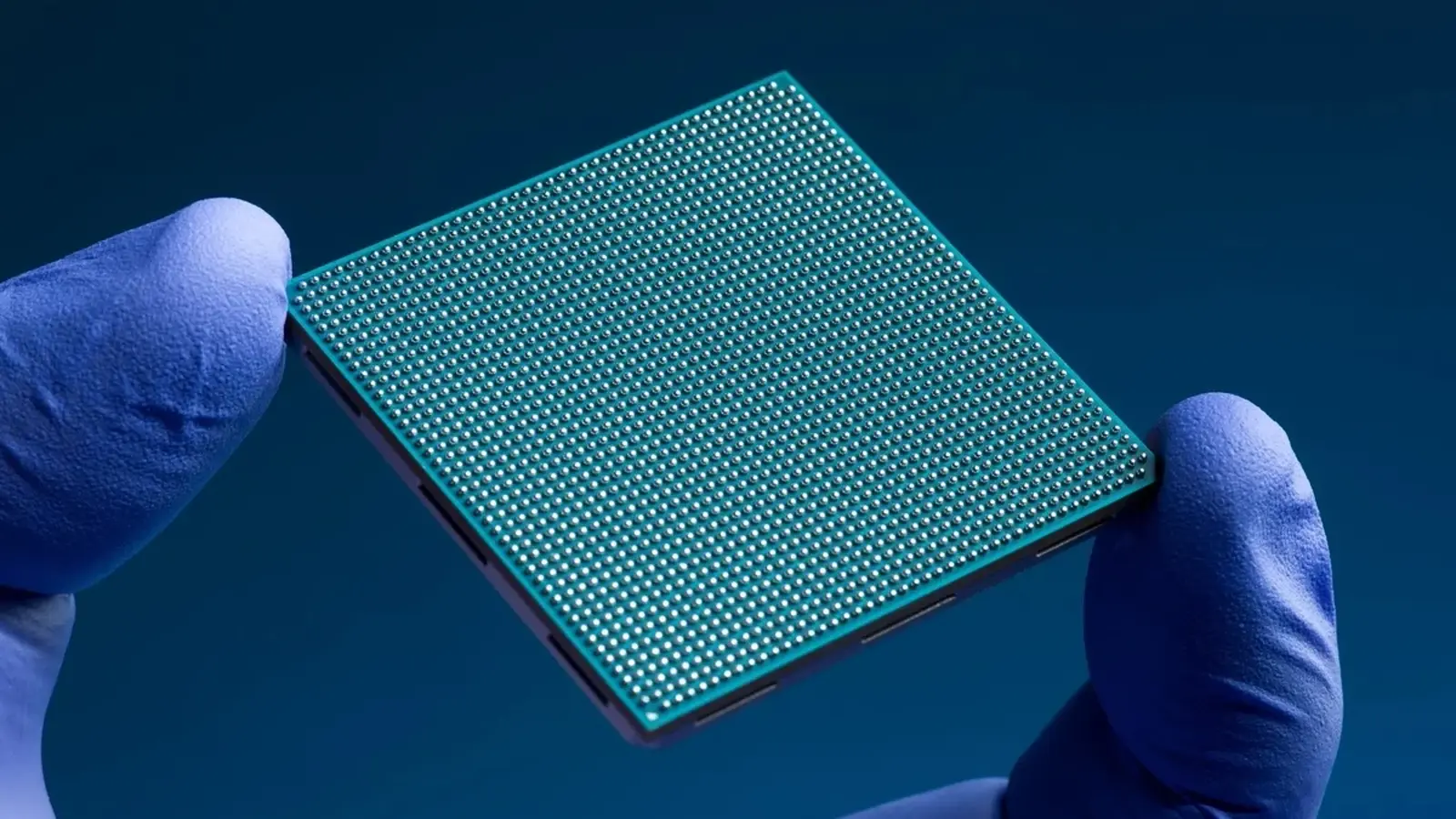
Read More Scince News Scientific a month ago Optical Chip Breaks 10 GHz Barrier for Real-Time AI Tsinghua researchers present OFE2, an integrated optical chip that performs feature extraction at 12.5 GHz with sub-250 ps latency, enabling low-energy, real-time AI for imaging, healthcare, and high-frequency trading.
Read More Scince News Space a month ago First Glimpse of a Young Sun’s Super-Eruption Captured Astronomers observed a two-temperature coronal mass ejection from EK Draconis, a young Sun-like star. Hot plasma at ~100,000 K and cool gas at ~10,000 K reveal how stellar eruptions could shape planetary atmospheres and habitability.
Read More Scince News Health a month ago How Creativity Turns Back Your Brain's Biological Clock A global study finds that creative activities—from tango to painting to gaming—are linked to younger biological brain ages. Learn how brain clocks and biophysical models explain these protective effects.
Read More Scince News Nature a month ago Greenland Is Shifting: How Ice Loss Reshapes the Island Scientists using 20 years of GPS data find Greenland is shifting northwest about 2 cm/year as ice melt, plate tectonics, and glacial rebound reshape the island—impacting navigation, mapping, and climate models.
Read More Scince News Space a month ago Did Cold War Nuclear Tests Trigger Mysterious Sky Lights? A reanalysis of the 1949–1958 Palomar sky survey shows transient lights cluster around above-ground nuclear tests and UAP reports, suggesting some mid-20th-century anomalies were real atmospheric or anthropogenic events.
Read More Scince News Health a month ago Why Millennials Have Higher Cancer Risks and How to Act Millennials face rising rates of early-onset cancer tied to diet, obesity, alcohol, sleep loss, stress and medication habits. This article explains the science, offers expert insight, and lists practical prevention steps.
Read More Scince News Nature a month ago Two-Headed Flatworms Reveal Body-Axis Reversal Phenomenon Researchers found naturally occurring two-headed flatworms whose descendants can reverse body-axis polarity. The discovery reveals extreme developmental flexibility and raises questions about stem cells and regeneration.
Read More Scince News Scientific a month ago Shiitake Memristors: Fungi That Remember and Compute Scientists demonstrated that dried shiitake mycelium can act as memristors — memory-resistive elements — offering a promising route to low-cost, biodegradable, neuromorphic hardware built from fungi.
Read More Scince News Health a month ago Blood Proteins Could Flag MS Years Before Symptoms UCSF researchers report that blood proteins such as MOG and NfL rise years before multiple sclerosis symptoms, suggesting a possible presymptomatic test and a new timeline for early intervention.
Read More Scince News Nature a month ago Ocean's Missing Plastic: How Microplastics Sink Away New research links plastic fragmentation, marine snow and ocean currents to explain why much plastic seems to vanish from the sea surface. Buoyant plastics persist for decades while producing microplastics that slowly sink.
Read More Scince News Nature a month ago Unexpected Life Under Arctic Ice Could Shift Climate Models Researchers discovered nitrogen-fixing microbes beneath Arctic sea ice. These non-cyanobacterial diazotrophs could boost algae, reshape food webs and alter carbon uptake, prompting calls to include them in climate models.
Read More Scince News Health a month ago MINA Syndrome: A New Genetic Cause of Muscle Weakness Researchers at the University of Missouri have identified MINA syndrome, a new genetic disorder caused by a NAMPT mutation that impairs neuronal energy and leads to progressive muscle weakness. The finding opens diagnostic and treatment avenues.
Read More Scince News Health a month ago Supramolecular Nanoparticles Reverse Alzheimer’s in Mice Researchers developed supramolecular nanoparticles that restore blood–brain barrier function and rapidly clear amyloid‑β in mice, reversing Alzheimer’s-like symptoms and recovering cognitive behavior.
Read More Scince News Scientific a month ago How a 'Childlike Face' Can Unlock Lost Childhood Memories New research shows that embodying a childlike version of your own face can help adults retrieve richer childhood memories. The study links bodily self-perception to autobiographical memory and suggests new research and therapeutic directions.
Read More Scince News Scientific a month ago How Ultra-High Heat Forged Earth's Stable Continents New research shows Earth's continents were forged by ultrahigh temperatures that drove uranium and thorium upward, cooling and strengthening the lower crust. Results impact resource exploration and planetary habitability studies.