
3 Minutes
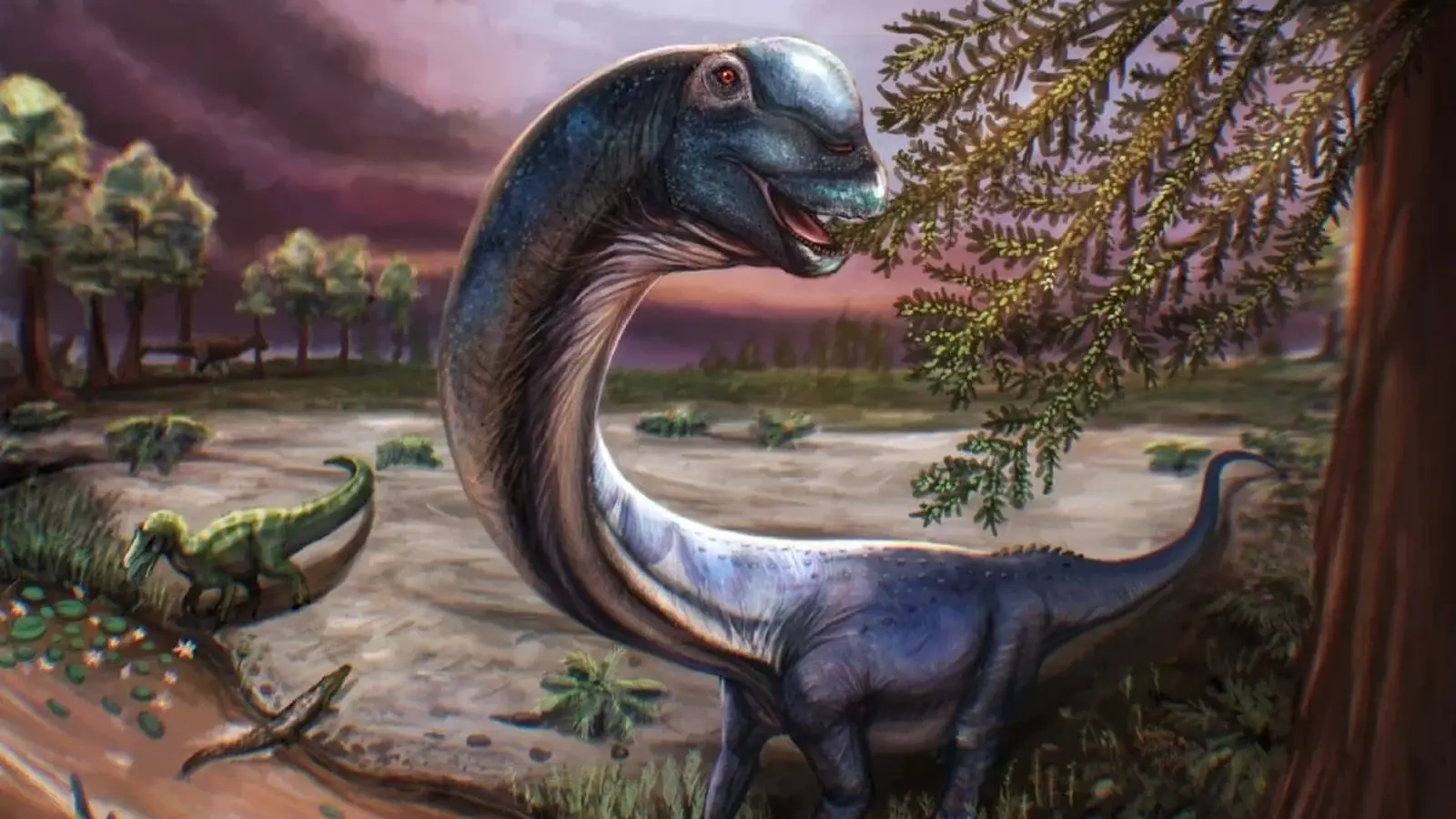
Picture nine elephants marching in a slow, ponderous line. That image will get you close to the size of Nagatitan chaiyaphumensis, a newly described sauropod from northeastern Thailand that stretched roughly 27 metres and likely tipped the scales at about 28 tonnes.
At roughly 27 metres and up to 28 tonnes, Nagatitan is the largest dinosaur ever discovered in Southeast Asia.
The name is telling. "Naga" nods to the mythic water serpents woven through regional Buddhism and folklore; "titan" borrows from the giant deities of Greek myth. The species name, chaiyaphumensis, points to Chaiyaphum province, where the bones were uncovered in 2016 at the edge of a dried pond in the Khok Kruat Formation.

What the team — scientists from Thailand working with researchers at University College London — recovered is unusually informative for the region: eight vertebrae, five ribs, parts of the pelvis, a humerus, a femur and assorted fragments. Those elements revealed subtle anatomical differences that justified calling this animal a new species. The work appears in Scientific Reports, 2026.
Technology did heavy lifting. The fossils were surface-scanned to build 3D models that could be studied across continents without hauling fragile bones around the globe. "3D scanning and printing has meant that we can study the specimen and collect data without having to travel," says Paul Upchurch, a paleobiologist at UCL and co-author on the paper.
Comparisons matter. Nagatitan outclasses the famous Diplodocus reconstructions like "Dippy" by more than 10 tonnes, but it remains modest next to giants such as Patagotitan, which may have weighed around 70 tonnes. Scale, after all, is a spectrum.
The Khok Kruat Formation preserves a snapshot of life more than 100 million years ago: sharks and turtles, pterosaurs skimming rivers, crocodile ancestors sunning on banks, and toothy theropods prowling inland. The landscape likely combined shrubland and savanna cut by winding rivers — a mosaic that would let a long-necked browser bend to graze aquatic plants as well as foliage on higher branches.

Sauropods seem to have coped with warm climates, perhaps by evolving large body surfaces to shed heat more effectively. Yet the geological story is unkind: younger strata in the region were deposited as shallow seas, erasing the later chapters of terrestrial dinosaur life. That is why the team calls Nagatitan something like a "last titan" — possibly the most recent large sauropod we will find in Southeast Asia.
For the lead author, Thitiwoot Sethapanichsakul, the discovery carried personal weight. "I've always been a dinosaur kid," he says, and naming a new species fulfilled a childhood promise as much as it advanced paleontology.
Finds like Nagatitan reshape our view of ancient Asia — not by rewriting every fact, but by filling in size, ecology and timing where the fossil record has been silent. And they remind us that even in well-studied lineages, a single field season can produce a species that changes the map.

Leave a Comment
Comments
No comments yet. Be the first.