
3 Minutes
Imagine a microscopic parcel wearing a sugar disguise, slipping past the brain's guarded gates and delivering a life-changing message inside a tumor. It sounds like science fiction, but researchers at Oregon State University have engineered tiny lipid particles coated in mannose that do exactly that in mice.
Short and clever. Mannose is a sugar molecule that, like glucose, is fed to the brain through the GLUT1 transporter. The team linked mannose to cholesterol and built nanoparticles with a dense, sugar-rich surface. The result? These mannose-laced lipid packets outcompeted uncoated particles at the blood-brain barrier, reaching the brain almost ten times more effectively.
Why does that matter for glioblastoma? Tumors of this type are ravenous for sugar and overexpress GLUT1, so the mannose-coated particles naturally accumulate where cancer cells congregate. Once there, the nanoparticles unload messenger RNA that tells tumor cells to produce PTEN, a protein that reins in uncontrolled growth.

The researchers used mannose bonded with cholesterol for their nanoparticles.
The effects in the mouse models were striking. After 28 days, untreated animals had tumors occupying roughly half their brains. Treated animals averaged just 2.3 percent tumor burden. Median survival climbed from 33 days to 49 days. Not a cure, but a significant extension and a dramatic reduction in tumor size, achieved without measurable toxicity to major organs.
There are caveats. These results are preclinical, limited to mice, and human brains are more complex. Translating delivery efficiency and therapeutic impact from animal models to patients will require more work, and human glioblastoma poses additional biological hurdles. Still, solving two bottlenecks at once — getting across the blood-brain barrier and homing in on tumor tissue — is a meaningful step forward.

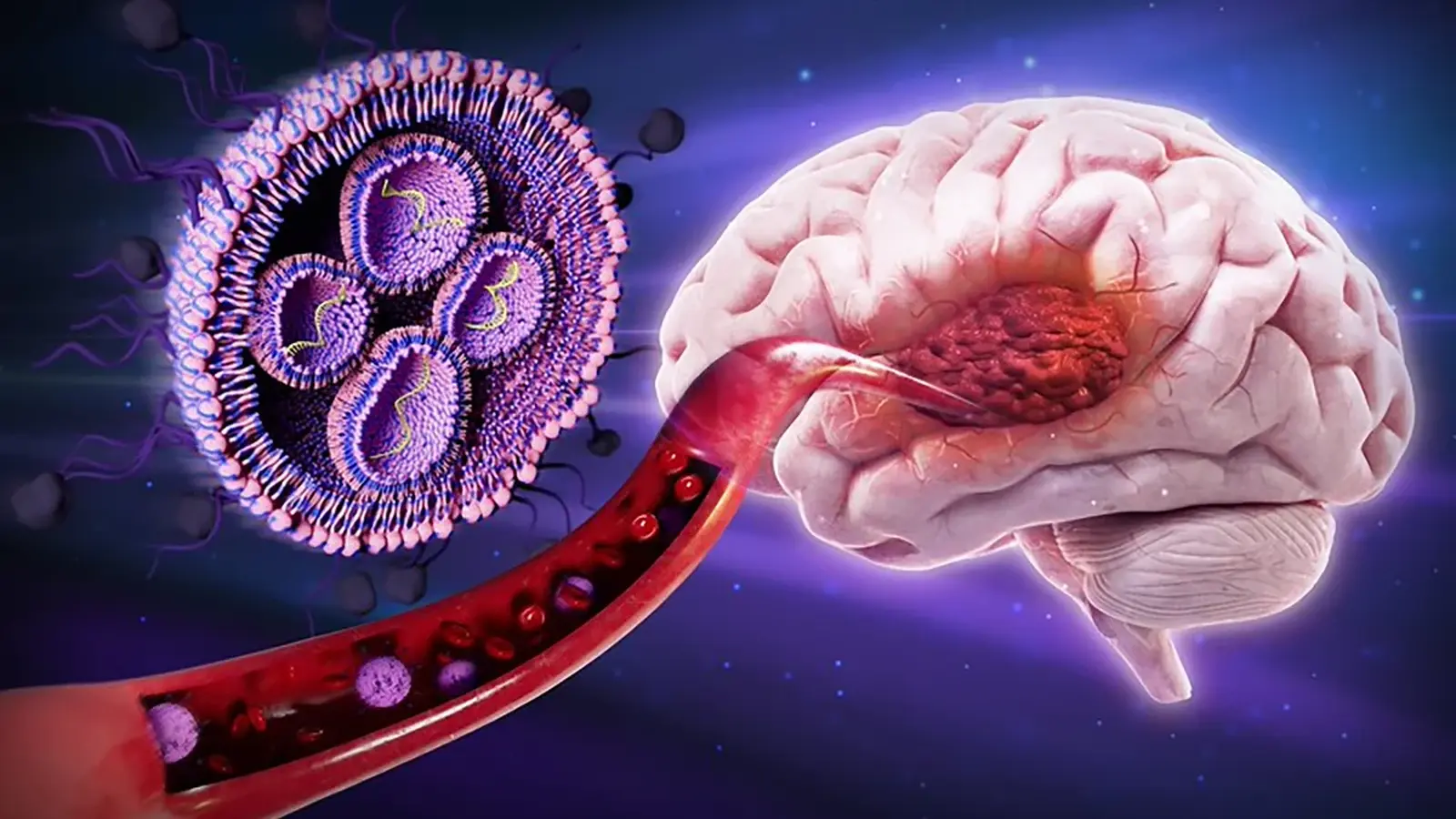
The sugar coating helped the nanoparticles pass from the bloodstream (pictured center) through the blood-brain barrier and into the brain tumor tissue.
The approach is elegant in its simplicity. By using a cholesterol backbone to pack more mannose onto each particle, the researchers created a platform that could be adapted to ferry different mRNA cargos into the brain. That opens the door not only for glioblastoma therapies but also for other neurological conditions that need precise molecular delivery.
Published in the Journal of Controlled Release, the study suggests a general strategy: exploit native transport routes and metabolic quirks of diseased tissue to improve targeted delivery. It is a reminder that sometimes the best disguise is the one nature already accepts.
Will this sugar-coated trick survive the long road from mouse to clinic? Time will tell, but the path forward now looks clearer than it did a year ago.


Leave a Comment
Comments
No comments yet. Be the first.