
4 Minutes
One infusion. Years of pain put on pause. For a handful of people whose rheumatoid arthritis refused to budge after every standard drug, researchers in Berlin have taken a page from cancer therapy and, in some cases, erased the disease’s stubborn memory.
Rheumatoid arthritis is a traitorous conversation between the immune system and the joints. The culprits can be B cells — memory cells that, once miseducated, keep producing antibodies that attack cartilage and bone. Drugs today largely turn down the immune volume; they rarely rewrite the story. The team at Charité wondered whether engineered T cells could instead hunt down and remove those misbehaving B cells at their hideouts.
The technique borrows from oncology. Doctors collect a patient’s T cells, arm them in the lab with a chimeric antigen receptor that recognizes CD19, then return them after a short course of chemotherapy. The modified cells act like living trackers, seeking out CD19-bearing B cells not only in blood but deep in bone marrow, lymph nodes and joint tissue.
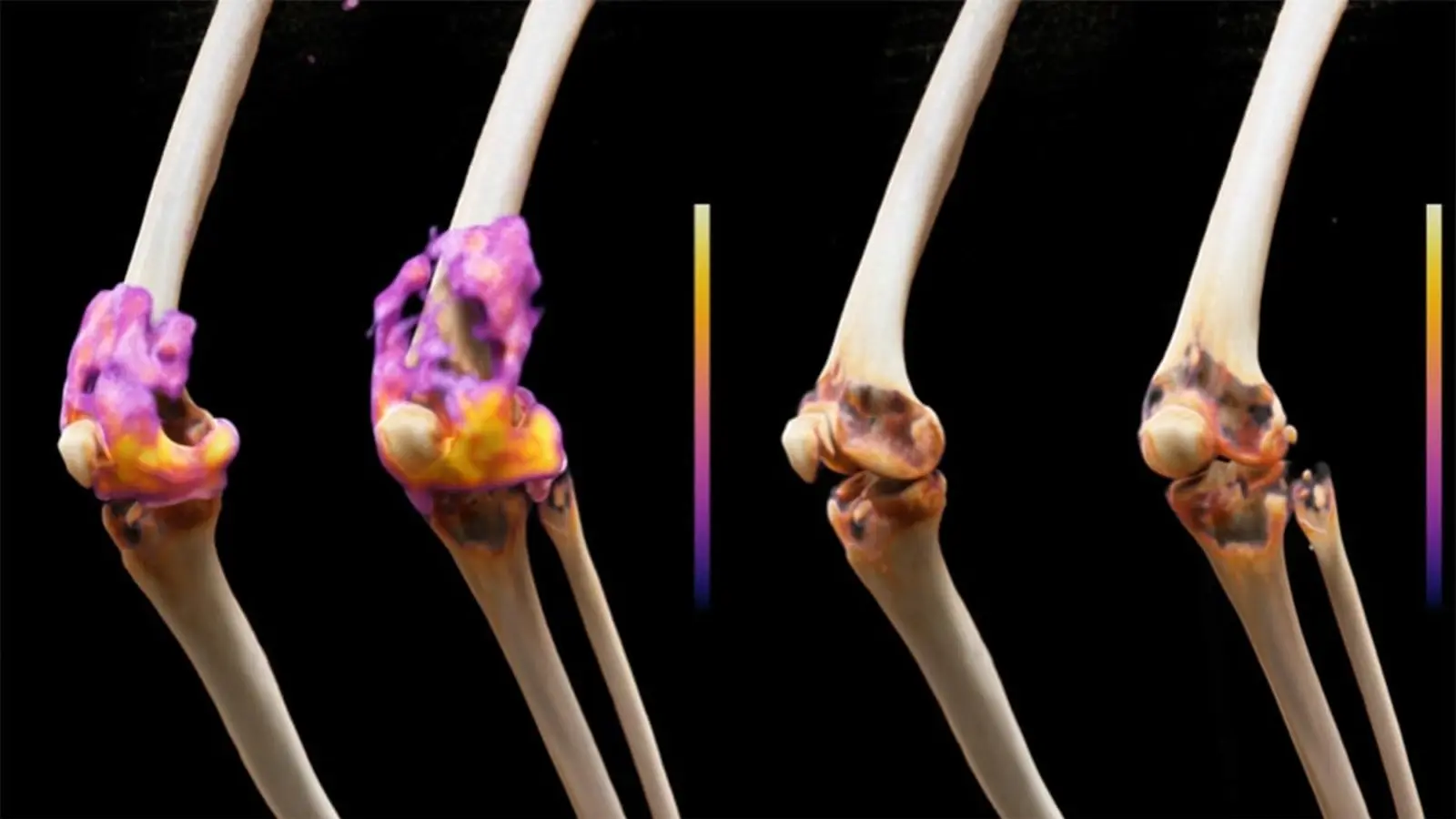
In the COMPARE trial six adults with severe, treatment-refractory rheumatoid arthritis received a single infusion of CD19-directed CAR T cells. These were patients who had cycled through multiple targeted and biologic agents over years and still had active disease. The result was striking: all six experienced clear drops in disease activity. Three stayed in medication-free remission during follow-up of up to a year. Swollen, inflamed foci that showed up on PET-MRI faded. Pain eased. Mobility improved.
But this was more than symptom control. The engineered T cells appear to penetrate immune reservoirs and deplete pathogenic B cells, and autoantibody levels fell substantially over the following months. When B cells repopulated, they were predominantly naive cells — the kind that haven’t yet been molded by the disease. In other words, the immune system looked as if it had been rebuilt from a cleaner slate, rather than simply muted.

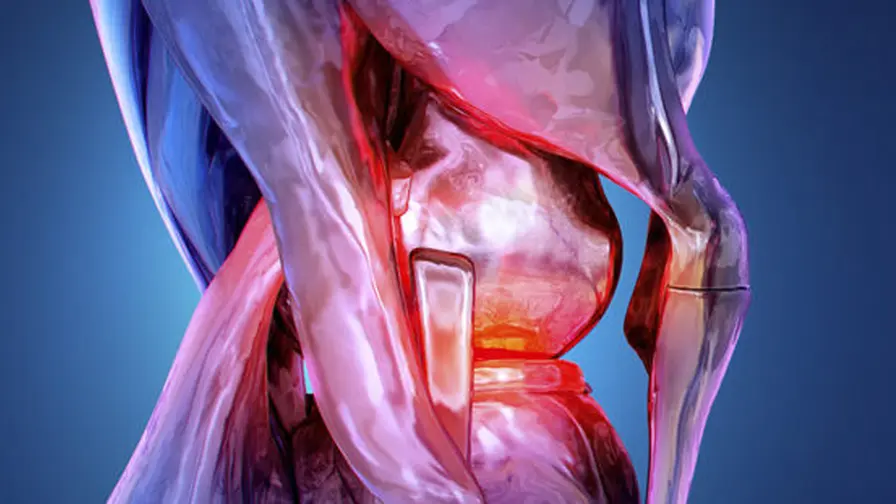
In the future, new cell therapies could be used to treat not only cancer but also autoimmune diseases such as rheumatoid arthritis.
Some reassuring detail: antibodies from prior vaccinations, such as those for chickenpox and tetanus, remained detectable in most patients. That suggests that protective immunity may largely persist even after profound B-cell depletion, though longer observation is needed to know the full picture.
Not every patient had a permanent cure. One person relapsed after an initial remission and others did not reach complete remission. Small numbers and short follow-up mean we can’t yet say how reproducible or durable these responses will be, or which patients will benefit most. CAR T-cell therapy also brings complexity: cell collection and genetic modification, preconditioning chemotherapy, and careful post-infusion monitoring. Safety is paramount when a cancer-derived approach is applied to a chronic autoimmune disease.
Side effects in this early cohort were manageable. All participants experienced a transient, mild-to-moderate cytokine release syndrome, an expected inflammatory reaction when CAR T cells become active. There were no severe neurologic complications, serious adverse events were uncommon, and infections were rare in the observed window. Still, six people and one year cannot reveal rare or late complications.
The COMPARE team, led by David Simon and Gerhard Krönke at Charité, plans a second phase enrolling ten more patients and comparing CAR T-cell therapy with an approved B-cell-targeting drug. That head-to-head will help clarify whether engineered T cells truly reset immune memory or simply suppress inflammation more deeply than current options.
This trial does not promise an immediate revolution for all people with rheumatoid arthritis. It does, however, open a provocative door: instead of lifelong immune suppression, a single, targeted cellular intervention might — at least for some patients — remove the cells that keep relighting the fire.
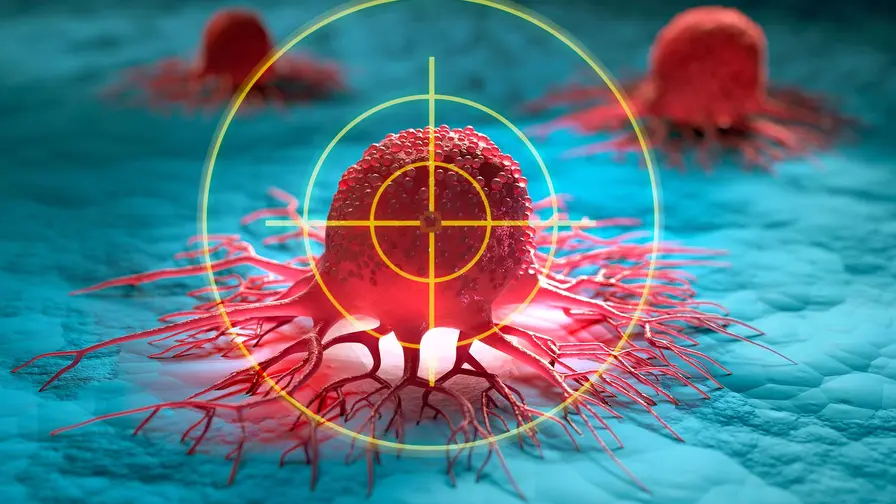
For patients who have exhausted standard treatments, CD19 CAR T-cell therapy offers a proof of principle that autoimmune memory can be rewritten; the next challenge is to determine how often and how safely it can be done.

Leave a Comment
Comments (1)
Wow, sounds almost miraculous. One infusion, years of pain paused? If that holds true this could be huge… but tiny trial, need more data n longer follow up, safety unknown