
3 Minutes
Imagine a camera that treats the night sky like a movie set. Silent. Immense. Continuous. Perched high in Chile, at the Vera Rubin Observatory, the LSST camera is doing precisely that: sweeping the southern sky every few dozen seconds and stitching together a decade-long film of cosmic change.
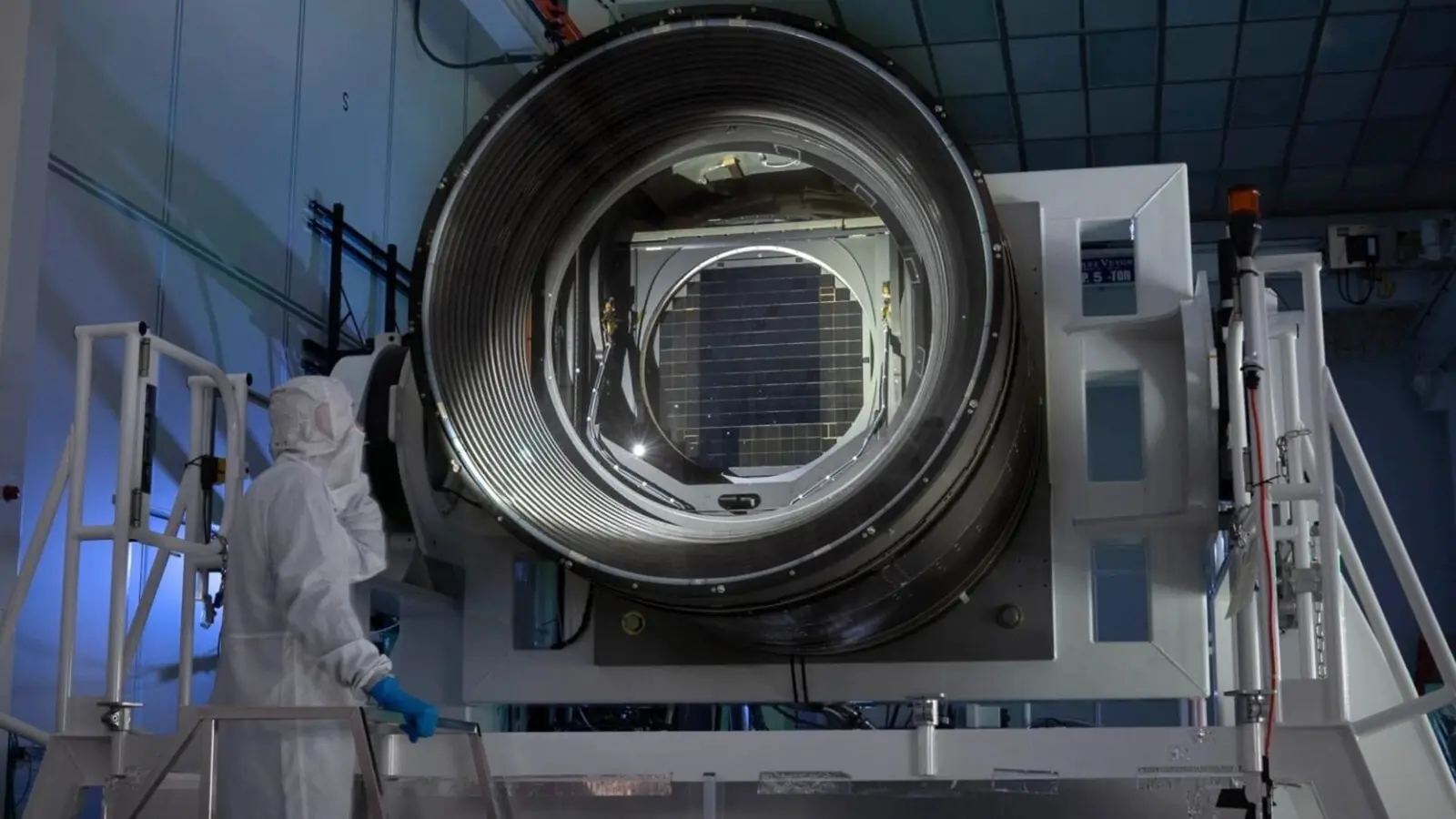
At first glance it doesn’t look like a gadget from science fiction. It looks more like a compact car in size, weighing roughly 3,060 kilograms and stretching about 4.49 meters end to end, with a height near 1.65 meters. But inside that hulking shell lives a sensor mosaic unlike any other: 3.2 billion pixels assembled from 189 CCD sensors, grouped into 21 rafts that together form a circular imaging surface about 63.5 centimeters across. Each CCD is 4096 by 4096 pixels with a pixel pitch around 10 micrometers.
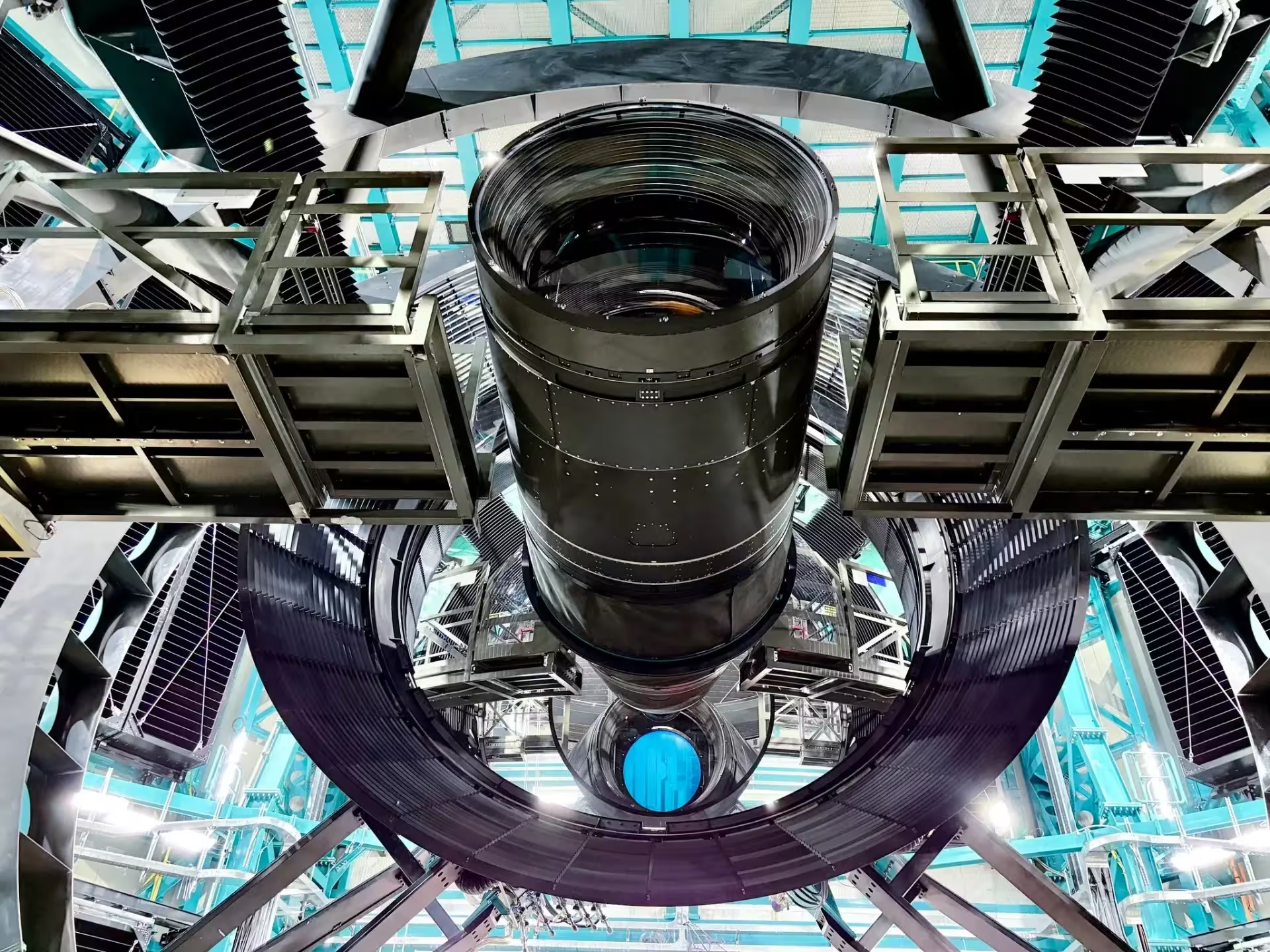
Why so many pixels? Because the LSST camera is not trying to capture a pretty picture. It aims to capture motion and change across a huge swath of sky. Its field of view covers roughly 9.6 square degrees — roughly the area of 45 full moons — so the telescope can sweep across the southern hemisphere quickly and repeatedly. The 8.4-meter telescope mirror collects faint light, three massive lenses correct and focus that light (one lens exceeds 1.5 meters across, reportedly the largest lens built for astrophysics), and the camera records it across wavelengths from about 320 to 1050 nanometers.
Color in this context is engineered. Six filters—labeled u, g, r, i, z and y—separate ultraviolet-near to near-infrared light so astronomers can tease out temperature, composition, and subtle changes in brightness. The filter mechanism sits in a rotating cell and can change filters in under two minutes when needed, keeping observations efficient without compromising image quality.

Raw resolution is only part of the story. Electronics produce heat and electronic noise, which would wash out faint signals. To fight that, the entire focal plane is housed inside a vacuum cryostat and chilled to about minus 100 degrees Celsius. The cold keeps sensor noise low and reduces hot or overactive pixels, preserving the camera’s extraordinary sensitivity.
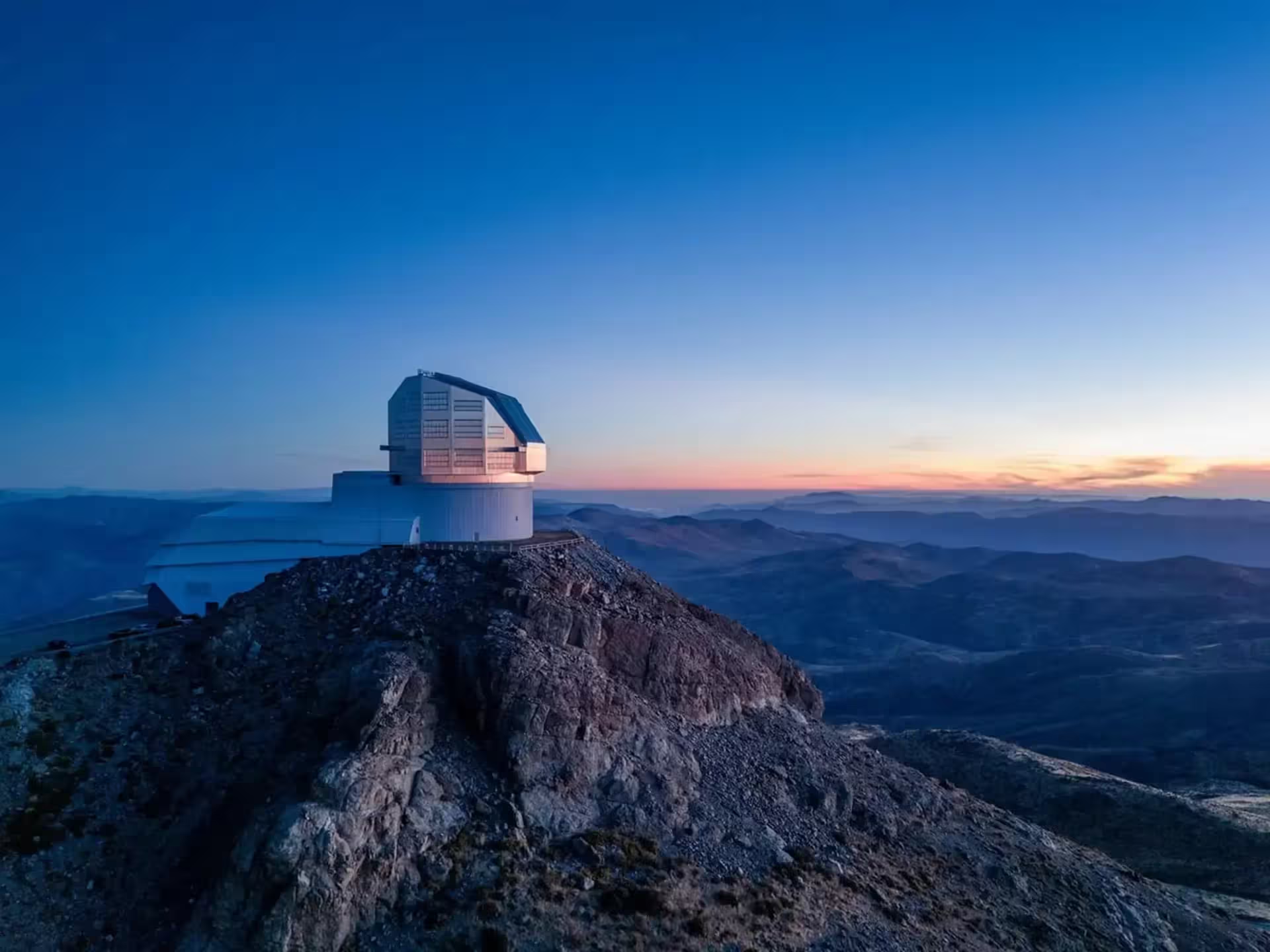
Speed matters as much as sensitivity. The observatory can capture a new field roughly every 40 seconds. The data stream is enormous, so images are not left on a single drive; they’re transmitted to processing facilities at SLAC on the same night. Automated pipelines compare each new exposure to previous images of the same patch of sky, flagging movers and shakers: asteroids, supernovae, variable stars, and other transient phenomena. In effect, astronomers get alerts and measurements on events unfolding in real time.
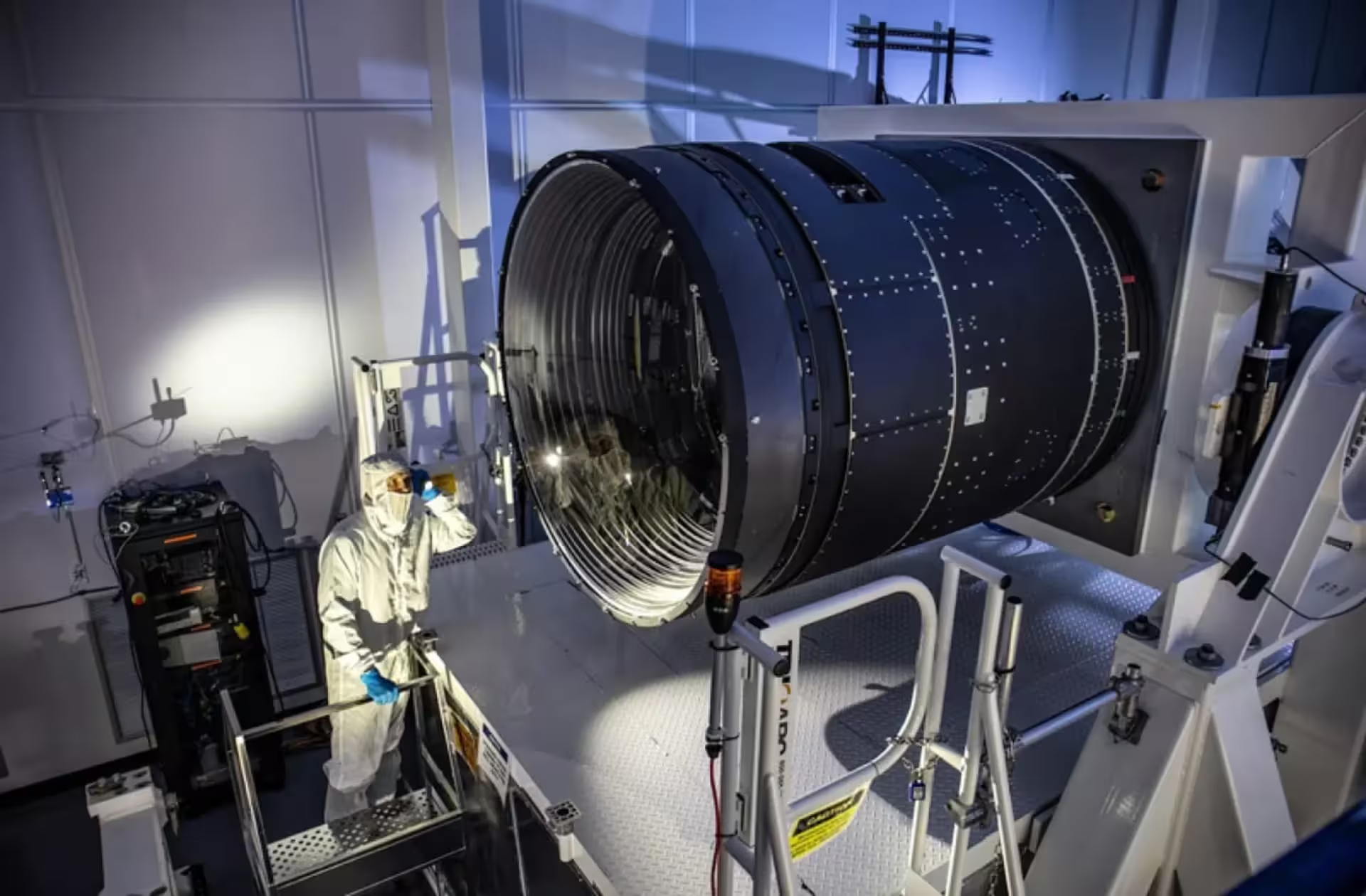
Combine an 8.4-meter mirror, a 9.6 square-degree field of view, six photometric bands, 189 high-performance CCDs, and that rapid cadence, and you have something new: a wide-field, time-domain survey that doesn’t just map the sky once but watches it continuously. Over a planned ten-year survey, the LSST camera will produce an unprecedented, frame-by-frame chronicle of the southern heavens—an archival movie that scientists will mine for everything from near-Earth objects to the faint flicker of faraway supernovae.
The camera’s power is not a single number of pixels. It’s the combination of scale, speed, and sensitivity that turns static images into motion—revealing how the cosmos evolves, one 40-second frame at a time.


Leave a Comment
Comments
No comments yet. Be the first.