
3 Minutes
Huawei still sets the pace for foldable phones in China. But Honor is not hiding in the shadows anymore.
New IDC figures for Q1 2026, shared on Weibo by Honor Global CMO Guan Haitao, put Huawei at about 60% of the domestic foldable market and Honor at 21%. Oppo, vivo and Xiaomi trail far behind with roughly 6%, 5% and 4% respectively—numbers that add up to a striking reality: Huawei and Honor together now control more than four-fifths of China’s foldable segment.
That dominance didn’t happen by accident. Huawei’s Mate and Pura foldables have hammered out consistent demand, and the brand’s HarmonyOS ecosystem gives those devices an integrated feel that many buyers prize. Back in Q3 2025 Huawei’s share was closer to 70%, so the shift is real, but incremental.
Honor’s rise is the story worth watching. Its share has nearly doubled since Q3 2025, propelled by the Magic V6 and other recent designs that trade bulk for thinness while packing flagship silicon. Slim chassis, better hinges, cleaner creases—those are the sorts of improvements that make a luxury device feel like a daily tool, not a novelty.
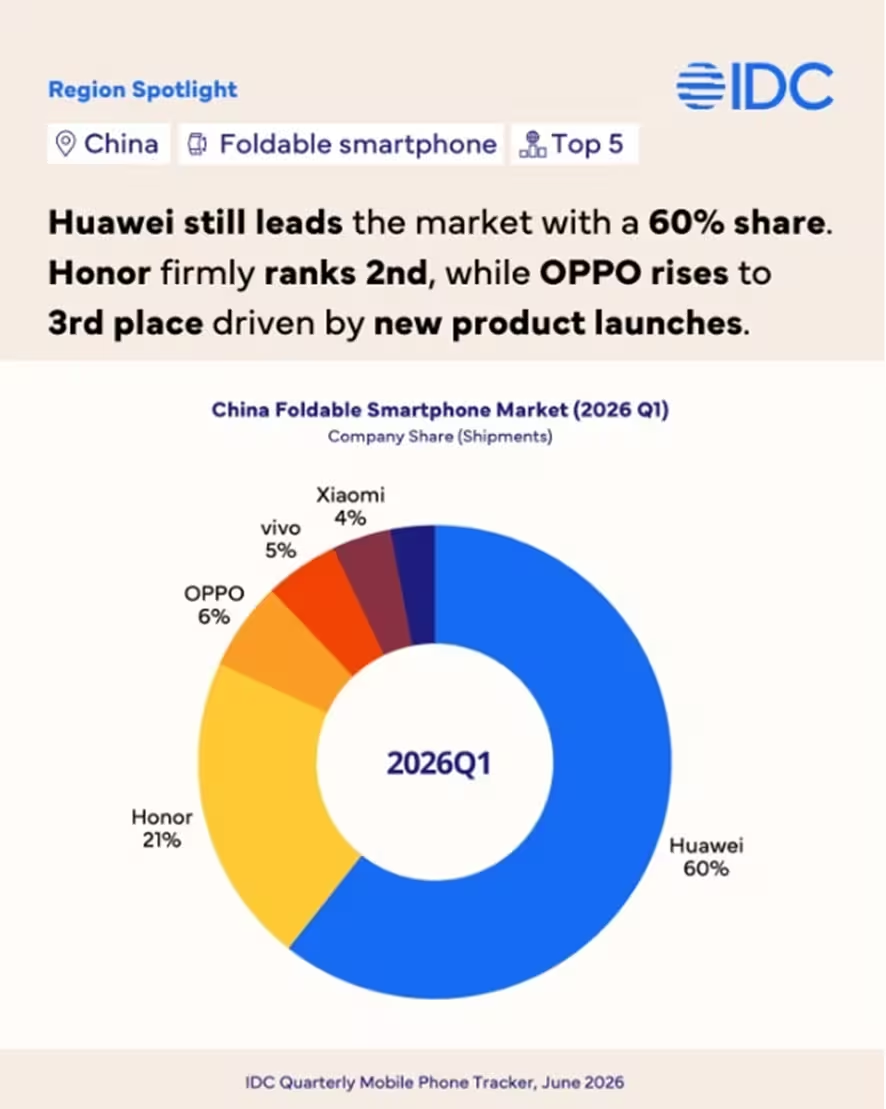
Huawei and Honor now control more than four-fifths of China's foldable market.
Outside the foldable bubble, China’s broader smartphone market cooled in Q1. IDC estimates shipments fell about 3.3% year‑on‑year to roughly 69 million units, squeezed by higher component costs and supply-chain friction. Still, foldables bucked the downward trend. Late‑2025 data showed foldable shipments climbing—2.63 million units in Q3, up 17.8% year over year—and that momentum appears to have continued into 2026.
What does this concentration mean for rivals? Oppo, vivo and Xiaomi clearly want a piece of the premium segment, but turning midrange strength into foldable credibility takes time and tight engineering. Manufacturing yield, hinge design and software adaptation are unforgiving; buyers notice a half-millimeter in feel as much as a line on a spec sheet.
There’s also an arms race of ecosystems. Huawei’s vertical integration and HarmonyOS polish deliver an experience that goes beyond the screen. Honor’s strategy, meanwhile, shows that nimble hardware cycles and appealing industrial design can cut into a market leader’s share even without the same depth of services.
So where will this head? Expect incremental gains from Honor, cautious catch‑ups from the other Chinese brands, and continued premiumization of the foldable category as manufacturers chase thinner profiles, longer battery life and less visible creasing. The duel between Huawei and Honor is the headline—everything else is the supporting act. Will buyers reward iteration or integration next? Keep watching the launches.

Leave a Comment
Comments
No comments yet. Be the first.