
3 Minutes
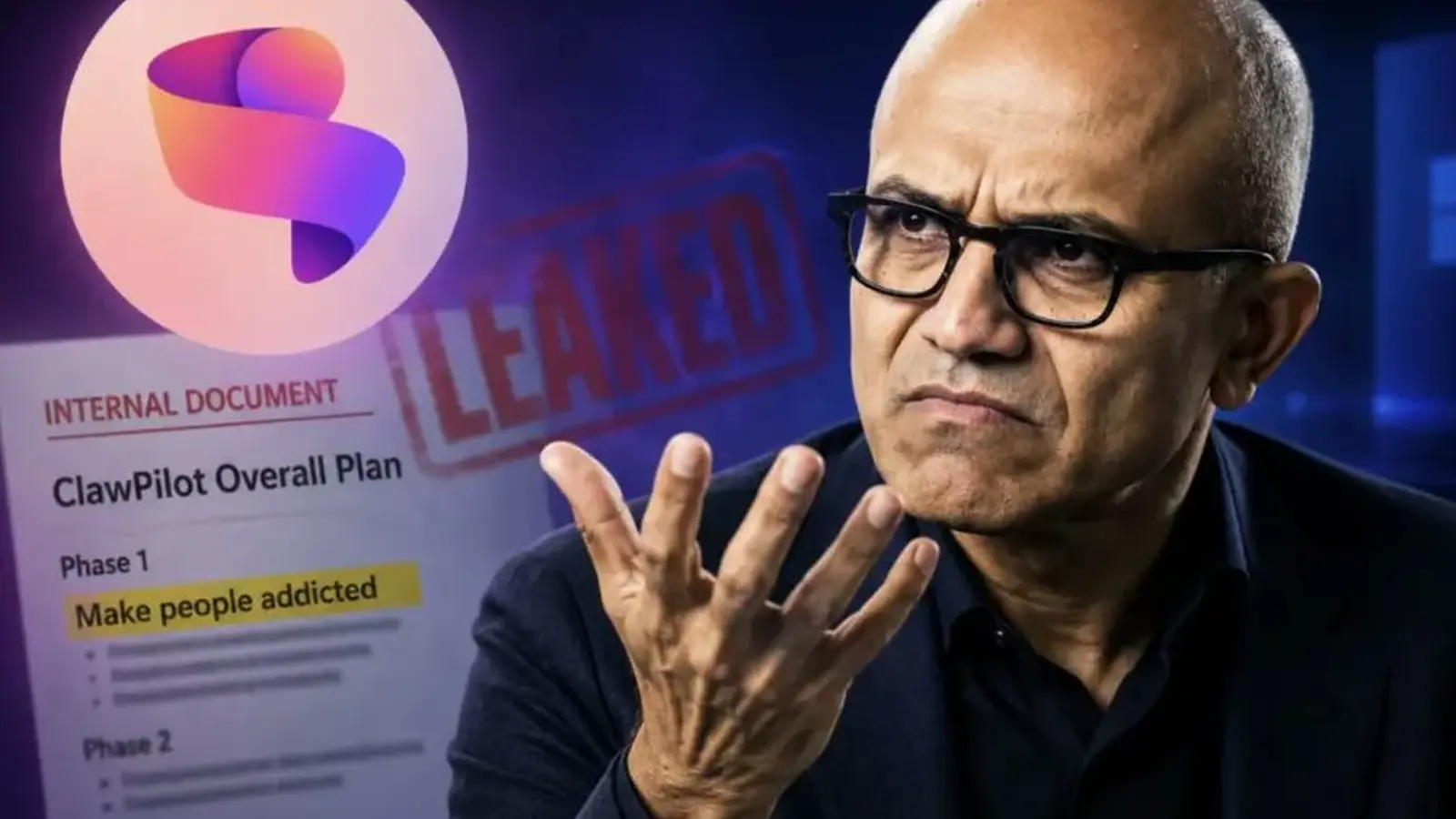
Is Microsoft trying to hook people on its new AI assistant? The suggestion stunned anyone who watched the company pivot from traditional software to agent-driven AI, and it arrived wrapped in an internal document leaked to the press.
The memo, first reported by 404 Media, allegedly described an early rollout phase for a conversational assistant called Scout — internally nicknamed ClawPilot — with blunt goals: spark habitual use, test new interfaces, and build an ecosystem that nudges the average person to rely on the tool daily. According to the report, the writers even claimed some of that dependency was already forming organically.
Satya Nadella pushed back hard. In an internal message obtained by The Information, he called the leak nonsense and insisted addiction is the opposite of Microsoft’s aim. "This is absolutely not our goal, and we are doing the exact reverse," he wrote, arguing the company intends to amplify human effort and grow economic value, not create dependence.
A Microsoft spokesperson repeated that line to The Information: Scout exists to help people work more effectively, not to increase screen time. The stated mission, they said, is to return time to users — to make workflows faster, not stickier.

404 Media pushed back on the denial, saying the memo wasn’t a random draft but a product of senior leaders — named in the report as Omar Shahine and Jacob Werner — and a text-generation tool. The outlet claims the document itself acknowledged being AI-assisted, with humans reviewing and approving the final language.
All of this comes as Microsoft finishes Build 2026, its annual developer conference, where the company doubled down on agent-style AI that acts on behalf of users. The shift feels profound: the old playbook that turned Office and Windows into cash machines is evolving into something built around autonomous, proactive helpers.
That shift raises two big questions. First, can Microsoft reassure users and regulators that these agents will enhance productivity without creating unhealthy patterns? And second, can the company preserve the revenue strengths of Office and Windows while steering the business toward a new, AI-centered model?
Nadella has been explicit about the change in strategy. He argues the factory-like, software-only approach of the Gates era is not the automatic route to future success. Instead, he says security, quality, and responsible transformation of AI are the priorities that will define Microsoft’s next chapter.
Leaks, denials, and competing narratives are nothing new in tech. But when a platform becomes a daily companion for billions, the stakes shift from product-market fit to public trust. Which direction Microsoft ultimately proves — habit-building or habit-breaking — will shape how people accept the next generation of AI assistants.
.avif "Microsoft Achieves $27.2 Billion Profit in Q4 2025 Amid Major Workforce Reductions and Surging Cloud Growth")

Leave a Comment
Comments
No comments yet. Be the first.