
3 Minutes
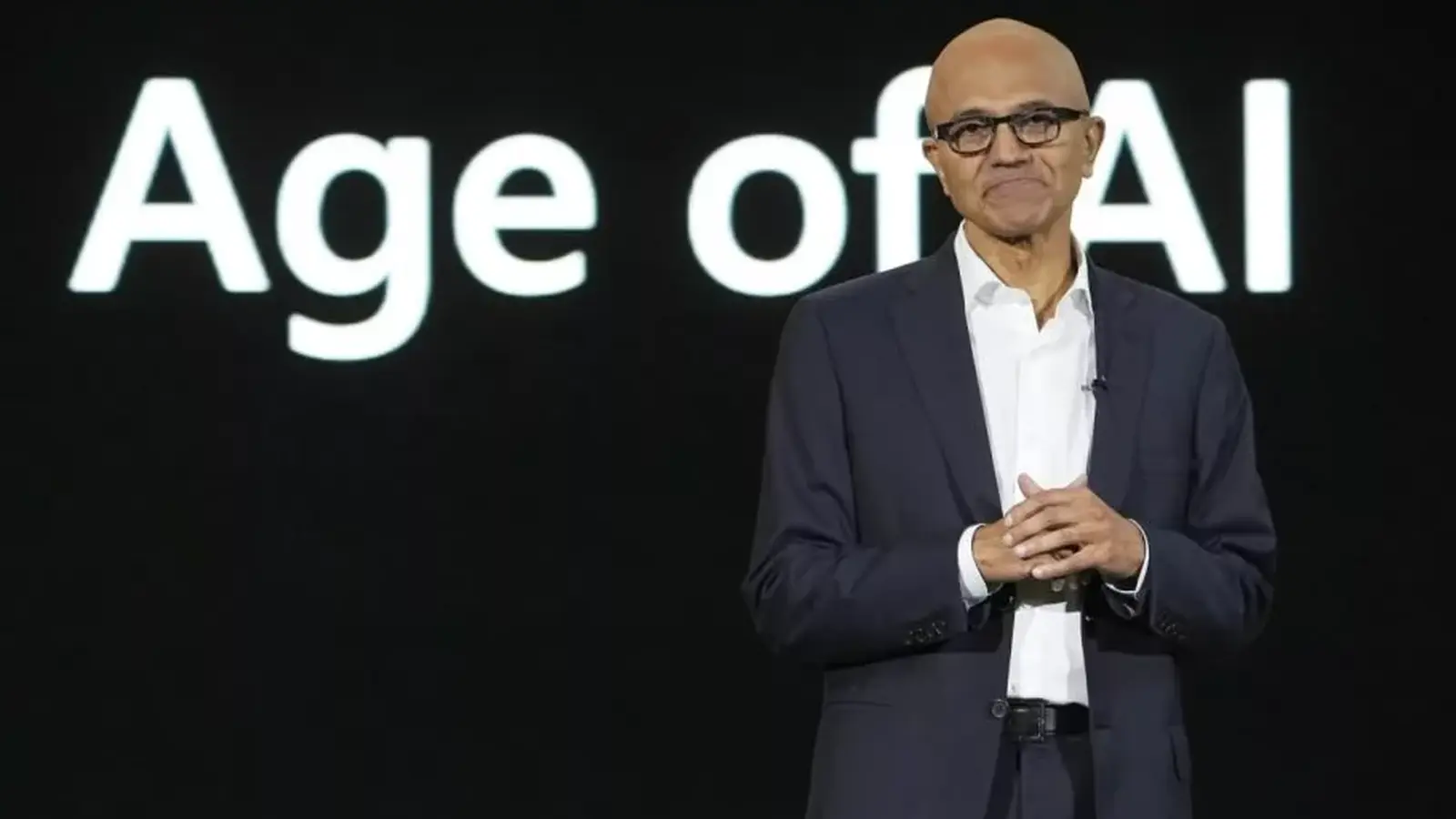
Imagine a handful of models quietly hoarding the institutional knowledge of companies around the world. Sounds like sci‑fi? Satya Nadella says it’s already happening.
On X, the Microsoft CEO warned that large AI models are aggregating and absorbing corporate information at scale, and that concentration of that knowledge in the hands of a few platforms could devastate entire industries. He compared the potential outcome to the first wave of globalization, when factories and manufacturing jobs migrated across borders, leaving economic charts that looked neat on paper but communities that were hollowed out in reality.
Nadella did not mince words. He argued that no one should wake up to a future where businesses are forced to hand over their value and data to a small set of models. 'There is no social license for an AI future that hollows out industries,' he wrote, urging a different path: one that preserves companies’ control over their knowledge and protects employees’ expertise.

His prescription is not technocratic fluff. Nadella envisions an open environment where organizations can operate their own learning cycles—systems that encode institutional knowledge, raise human capital value, and increase organizational tokenized assets over time. It’s a call for systems that distribute benefits broadly, not funnel value into the coffers of a few dominant AI services.
Others in the tech world are echoing the alarm. Snowflake CEO Sridhar Ramaswamy has argued that some large AI players want universal access to data, a move that would turn other software vendors into little more than data transmission pipes feeding those giant brains. Aaron Levie, CEO of Box, points out another risk: as AI begins to perform sophisticated legal work, scientific research and other expert tasks, the advantage will tilt toward whoever controls the most relevant, high‑quality domain data.
So what does competitiveness look like in such a landscape? According to these leaders, firms won’t win by copying general-purpose intelligence. They will win by curating precise, contextual, domain‑specific information—data that reflects their processes, customers, regulations and craft. That kind of knowledge is harder to scrape, and harder to commodify.
Policy and architecture matter. Left unchecked, a few vertically integrated AI services could centralize not only compute and models, but also the invisible infrastructure of trust and expertise that companies build over decades. Open ecosystems, interoperability standards, and ways for organizations to retain and operationalize their own learning loops are proposed as antidotes. These are design choices, not inevitabilities.
Our priority should be to build an ecosystem, not just a model, so value flows across companies, industries and nations.
The debate is no longer about whether AI will transform work. It’s about who gets to capture the returns from that transformation. Will value remain distributed across businesses large and small, or will it concentrate around a few firms that control the data, the models and the pathways of insight?
That question will shape where jobs survive, where new industries take root, and whether the next chapter of technology strengthens economies or strips them bare. The clock is ticking on how we design that future.


Leave a Comment
Comments
No comments yet. Be the first.