
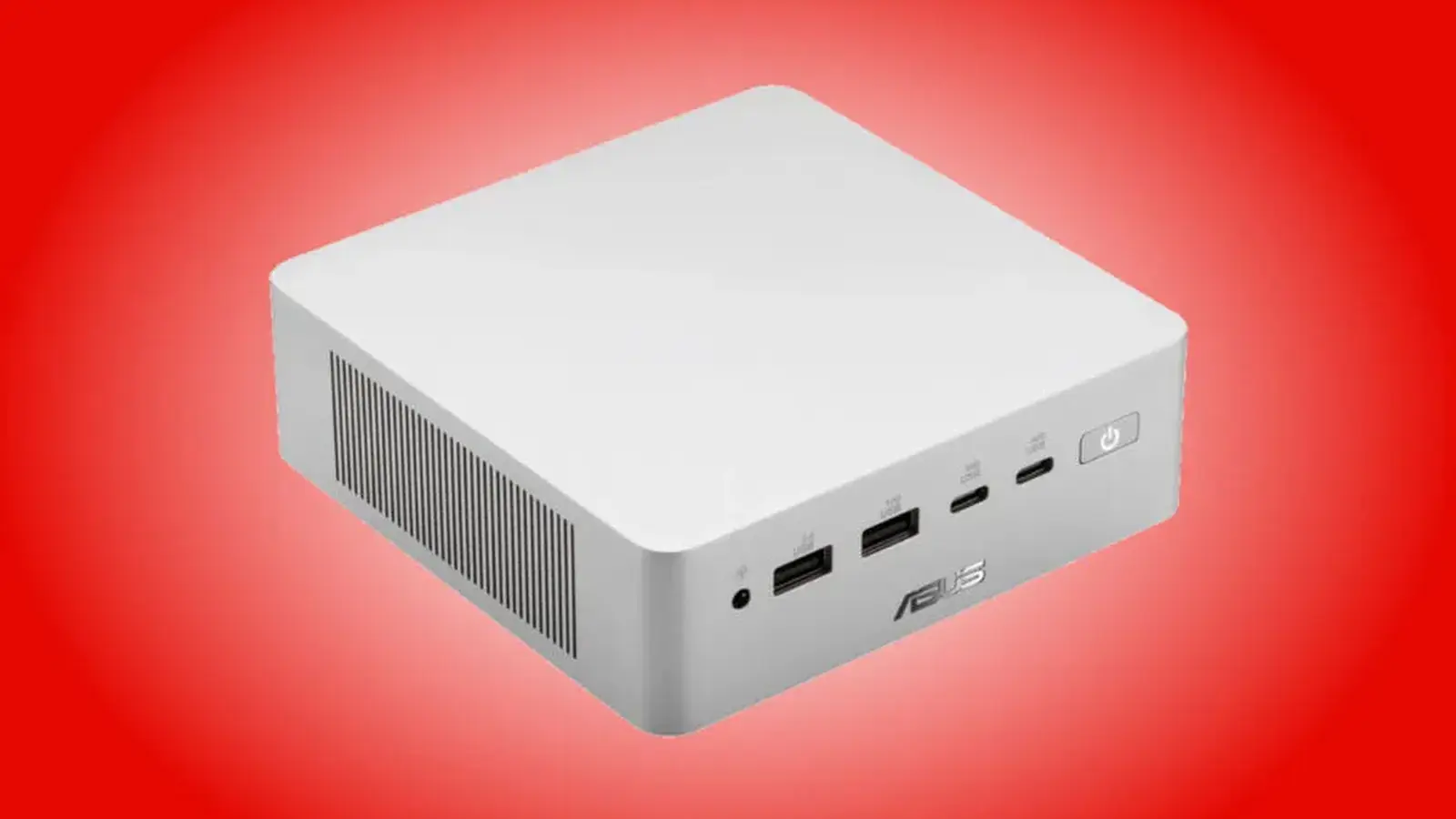
Asus just dropped a curveball: a mini‑PC built around Qualcomm's Snapdragon X2 Elite. Short answer: it's trying to blur the lines between ultralight laptop silicon and compact desktop utility. Wild? Perhaps. Clever? Very likely.
For years the high-performance mini‑PC scene leaned on AMD and, occasionally, Intel. Ryzen AI Max chips have been the go‑to for compact boxes aimed at AI and gaming. Asus, however, picked a different lane. The Ascent QN10 uses the Snapdragon X2 Elite — a 3nm SoC we mostly saw inside laptops like the ProArt PZ14 and Zenbook A16 — and repackages it as a small, quiet, and energy‑efficient workhorse.
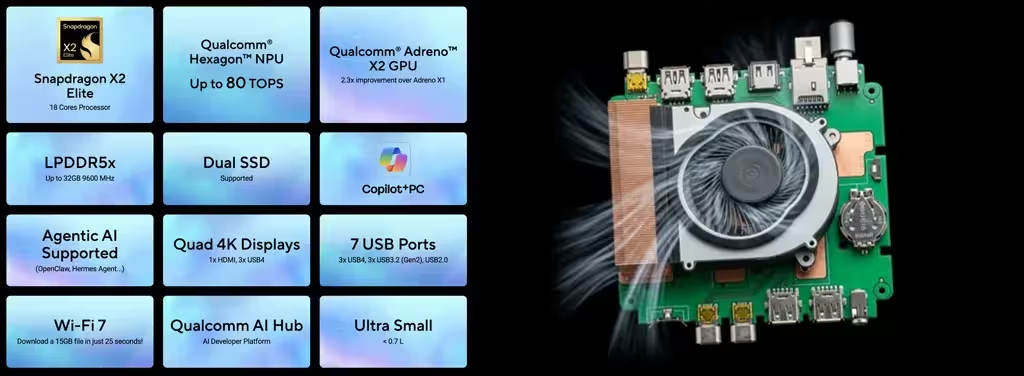
Why go Snapdragon for a mini‑PC? Power efficiency plays a part. Thermal headroom matters in a tiny chassis. And the X2 Elite brings an integrated Adreno X2‑90 GPU and an NPU that claims up to 80 TOPS, which is appealing for local AI workloads without a discrete graphics card. The QN10 drops the separate GPU its predecessor Ascent GX10 offered and leans on that integrated silicon instead.
This is a bold experiment: a phone-generation chipset aiming for desktop AI workloads.
Hardware is straightforward and unapologetic. Asus pairs the X2 Elite with up to 32GB of LPDDR5x running at a blistering 9600MHz. That RAM is soldered down — no user upgrades. Dual SSD slots are supported for storage flexibility, and the machine carries Copilot Plus certification, meaning it's ready to run agentic AI tools such as OpenClaw out of the gate.
- SoC: Qualcomm Snapdragon X2 Elite (3nm), 18 CPU cores, Adreno X2‑90 iGPU
- NPU: up to 80 TOPS
- Memory: up to 32GB LPDDR5x @ 9600MHz (non‑upgradable)
- Storage: dual SSD support (config-dependent)
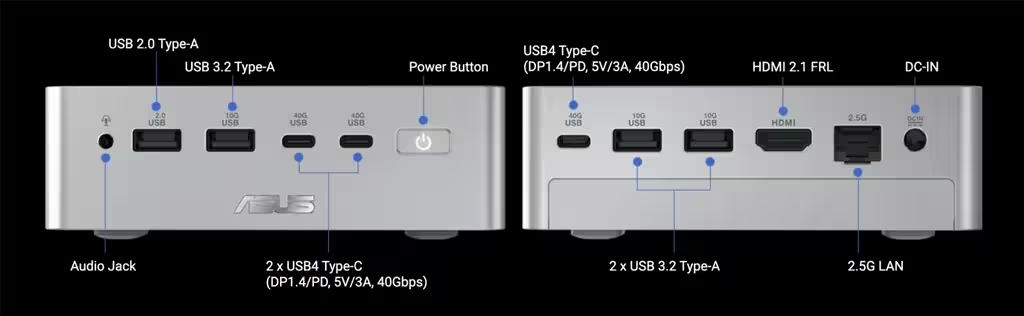
- Ports: 4× USB‑A (10Gbps), 3× USB‑C (40Gbps), HDMI 2.1, 3.5mm combo, 2.5Gb Ethernet
- Wireless: Wi‑Fi 7, Bluetooth 6
- Displays: up to four 4K monitors supported
Outstanding on paper. Real‑world performance will hinge on how well software takes advantage of the NPU and the X2's vector capabilities. Many AI workloads are still optimized for x86 and discrete GPUs. But with local agent frameworks becoming more modular and portable, the QN10 could carve out a niche as a quiet, low‑power AI node for creators and developers who prize compactness over raw gaming throughput.
Pricing is as split as the strategy. The base QN10 — 16GB RAM and 512GB storage — starts around $1,490 in China. A 32GB/1TB configuration shows up at roughly $2,075 in Singapore, while reports suggest the same higher‑end kit will land in the U.S. closer to $1,699. Not cheap. But when you factor in the low power draw and small footprint, some buyers will see value where others see compromise.
So, who is this for? Developers building local AI prototypes. Creators who need multi‑monitor desktop space without a roaring fan. Anyone curious about what happens when mobile silicon gets serious about desktop tasks. The experiment begins now — and it will be interesting to watch how software and workflows respond.

Leave a Comment
Comments
No comments yet. Be the first.