
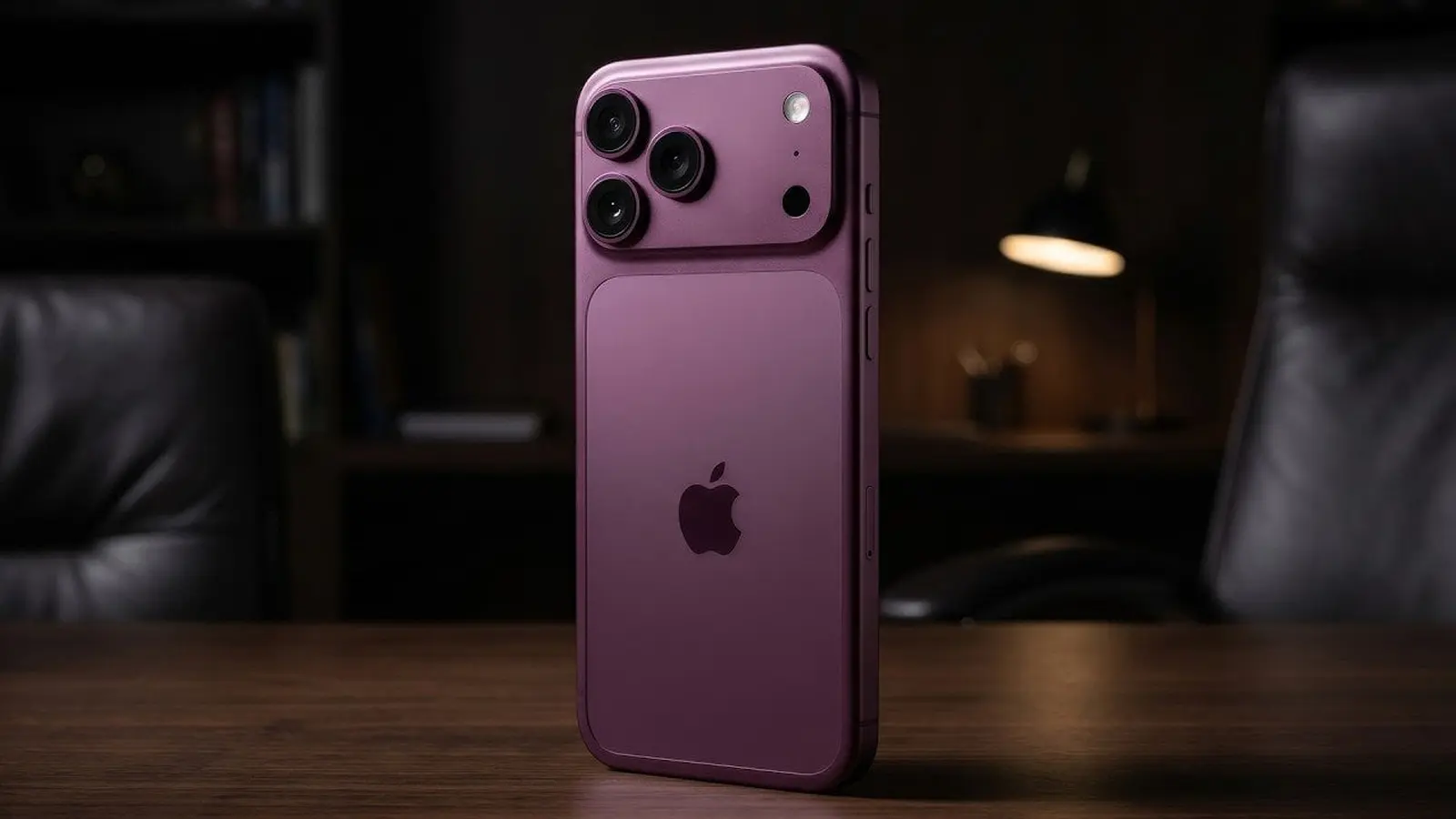
Leaks landed on Geekbench and, for once, the numbers are doing the talking. Two unreleased iPhones—identified as iPhone19,2 and iPhone19,3—posted single-core scores of 4,719 and 4,612, and multi-core runs of 12,677 and 11,819. Short version: the A20 Pro looks faster.
Average those single-core figures and you get roughly 4,665. Multi-core averages land near 12,248. Against the iPhone 17 Pro generation, that translates to roughly a 21–23% uplift across both single- and multi-core runs. That’s a meaningful leap, especially when you factor in that the A20 Pro is reportedly fabbed on a 2nm process—a technical advance that should shave power draw even as clocks climb.
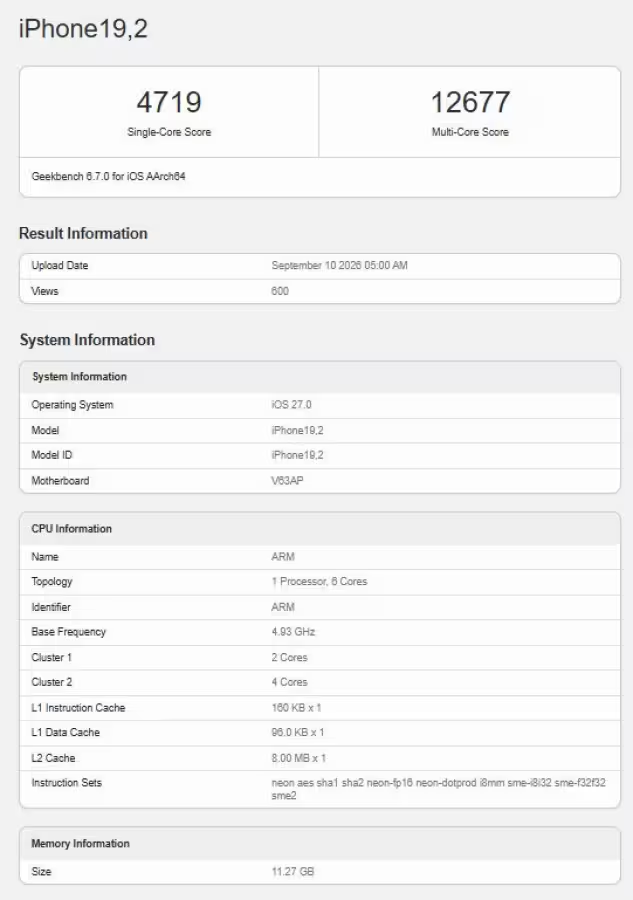 | 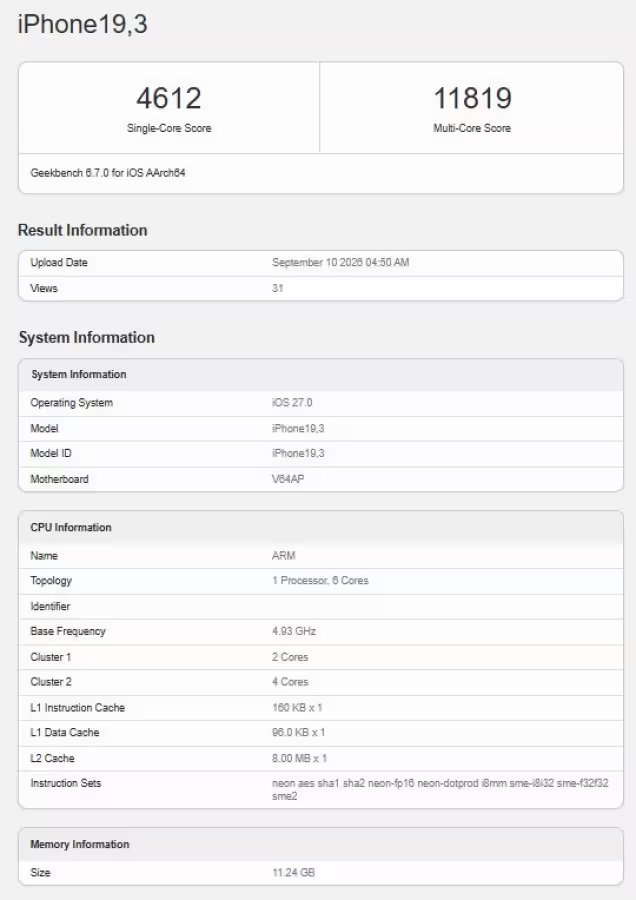 |
iPhone 18 Pro and iPhone 18 Pro Max on Geekbench
Speaking of clocks: Geekbench traces suggest the A20 Pro can peak around 4.93GHz. The test phones show 12GB of RAM and were running iOS 27, which Apple plans to ship on September 14. Small details, but they matter when you want a sense of how real-world performance might feel during heavy multitasking or sustained workloads.
How does Apple stack up to rivals? The MediaTek Dimensity 9600 shows a single-core score of about 4,139 and a multi-core near 13,285—so it falls behind on single-thread speed but nudges ahead on multi-core. Those mixed results underscore how different silicon architectures prioritize threads, frequency, and efficiency in distinct ways.
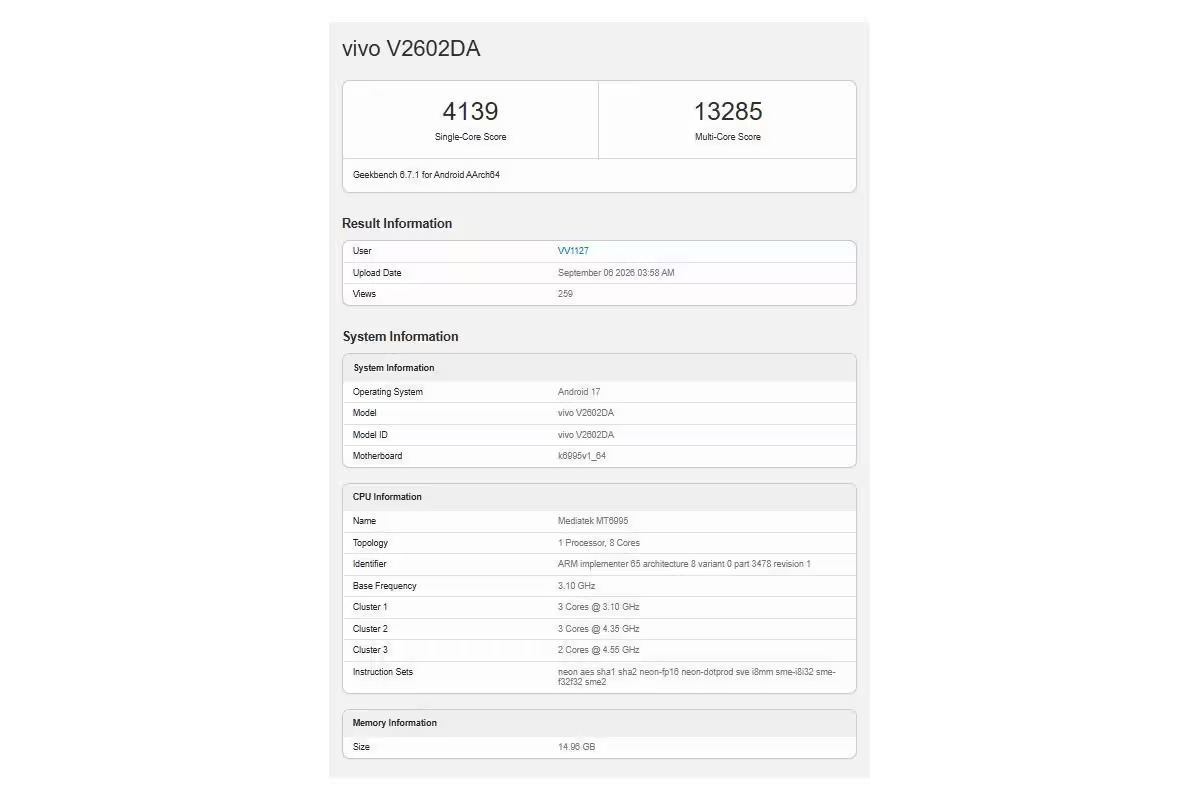
MediaTek Dimensity 9600 on Geekbench
There are also whispers about the Snapdragon 8 Elite Gen 6, but the figures floating around are inconsistent—different Geekbench versions, suspiciously low results, or missing context. Benchmarks without uniform testing conditions are like comparing bikes on different racetracks: you can try, but the conclusions will be shaky.
These Geekbench scores are encouraging for Apple, but they come from prototype hardware and varied test environments—so don’t start declaring a definitive winner yet.
Patience wins here. Official reviews and standardized benchmarks will arrive once MediaTek and Qualcomm ship their final silicon later this month. Until then, the A20 Pro looks like a genuine step forward—but the story isn’t finished.

Leave a Comment
Comments
No comments yet. Be the first.