
3 Minutes
Picture this: a Mac launch that doesn't follow the script. No flashy line-up of Pro and Max chips. Instead, a single base silicon arrives first, and the heavy hitters show up later with an AI-first agenda. That, according to reporting from industry sources, appears to be Apple’s next move.
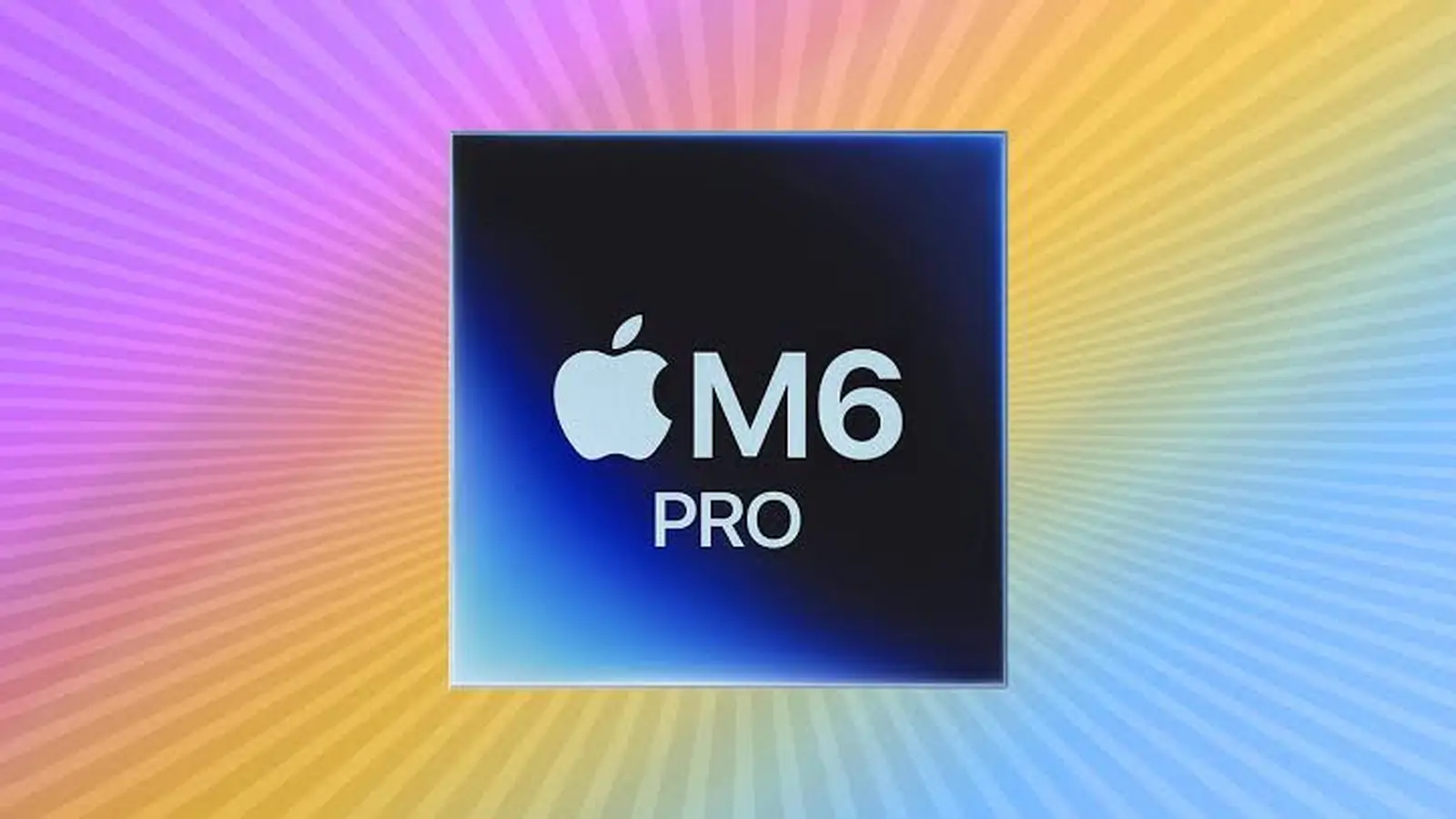
The company is said to be trimming the M6 family down to a single, entry-level chip. Expect the plain M6 to end up in refreshed 14-inch MacBook Pros and other lower-tier models, while Apple skips building M6 Pro and M6 Max variants entirely. It’s the sort of strategic detour that signals a bigger change than a mere product shuffle.
Under the hood, the M6 looks like a meaningful technical leap. The chip is rumored to be Apple’s first built on TSMC’s 2nm node, replacing the 3nm process used in recent generations. Memory bandwidth is expected to climb to roughly 200GB/s, up from about 153GB/s on the M5. Engineers reportedly reworked memory architecture, boosted CPU speeds across all cores, upgraded the Neural Engine, tightened up video encode/decode blocks, and pushed the GPU to as many as 12 cores instead of 10.

But the real pivot is what comes next: the M7 family. Apple’s roadmap now apparently emphasizes a broad M7 lineup—M7, M7 Pro, M7 Max and an M7 Ultra—designed around stronger on-device AI performance and beefed-up graphics. Early figures point to about 240GB/s of memory bandwidth on the standard M7, a sign that Apple intends to lean heavily into workloads that need both memory throughput and specialized AI silicon.
Meanwhile, legacy plans haven’t vanished entirely. There are still tests for an M5 Ultra aimed at future Mac Studio hardware. That variant is reportedly being evaluated with configurations as extreme as 36 CPU cores, 80 GPU cores and support for up to 768GB of unified memory—numbers that read like a high-performance workstation on a chip.
Why change course now? Some of it is practical. Moving advanced transistor improvements forward—and prioritizing the blocks needed for machine learning and complex graphics—can shorten the time to market for AI-capable machines. It also concentrates R&D where Apple thinks demand will surge: local AI inference, real-time video and graphics workloads, and pro apps that benefit from tighter integration between neural engines and GPUs.
That shift has product implications. Consumers might see a narrower two-tier rollout this cycle: accessible machines powered by a refined M6, and later, premium systems that arrive with a dramatically different focus. Developers, meanwhile, get a clearer signal: optimize for on-device AI and unified memory throughput, because that’s where future Macs are headed.
Apple is betting that by putting AI at the center of silicon design, it can define the next era of Mac performance.
There’s still a lot to prove—yields on 2nm, real-world gains from the new memory design, and whether the staggered release will satisfy pro buyers. But one thing feels certain: Apple’s chip roadmap is evolving from iterative speed bumps into a deliberate reorientation around machine intelligence and graphics muscle. Keep an eye on the next few Mac cycles; the chips will tell the story.













Leave a Comment
Comments
No comments yet. Be the first.