

CLARITY Act faces an uphill legislative climb
The CLARITY Act — a high-profile bill aiming to set federal rules for cryptocurrencies, stablecoins and blockchain-based services — still lacks a clear path to becoming law before the U.S. midterm elections, according to research from investment bank TD Cowen. While Senate leaders are preparing to begin procedural steps in mid July, the legislation confronts political, procedural and policy obstacles that could delay or derail a vote on the Senate floor.
Senate timing and procedural outlook
TD Cowen’s Washington Research Group says Senate Majority Leader John Thune is expected to start the formal process for the CLARITY Act in the week of July 13, which could put a floor vote on the calendar either that week or during the week of July 20. But managers at the bank caution that unresolved disputes could push any final action past key congressional deadlines.
Critical July timelines
Analyst Jaret Seiberg identifies July 24 as an important internal deadline before the House departs for its August recess. If Congress fails to advance the bill before that date, TD Cowen questions the likelihood of moving it through both chambers and into law before the November election. Other market watchers — including Galaxy Research and JPMorgan — have similarly lowered their odds that the CLARITY Act will pass this year, citing limited legislative time and election-driven calendar pressures.

Political risks and presidential uncertainty
One major source of uncertainty is whether President Donald Trump would sign the final bill. TD Cowen notes that Republican senators may be reluctant to accept politically difficult Democratic amendments unless they are confident the president will approve the compromise. That confidence has been shaken by recent instances where Trump declined to sign bipartisan legislation he had previously negotiated, and by public statements linking approvals to other congressional priorities.
Amendments, voting dynamics and GOP math
Democrats are expected to force votes on ethics and other politically sensitive amendments. TD Cowen warns that some Republican senators — including moderates and those who are retiring — could be pivotal. The bank highlights senators such as Thom Tillis, Mitch McConnell, Bill Cassidy, John Cornyn, Susan Collins and Lisa Murkowski as potential swing votes whose positions could determine whether the GOP can block or carry certain amendments.
Ethics proposals and industry restrictions
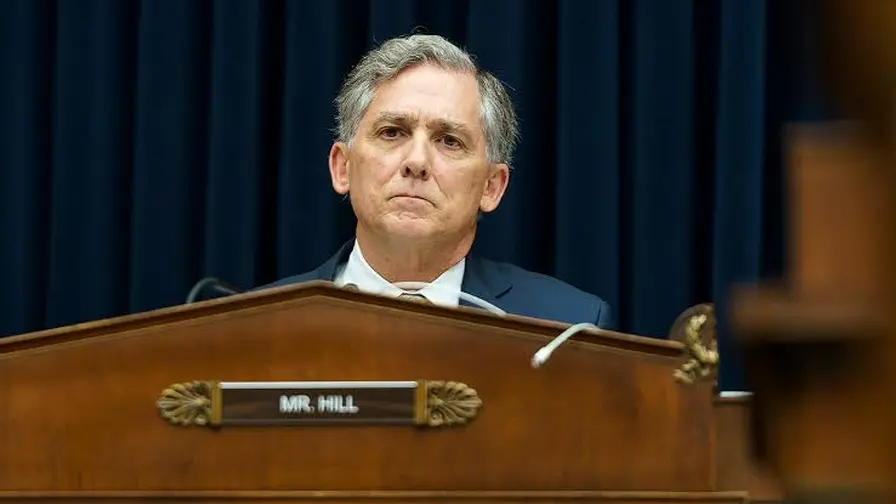
A contentious ethics proposal under consideration would bar government officials and their immediate families from owning crypto businesses — a restriction that could extend to the president. TD Cowen says Trump has not signaled a willingness to accept such limits, raising the prospect that Republicans could vote against Democratic amendments and complicate the bill’s path.
Law enforcement, AML concerns and developer protections
Beyond politics, legal and enforcement issues are prominent in negotiations. Law enforcement groups have raised concerns that Section 604 of the CLARITY Act — sometimes called the Blockchain Regulatory Certainty Act — could shield non-custodial software developers from liability, thereby hindering investigations into illicit finance. TD Cowen reports the White House is meeting with stakeholders to resolve questions about whether developers should be held accountable if their tools are later used for money laundering.
Anti-money-laundering (AML) provisions under scrutiny
Resolving AML and enforcement concerns would likely strengthen the bill’s prospects, the bank said, but those discussions remain ongoing. Law enforcement’s objections, combined with technical debates over market oversight, keep regulatory certainty for crypto software and blockchain protocols a work in progress.
Stablecoins, yields and banking opposition
The CLARITY Act’s treatment of stablecoins and yield-generating products continues to divide stakeholders. Banks have pushed back on provisions that could permit or define stablecoin yield mechanisms, while crypto firms and some policymakers advocate clearer rules to support tokenized payments and DeFi innovation. TD Cowen does not expect major changes to the bill’s stablecoin yield language at this stage, despite industry and banking resistance.
Market implications and investor takeaways
For crypto investors and market participants, the uncertainty around the CLARITY Act reinforces the need to monitor regulatory developments closely. Passage would bring federal clarity to digital asset custody, stablecoins and non-custodial software — potentially reshaping custody business models, compliance burdens and the competitive landscape for exchanges, wallets and DeFi platforms. A delay or failure to pass comprehensive federal rules could leave states and regulators to fill gaps, perpetuating regulatory fragmentation.
What to watch next
Key near-term indicators include whether Senate leaders formally file the bill and how quickly floor consideration proceeds in mid to late July. Watch for public statements from the White House about Section 604, amendments related to ethics and AML, and any signals from influential senators about their vote intentions. Market participants should also track updated probability assessments from research groups and major banks, which may adjust expectations as negotiations evolve.

Overall, TD Cowen’s assessment underscores that while momentum exists for a long-awaited federal crypto framework, the CLARITY Act’s timeline and ultimate content remain far from assured. Ongoing talks over ethics, anti-money-laundering protections, stablecoin rules and presidential support will be decisive factors for whether the bill becomes the definitive federal crypto regulation this year.

Leave a Comment
Comments (2)
Pretty balanced take - lots unresolved. If section 604 stays vague devs and law enforcement will keep clashing, states will step in. Quick thought: markets watch July 24
Is this likely to pass? feels like too many moving parts, Trump could sink it, and those AML worries are real. who wins here…