
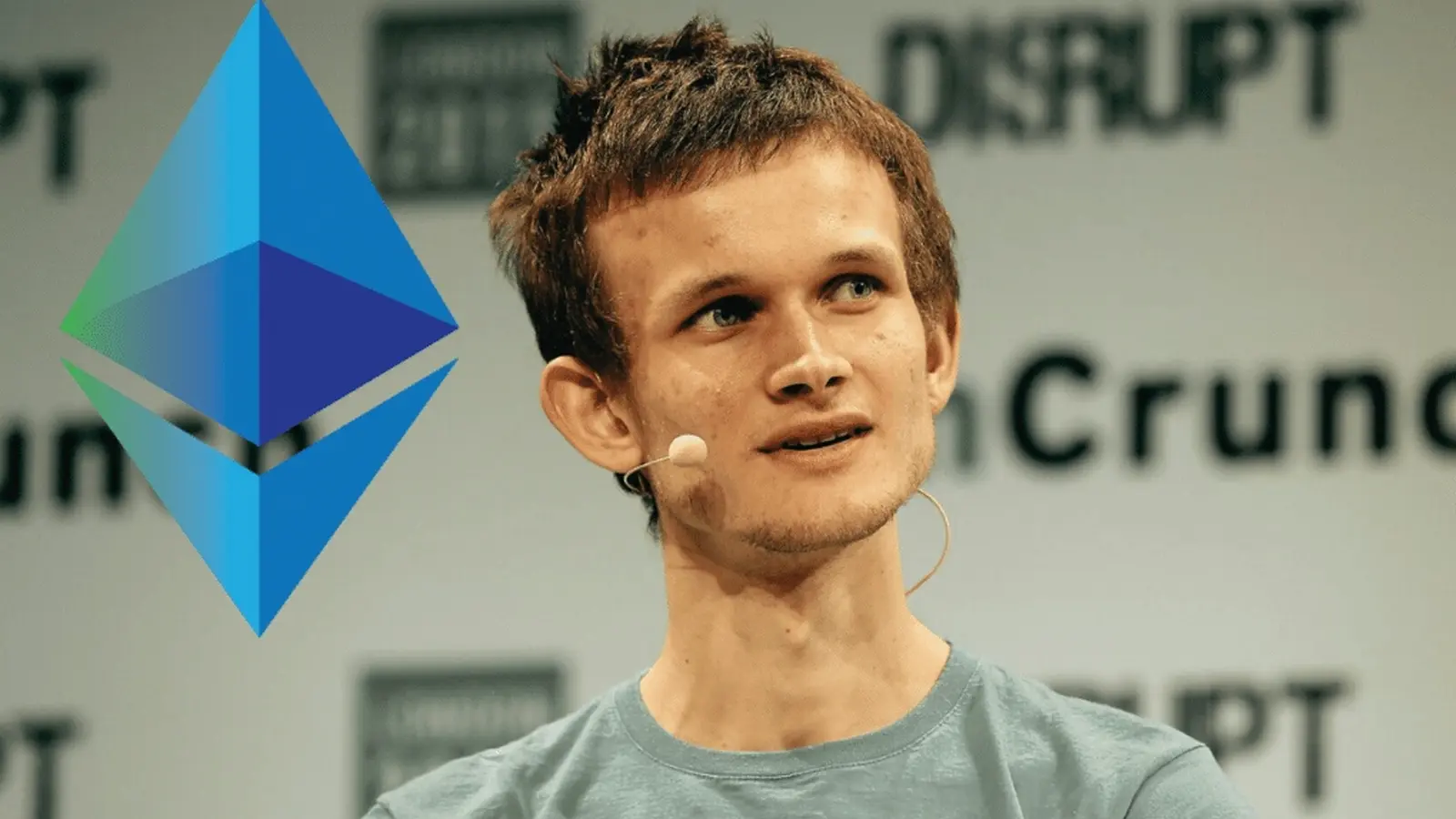
Ethereum’s evolution beyond the blockchain label
Ethereum is shifting toward what co-founder Vitalik Buterin describes as a "cryptographic world computer"—an architecture that blends consensus-led ordering with advanced cryptography, privacy tooling, proof systems and decentralized off-chain computation. This transition, driven by upgrades such as Hegotá and a multi-year research roadmap, aims to change how verification, transaction inclusion, privacy and state management work across the network. The result could be an Ethereum that preserves trustless guarantees while lowering hardware costs for verifiers and enabling quantum-resistant cryptography and richer account models.
What does "cryptographic world computer" mean?
Buterin's term captures a design where Ethereum's base layer focuses on canonical ordering and small, verifiable state transitions, while heavy computation, large signatures and historical storage move into cryptographically verifiable components that need not be replayed by every node. The approach pairs blockchain consensus with zero-knowledge proofs, sampling-based data availability, signature aggregation and decentralized off-chain services. In short, the chain remains the single source of ordering and finality, but much of the workload becomes provable and distributable—enabling a more scalable, private and quantum-ready platform.
Where Hegotá fits into the long-term roadmap
Hegotá (also written Hegota in some materials) is positioned as a pivotal upgrade on Ethereum's timeline. While its exact scope remains under development, Hegotá is being treated as the last upgrade that will look familiar to engineers used to the Ethereum of 2015–2025. Subsequent changes are expected to pivot the network toward proof-centric verification and redesigned consensus mechanics.

Key features scheduled for Hegotá
Two major proposals earmarked for Hegotá are FOCIL (EIP-7805) and Frame Transactions (EIP-8141). Both are designed to strengthen censorship resistance, expand account flexibility and prepare the protocol for post-quantum signature schemes.
FOCIL and transaction inclusion
FOCIL introduces a mechanism whereby validators publish inclusion lists that block builders must honor. Instead of a single builder deciding which valid transactions to include—opening the door to censorship—FOCIL disperses inclusion authority across multiple validators. The result should be stronger censorship resistance, better Layer 2 settlement guarantees and a more robust transaction inclusion process aligned with Ethereum's decentralization goals.
Frame Transactions and account-level flexibility
Frame Transactions let accounts define their own authorization logic rather than relying on a single, fixed signature format. That enables social recovery wallets, on-chain spending limits, sponsored gas payments and the ability to adopt quantum-resistant signature schemes at the account level without forcing a network-wide migration. This feature is crucial to the network's long-run plan for post-quantum security and more expressive account models.
Verification: moving from full re-execution to proofs and sampling
One of the most consequential shifts Buterin and other researchers foresee is how nodes validate chain history and new blocks. The legacy model—download every block, execute every transaction and re-run the entire state transition—scales poorly as cryptography and application complexity grow. The planned path replaces much of that redundant work with cryptographic proofs and data sampling.

PeerDAS and data availability sampling
PeerDAS, introduced through Fusaka, permits nodes to check data availability by sampling parts of a dataset rather than downloading every blob. This sampling approach reduces bandwidth and storage burdens for verifying nodes while preserving trust assumptions—nodes can still detect missing or withheld data without full downloads. PeerDAS thus becomes a foundational component of a proof-based verification stack.
Recursive STARKs and SNARK verification
Recursive proof systems like STARKs are central to plans to reduce repeated execution. Ethereum's Lean rebuild emphasizes recursive STARKs to compress proof work across many transactions, enabling verifiers to trust succinct proofs instead of re-executing heavy computations. Combined with SNARK verification for certain use cases, the network can shift from "download and re-execute" to "sample data and verify proofs," lowering hardware requirements for strong verification guarantees.
EIP-8288 and in-mempool aggregation
EIP-8288, a draft co-authored by Buterin and Thomas Coratger, envisions aggregating cryptographic signatures and STARK proofs inside the mempool. The idea is to let mempool nodes combine multiple signatures and proofs into a single recursive STARK before sending the package to builders. Builders would then include an aggregated proof instead of lots of large individual proofs—reducing bandwidth and gas overhead, especially for post-quantum signatures that tend to be larger.
Why mempool aggregation matters
As Ethereum moves toward quantum-resistant primitives such as LeanSPHINCS for signatures and lean STARK constructions for proofs, the raw size and computational costs of cryptographic objects could increase. Aggregation inside the mempool helps amortize those costs, enabling large-scale use of post-quantum cryptography without prohibitive on-chain resource consumption.
Privacy and private mempools
Privacy enhancements are being developed in parallel with consensus and verification changes. Research into encrypted mempools, onion routing, mixnets and zero-knowledge transaction privacy aims to reduce network-level leakage and improve user confidentiality. In future flows, transactions could enter privacy-preserving mempools, then move through FOCIL-style inclusion lists or builders that respect those privacy constraints while still meeting protocol rules.
Consensus redesign: Lean Ethereum and faster finality
Consensus is another major area of active research. The Lean Ethereum program revisits finality and slot design, moving toward simpler and faster finality models than those currently used in proof-of-stake. Work that began on single-slot finality evolved into three-slot designs and then into Minimmit, a one-round consensus candidate within Lean Ethereum research.
Target finality timelines
Long-range research targets aim for much faster finality—on the order of seconds rather than multiple epochs. Some projections put slot lengths in a four- to eight-second range, with finality reachable in roughly eight to 32 seconds under an optimistic 2030 model. These remain research goals and are subject to change, but a move to quicker, simpler finality would materially improve user experience for payments, L2 rollups and general dApp responsiveness.

Quantum resistance by 2029
The Ethereum Foundation has publicly targeted December 2029 for quantum resistance across execution, consensus and data layers. This aggressive timetable reflects planning assumptions that cryptographically relevant quantum machines could appear as early as 2030. The transition involves replacing or supplementing primitives vulnerable to quantum attacks—BLS validator signatures, ECDSA account signatures, KZG commitments and some ZK systems are under review.
Mitigations: account-level migration and aggregated proofs
Frame Transactions make it possible for wallets to opt into quantum-resistant verification schemes without forcing a single, universal account migration path. EIP-8288’s aggregation and recursive STARK techniques reduce the bandwidth and gas cost of larger post-quantum signatures. Taken together, these features make a practical migration to post-quantum cryptography more achievable.
Decentralized off-chain components and distributed history
Buterin’s architecture emphasizes keeping only what the L1 must have on-chain: canonical order, small verifiable state transitions and finality. Heavy or specialized computation, large historical datasets and some state storage can be moved off-chain into decentralized services that produce cryptographic proofs of correctness. This allows the chain to verify outputs without redoing every computation, improving scalability while retaining strong trust assumptions.
Specialized compute and proof verification
Under this model, specialized nodes or services may compute complex operations—like multi-party off-chain computation, advanced analytics or machine-verified proofs—and then submit succinct, verifiable proofs to the chain. Validators and light clients then need only validate those proofs rather than re-executing the entire workload, accelerating throughput and enabling new classes of L2 designs and privacy-preserving applications.
Longer-term, speculative technologies
Some technologies Buterin mentions sit further in the future, such as indistinguishability obfuscation (iO) for encrypted multi-party computation. These are speculative and not required for the near-term architecture, but they point to a future where generalized encrypted computation across many asynchronous participants could become practical when combined with strong proof systems and improved consensus.
What to watch next: Glamsterdam, Hegotá and beyond
Ethereum’s immediate milestones remain Glamsterdam and Hegotá. Glamsterdam is due before Hegotá and focuses on testing and risk mitigation. Hegotá’s current proposals include FOCIL and Frame Transactions; additional proposals and research continue through governance and testing phases. Beyond Hegotá, the network is expected to pursue proof-based verification, recursive STARK aggregation, Lean consensus plans and quantum-resilient cryptography as multi-year goals.
Implications for developers, validators and users
Developers should prepare for new account models, on-chain authorization flexibility and the future availability of aggregated proofs and in-mempool preprocessing. Validators and node operators will see changes in verification tooling and data availability sampling, potentially lowering hardware requirements for full verification. End users stand to benefit from stronger censorship resistance, faster finality and improved privacy—alongside a long-term push toward quantum-resistant security.
Conclusion
Ethereum’s roadmap is increasingly centered on cryptographic engineering: proofs, aggregation, sampling and privacy. Hegotá is being framed as a turning point between the network’s earlier architecture and a future dominated by succinct verification and decentralized off-chain components. If the research and upgrades succeed, Ethereum could become a more scalable, private and quantum-resilient platform—truly embodying the idea of a cryptographic world computer rather than just a traditional blockchain.

Leave a Comment
Comments (1)
wow crypto nerd in me is shook, but this actually feels huge. If L1 just orders and proofs do the rest, fees down, privacy up? still nervous about who runs the offchain bits tho