
3 Minutes
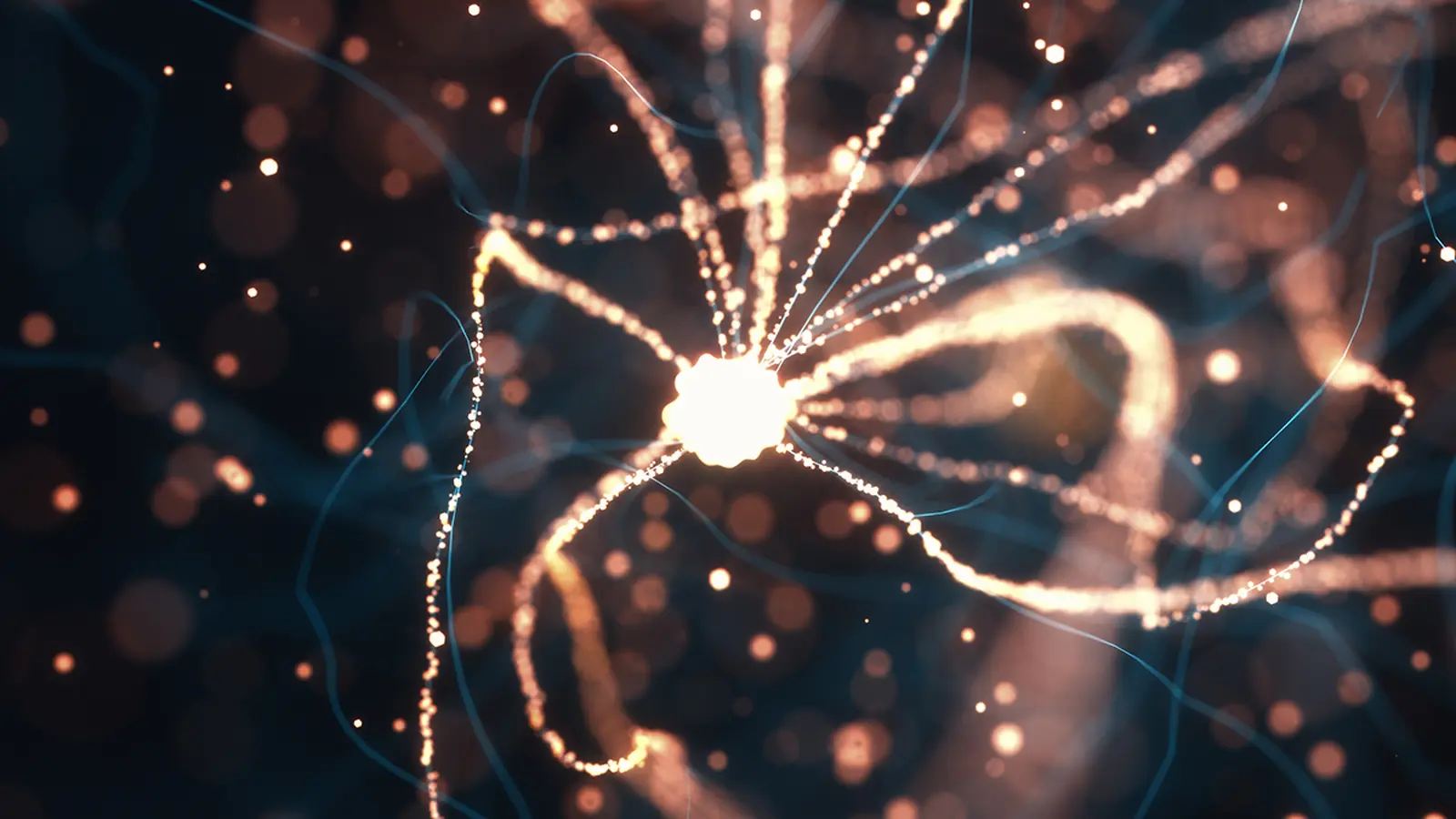
Imagine a library where the books fall apart from the spine first — the words remain, but the structure that holds them disintegrates. That is what scientists are now seeing inside neurons affected by Alzheimer’s and some other dementias: the cell’s nucleus collapsing from within.
Researchers at King's College London traced this collapse to a little-known process called karyoptosis, a pathway in which the nucleus, the command center of the cell, literally unravels. They watched the sequence unfold in lab-grown neurons from rats and humans, and then checked postmortem brain samples to see how often it happens in real disease.
The trigger is painfully familiar to dementia researchers: protein waste piling up faster than neurons can clear it. But the mechanism that turns that biochemical jam into a physical meltdown is new. An enzyme, p38 MAP kinase, tags a structural nuclear protein called LaminB1 for destruction. Once LaminB1 is compromised, the nucleus loses its scaffolding, crumples and spills its inner contents. The cell follows soon after.
Short sentence. Big consequence.
Crucially, when the team blocked p38 MAP kinase in their cell experiments, the neurons still accumulated toxic proteins — but the nuclear collapse was delayed. In plain terms: you can’t stop the traffic jam, at least not yet, but you can keep the bridge from falling down while you clear it.

Nuclei that show signs of karyoptosis (right) are more shriveled.
Functional genomicist Manolis Fanto notes that targeting the interaction between p38 MAP kinase and LaminB1 could buy time for more precise therapies aimed at the underlying causes of specific neurodegenerative diseases. Time, in this context, is everything.
The human data sharpen the picture. The researchers examined roughly 3,000 cortical cells from 28 donors who had died with either frontotemporal dementia or Alzheimer’s. About 35 percent of cells from the frontal cortex showed signs of nuclear collapse, compared with roughly 15 percent in age-matched controls. Those are not trivial differences. Karyoptosis could explain a substantial chunk of the neuronal loss seen in these disorders.
“The death and loss of cells in the brain drives many symptoms experienced by people living with dementia,” says neuroscientist Rebecca Casterton, who helped lead the study. Her team calls the chemical cascade they mapped a roadmap — an outline of steps that link protein clearance failure to catastrophic nuclear breakdown.
Sara Rodrigues of Alzheimer's Research UK, which supported the work, emphasizes the practical upshot: identifying karyoptosis creates new molecular targets. If scientists can interrupt the route from toxic protein to nuclear collapse, therapies that address the root causes of disease could have a longer window to act.
The finding doesn’t pretend to explain every case of dementia. The disorders are a tangled mix of risk factors and mechanisms. But this nuclear kill switch intersects with core features of Alzheimer’s and frontotemporal dementia in a way that feels fundamental: structural collapse triggered by biochemical overload.
Stopping or slowing karyoptosis could preserve neurons long enough for disease-modifying treatments to work.
Next steps are straightforward and urgent. Test inhibitors that block p38 MAP kinase or protect LaminB1 in animal models. Measure cognitive outcomes. See whether delaying nuclear collapse slows clinical decline.
There is work ahead. There is also a new line of sight into how brain cells die — and, with it, a promising target that might turn a fatal cascade into a survivable delay.








Leave a Comment
Comments
No comments yet. Be the first.