

What if the clock on your kitchen wall matters as much as the food on your plate? A large U.S. study suggests that the times we take our first and last calories each day are tied to long-term survival — not as definitive cause, but as a strong marker worth paying attention to.
Researchers combed through dietary records from 31,044 adults aged 40 and older who participated in the National Health and Nutrition Examination Survey between 1999 and 2018. Participants described everything they ate or drank in the previous 24 hours, noting the time for each item. Any calorie after 4 a.m. counted as the day’s “first meal,” while the last reported calorie became the day’s final meal; the span between them defined the eating window. The team then linked those records to mortality data through the end of 2019.
The follow-up averaged 8.6 years. During that interval, 7,129 people died, including 2,259 from cardiovascular causes. The analysis adjusted for many potential confounders — age, smoking, physical activity, diet quality, BMI, energy intake, income and preexisting disease — yet patterns persisted once those factors were considered.
Here’s what stood out: the later the first meal, the higher the association with mortality. Compared with people who ate between 7 and 8 a.m., those who waited until 8–10 a.m. had about a 10% higher risk of dying from any cause. Waiting until 10 a.m.–noon raised that estimate to 19%, and delaying the first intake until after noon corresponded to a roughly 29% higher risk. Cardiovascular deaths followed a similar climb: beginning to eat after noon was associated with a 46% higher risk of cardiovascular death versus a 7–8 a.m. start. In practical terms, at age 50 the group that delayed their first meal past noon had an average life expectancy about 2.46 years shorter than early starters.

The timing of the last meal produced a more complicated picture. It wasn’t a simple “later is worse” slope. Instead, the relationship looked U-shaped. Finishing eating before 7 p.m. was linked to a 13% higher all-cause mortality risk compared with stopping between 7 and 8 p.m., while eating after midnight associated with a 27% higher risk. The model’s lowest risk clustered near 8 p.m. — though the authors caution that a single universal “best” dinner time is unlikely.
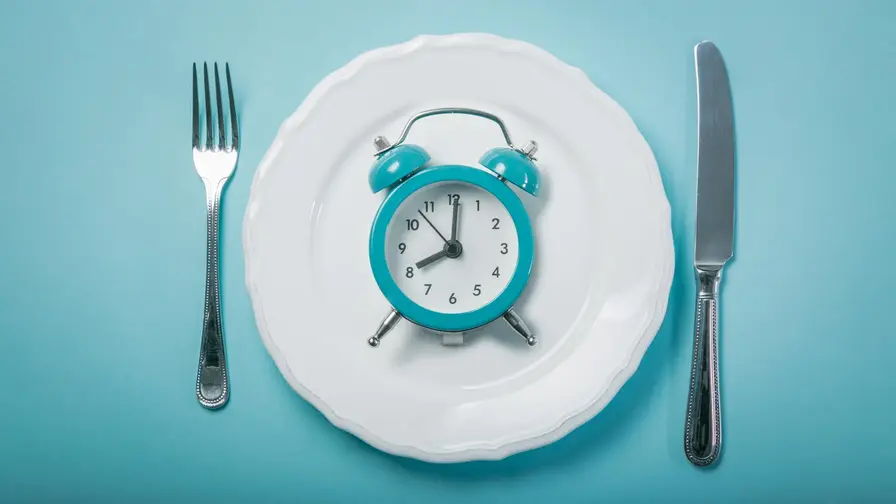
Eating late in the day or putting off the first bite until midday correlated with higher mortality in this large observational dataset.
Why might timing matter? The study’s authors point to circadian biology. Meal timing serves as a cue for peripheral clocks in organs outside the brain. Late starts and late-night eating can desynchronize those rhythms and disturb glucose and lipid metabolism. Animal work offers plausible mechanisms: altered weight regulation, fat building in the liver, disrupted local clocks in tissues and changes in how fats are absorbed. But whether those pathways explain human mortality patterns remains to be proven.
Reverse causation is a real concern. People who eat very late or very early may be doing so because of ill health, poor sleep, shift work or socioeconomic pressures. Indeed, early finishers tended to be older, ate less frequently and carried more existing illness — suggesting that the clock on their meals might reflect health or life circumstances rather than drive them.
The eating-window length — the hours between first and last intake — added nuance. Across the whole sample it showed no steady relationship with mortality once first-meal timing was taken into account. In other words, fasting duration alone may be an incomplete lens; when that window begins seems to alter its meaning.
Limitations are clear. This is observational research built largely on a single 24‑hour dietary recall at baseline, which may not reflect long-term habits. Important variables such as chronotype (whether someone is a morning or evening person), detailed sleep timing and the timing of physical activity were not fully captured and could influence outcomes despite statistical adjustments.
The authors advise caution: these findings point to potential risk markers and possibly modifiable behaviors, but they do not prove that changing your meal times will extend life. Still, they add a growing chorus of evidence suggesting that when we eat intersects with how our bodies process food and manage metabolic health.

The study was published in the European Journal of Clinical Nutrition and led by researchers at Huazhong University of Science and Technology. As science refines the links between clocks and calories, the next question is practical: how much can adjusting meal timing help, and for whom? The answer will shape both research and personal routines in the years to come.

Leave a Comment
Comments
No comments yet. Be the first.