
4 Minutes
Creases have been the telltale sign of every foldable phone. Samsung wants to make them a memory. The company teased a new internal structure it calls Flex Titanium — a slim, tougher way to build folding displays that promises fewer visible folds, flatter screens and greater longevity.
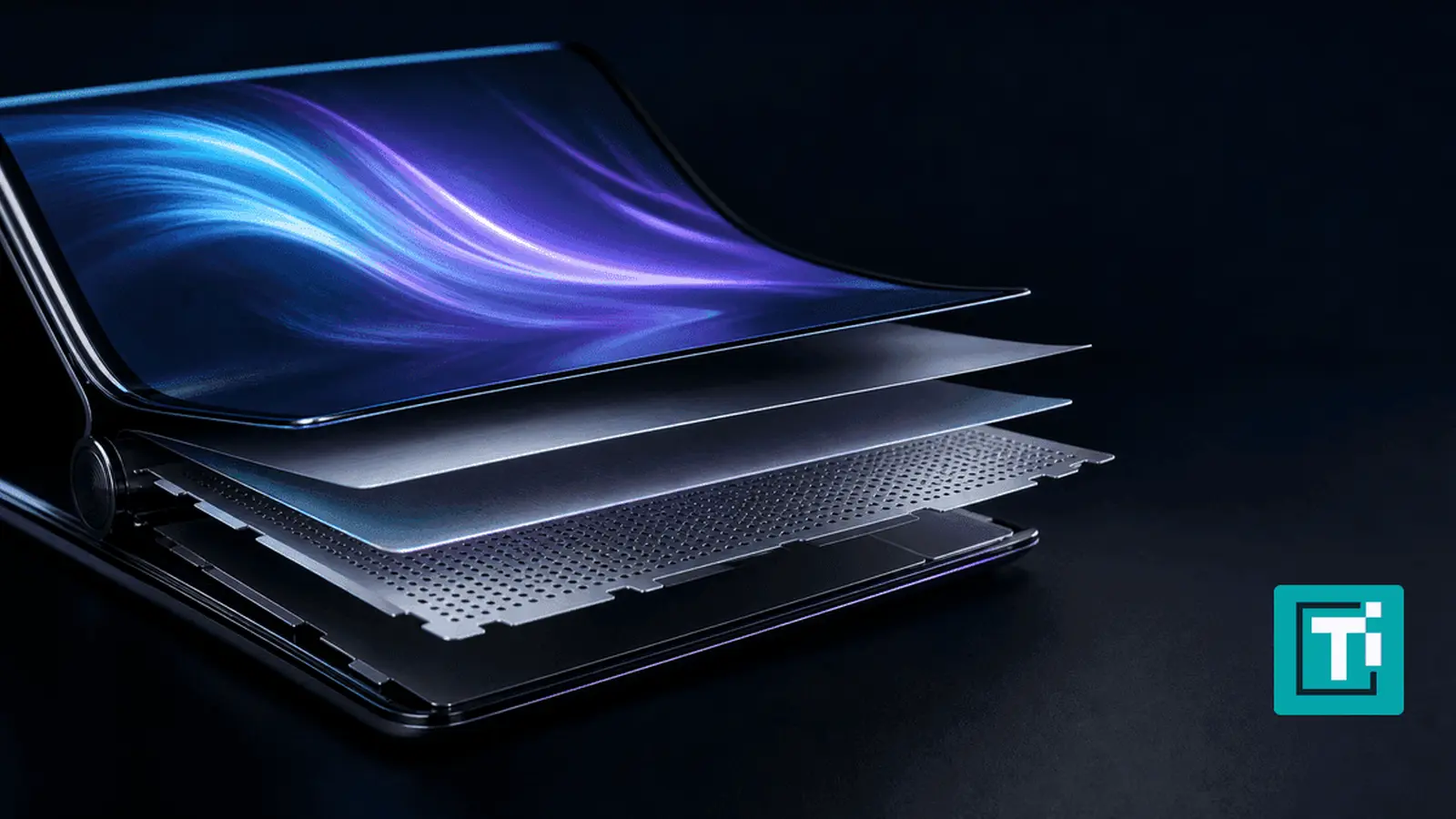
Think of it as giving the display a lightweight skeleton. The system stacks a feather-thin titanium alloy film directly under the OLED, and below that sits a flexible titanium plate that supports the whole panel. The alloy film is said to be only about one-third the thickness of a human hair, yet far stiffer than the polymer layers many older foldables rely on; Samsung claims roughly a twenty-fold increase in stiffness compared with some previous polymer solutions. The result: a display that can bend without behaving like soft plastic.
There is engineering poetry in the detail. Engineers reduced air gaps and forged a tighter bond between the display and its support plate, smoothing the surface and cutting down on the visual wrinkle that appears where most phones fold. Micro-patterned holes in the folding region of the titanium plate supply the flexibility engineers need while maintaining structural durability. Small changes. Big payoff.
Durability is more than marketing copy here. Samsung frames Flex Titanium as a solution for displays that must survive hundreds of thousands of folds and the knocks of everyday life. That matters if foldables are to move from novelty to daily-driver status. A flatter panel not only looks better; it also improves touch feel, reduces reflection artifacts and can help efficiency when paired with optimized organic materials in the display stack.
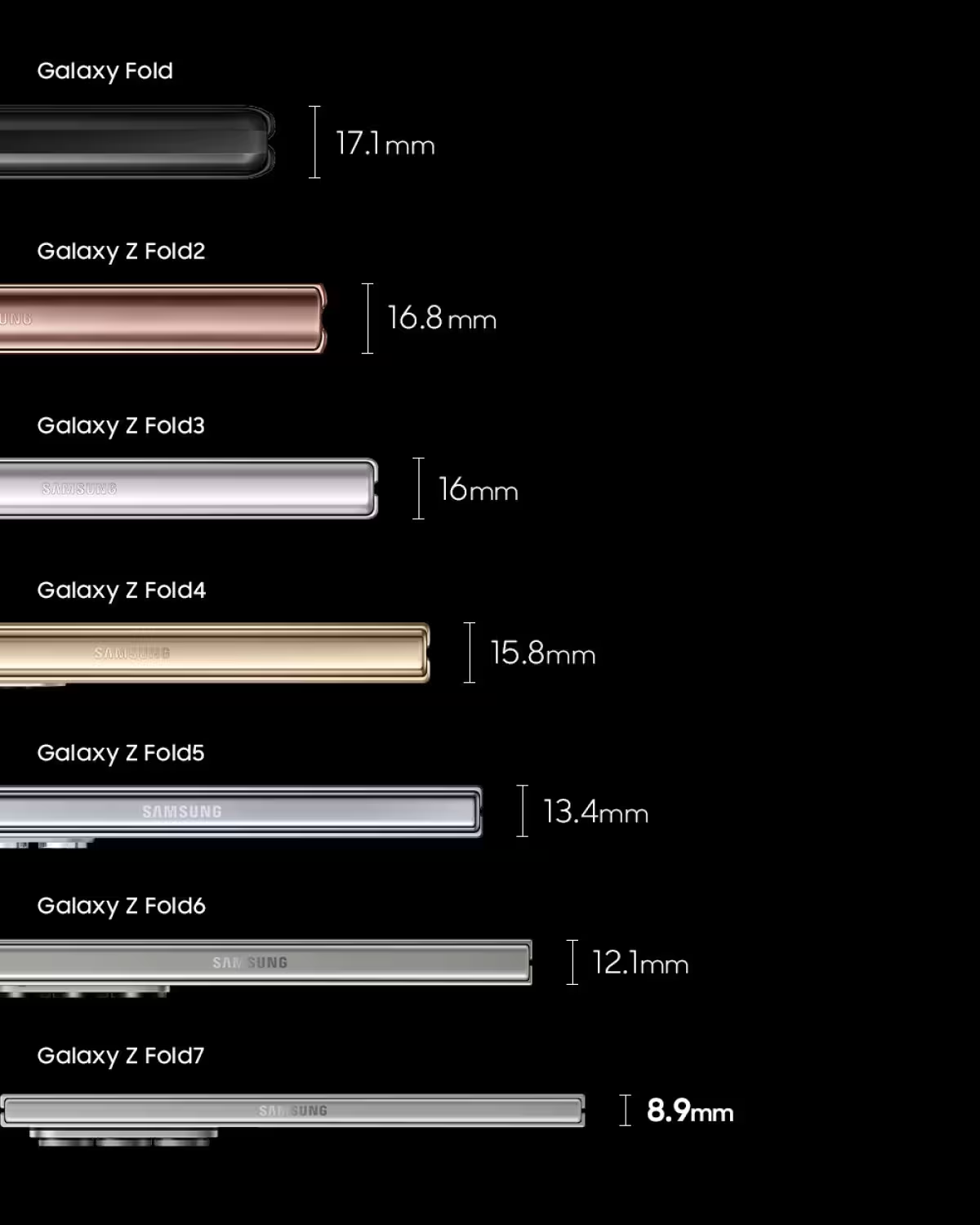
This update follows a steady string of incremental improvements. The Galaxy Z Fold7 already introduced a third-generation Armor FlexHinge that was 27% thinner and 43% lighter than the hinge inside the Z Fold6. Flex Titanium builds on that same philosophy: strip away bulk, add smart materials, and let design and durability reinforce one another. Titanium is an awkward partner to work with — tough, light, but notoriously difficult to shape at the scales modern displays demand — which is what makes this iteration noteworthy.


Why titanium? Why now? As manufacturers push for ever-thinner screens and higher durability targets, materials that combine stiffness with low mass become attractive. Titanium fits the bill: it brings rigidity without sensing like a slab of metal under your thumb. By rethinking where and how the material sits in the display module, Samsung looks to keep foldables thin while shrinking the crease and improving shock resistance.
There’s also a practical payoff for users. A tighter bond between the OLED and its support plate minimizes the tiny air pockets that can degrade image uniformity. That means richer-looking displays across the unfolded canvas and fewer annoyances when the screen is handled or pressed. In short: better pictures, fewer quirks, and a device that feels more like a refined instrument than a prototype.
Samsung rolled this preview out ahead of Galaxy Unpacked in London, where the company hinted at a fresh shape as well as the material update. The event’s tagline, A New Shape Unfolds, and surrounding rumors point to a wider, book-like foldable that sits somewhere between the compact Z Flip and the full-size Z Fold. If the hardware inside matches the ambition outside, this next-generation device could finally answer many of the complaints early adopters have lodged against foldables.
There are still questions. How much will this add to manufacturing cost? Will repairability suffer when a thin metal film replaces more forgiving polymers? Samsung’s teaser gives a technical roadmap, not a full user experience. But the move toward titanium-backed displays signals a clear intent: foldables are shedding compromises and gearing up for mainstream life.
The crease may not disappear overnight, but with Flex Titanium Samsung has handed the foldable category a credible new tool. If executed well, it could be the change that makes folding phones feel less like fragile experiments and more like the future of pocket-sized computing.

Leave a Comment
Comments (2)
How much will this jack up the price? And repairability? Thin metal film plus a drop = messy, right??
whoa, if this actually kills the crease im sold. Titanium sounds like legit magic, but repair costs worry me…