
5 Minutes
Airbus to pilot open-fan engines as aviation seeks fuel gains
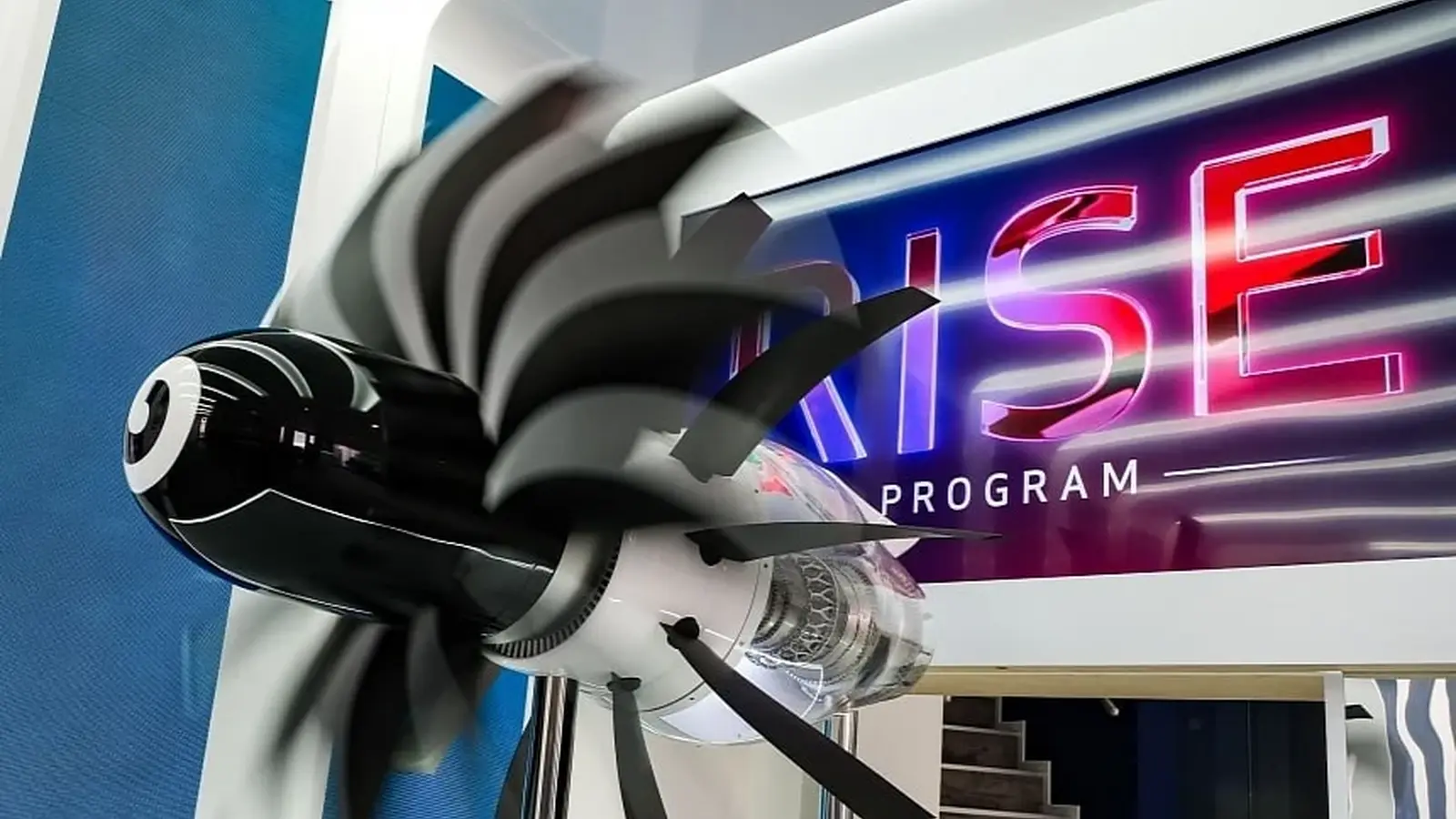
Airbus has agreed to take the lead in flight-testing an open-fan jet engine concept developed under the RISE (Revolutionary Innovation for Sustainable Engines) program. Conceived by CFM International — the GE Aerospace and Safran Aircraft Engines joint venture — the open-fan layout moves the fan blades outside the protective nacelle to increase bypass ratio, cut drag and slash fuel burn. For a world projected to need roughly 40,000 new commercial aircraft over the next 20 years, most of them single-aisle types, innovations like this could reshape the next generation of narrowbody jets.
What happened in testing so far?
After an initial wind-tunnel prototype run more than two years ago, CFM and Safran quietly accelerated validation work. According to recent updates from GE Aerospace, engineers completed more than 350 component tests and over 3,000 endurance cycles on core engine parts. Wind-tunnel exposure alone totaled about 200 hours, and the program included the earliest dust-ingestion trials ever run in a CFM initiative — a key step when you expose fan hardware directly to the airstream.

The structured test campaign moved from single-piece validation to module and system-level durability checks. No public setbacks have been announced; instead, the consortium now eyes an in-flight demonstrator by the decade’s end, working with Airbus to package the powerplant on an actual airframe.
How the open-fan differs — and why it matters
Traditional turbofan engines tuck massive fans inside a circular nacelle. Higher bypass ratios — more air moved around the core versus through it — are central to improved thermal efficiency and lower fuel consumption. But nacelle diameter and aircraft aerodynamics impose practical limits on fan size. The open-fan architecture sidesteps that constraint by putting large fan blades in the free airstream, enabling a much larger effective fan diameter without awkward or heavier nacelles.

Benefits include:
- Higher bypass ratios and reduced specific fuel consumption
- Lower external drag by redirecting flow around a compact core
- Cooler core temperatures and potentially longer component life
- Easier ejection paths for debris and dust, reducing erosion and deposit formation
CFM’s RISE target is ambitious: about a 20% reduction in CO2 and fuel burn compared with today’s most efficient single-aisle engines. When combined with sustainable aviation fuels (SAF) or hydrogen, engineers project far deeper cuts in lifecycle emissions — industry scenarios speak of up to an 80% reduction under ideal pathways.
Materials, architecture and parallels with automotive tech
The open-fan demonstrator uses carbon-fiber composite fan blades, metal alloys and ceramic parts around a compact, high-performance core. These choices mirror trends in high-performance automotive powertrains: lightweight composites to reduce mass, advanced alloys for thermal resilience, and ceramics for high-temperature components.

Car and motorsport enthusiasts will recognize familiar trade-offs: increased complexity in component integration and cooling (thermal management) for a big efficiency payoff. The idea resembles how modern car designers pair downsized, forced-induction engines with electric support — here, turbofan designers explore hybrid-electric auxiliaries to help during certain flight phases.

Electrification, hybrid systems and system integration
RISE isn’t only about exposed blades. CFM has also partnered with NASA to test ground demonstrators of a narrowbody hybrid-electric architecture, integrating electric motors with a high-bypass turbofan. Those trials validated control strategies and motor integration that could be applied alongside an open-fan layout, enabling transient power boosts, improved taxi efficiency or reduced fuel use on climb.
From a vehicle-systems perspective, combining an open-fan with electric assist is analogous to hybrid powertrains in cars: the combustion core handles cruise efficiency while electric systems manage peaks and low-speed operation, improving overall fuel economy and reducing emissions.
Performance, maintenance and market positioning
Exact performance numbers beyond the headline fuel and emissions targets are still evolving because the open-fan blades haven’t yet been mated to a flight-certified core on a real aircraft. But the preliminary lab and wind-tunnel work suggest:
- Significant improvements in fuel economy for single-aisle aircraft
- Potential for lower maintenance costs in some areas due to reduced deposit buildup
- New maintenance and inspection regimes because external blades are exposed to foreign object damage (FOD) differently than enclosed fans
For airlines and manufacturers, positioning will be critical. Early adopters could tout major operational savings and sustainability credentials — strong selling points in a market driven by fuel price volatility, emissions regulation, and passenger expectations for greener travel.
Industry implications and timeline
If flight tests later this decade prove the concept, open-fan engines could enter certification and entry-into-service programs in the 2030s, coinciding with many airlines’ fleet renewal cycles. That timing makes the technology commercially relevant: single-aisle jets are the backbone of global short-to-medium-haul networks, and any meaningful efficiency gains translate directly to cost and carbon savings at airline scale.
The move also shows how aerospace innovation increasingly mirrors trends in the automotive sector: cross-disciplinary use of lightweight composites, electrification, hybridization and a stronger focus on lifecycle emissions.
Key takeaways
- The RISE open-fan concept offers up to ≈20% fuel burn reduction compared to today’s best single-aisle engines, with deeper emissions cuts when paired with SAF or hydrogen.
- CFM’s test program logged 350+ tests, ~3,000 endurance cycles and 200 hours in wind tunnels; Airbus will help progress to airborne demonstration.
- Materials and hybrid-electric control work draw clear parallels with modern automotive powertrain trends: lighter materials, thermal management and electrified assistance.
"It's not a backward step toward propellers," engineers note — rather, it’s a rethinking of how to move large volumes of air more efficiently. For car fans who appreciate engineering trade-offs, the open-fan story is another reminder that propulsion is entering a new era where aerodynamics, materials science and electrification converge.
We’ll follow the RISE program closely as wind-tunnel prototypes give way to flight demonstrations. When open-fan engines move from laboratory hardware to certified powerplants on commercial jets, the ripple effects will be felt across aviation — and in the design conversations shared by engineers in both the aerospace and automotive worlds.


Leave a Comment
Comments (2)
Feels a bit overhyped, but 20% is huge if real. Hope the FOD and certification headaches dont get buried, airlines will ask tough Qs.
Open fan looks like a game changer, but is exposing blades safe in dusty airports? maintenance costs, FOD risk, maby they have tricks but curious.