
6 Minutes
Auto.m: a compact Level 5 autonomous taxi with real market potential
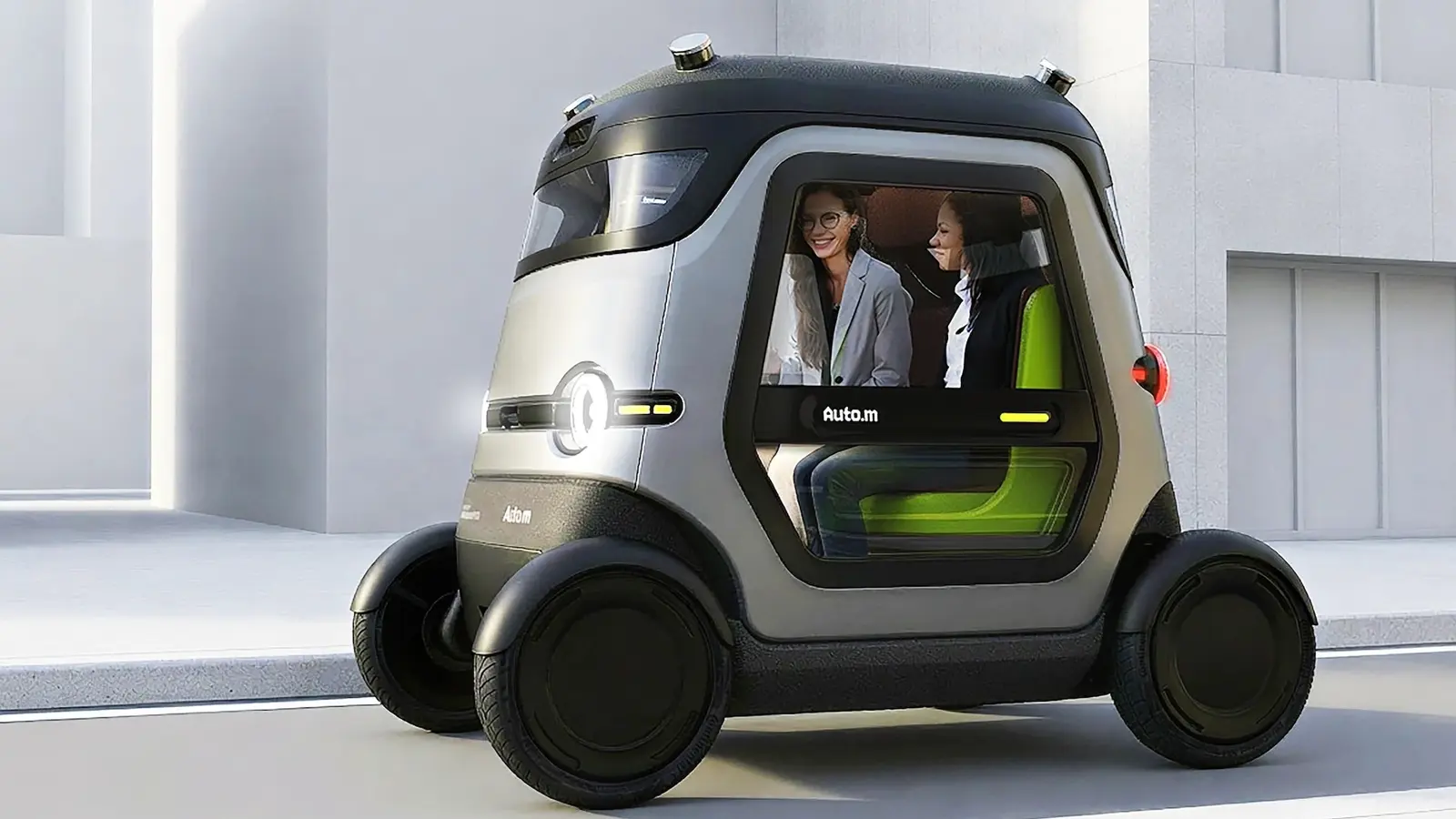
Cities are being reshaped by new mobility models, from shared e-bikes to microcars. The Auto.m concept, designed by Alejandro Otalora, sits squarely in the autonomous taxi category and aims to redefine short urban trips. The project, a personal design effort from the Head of Global Design & Product Innovation at robot.com, was conceived in 2019 and unveiled in 2026. Its recent win of the 2026 Red Dot Award confirms strong industry recognition and elevates its visibility among potential investors and operators.
Why the Red Dot matters for the Auto.m
Winning a Red Dot Award is more than a design trophy. It signals that a concept has excellence in form, function, and user experience. For Auto.m, the award amplifies credibility: it suggests the design has been vetted by specialists and stands a chance of moving from render to road if backed by production funding or a mobility operator.

Design and dimensions: small footprint, big ambition
Auto.m focuses on compactness and interior space efficiency. The concept measures just 225.8 cm long, 160.6 cm wide, and 182.5 cm tall. Those dimensions place it in the same micro-EV family as the Renault Twizy, Citroën Ami, and the historic Fiat Topolino in spirit, but with a modern, autonomous-first twist.
The exterior adopts a vertical, tower-like silhouette to maximize interior volume while keeping a tiny road footprint. This upright stance may polarize opinions — some observers note a Dalek-like appearance — but it also prioritizes visibility, curb-side boarding, and efficient packaging for urban trips.

Minimalist interior aimed at passenger comfort
Because Auto.m targets full autonomy, there is no conventional driver cockpit. No steering wheel, no instrument cluster. Instead, occupants are greeted by a simple two-seat layout and an interactive digital interface driven by an onboard AI assistant. The focus is on a calm, spacious cabin where passengers can relax, work, or even nap while the vehicle handles navigation and traffic.
Highlights:
- Seating for two with lounge-style comfort
- AI assistant integrated into the infotainment and trip management
- Minimal surfaces to emphasize a roomy feel despite the compact exterior
Engineering features and unique mobility ideas

Several speculative but intriguing design choices make Auto.m stand out. The concept proposes adjustable wheel modules that can pivot and reposition, enabling ultra-tight turns and extreme parking flexibility. The ideation notes claim the wheels could even perform low-speed doughnuts with minimal tire wear, which in practice translates to exceptional maneuverability in narrow European streets or dense urban centers.
Powertrain details are not published, but Auto.m is clearly conceived as an electric vehicle. Quiet operation and zero tailpipe emissions are part of the environmental case for deploying such small autonomous taxis in city cores.

Sensors and autonomy stack
At each corner of the roof the render shows antenna-like sensor pods. While specifications are not listed, the design implies a full sensor suite typical of advanced autonomous systems: LiDAR, radar, cameras, ultrasonic sensors, and GPS. Auto.m is presented as a Level 5 vehicle in the concept material, meaning full automation with no need for human intervention under any driving condition. That remains the aspirational goal for many OEMs and AV developers, and it sets Auto.m apart from most existing commercial offerings that currently operate at lower autonomy levels.
Sustainability and materials
Auto.m pitches recycled materials as part of its sustainability story. Recycled plastics and rubber are cited for body panels and interior components, aligning with broader industry trends to reduce embodied carbon and reliance on virgin polymers. There is also mention of frosted or privacy glass across much of the side surfaces, and the possibility of state-shifting glass if production budgets allowed — a feature that would add both comfort and a high-tech feel.
These eco-credentials are relevant to cities and fleet operators looking to decarbonize shared mobility while minimizing lifecycle environmental impact.
Market positioning and production prospects
Auto.m sits in the small autonomous electric taxi niche, a space already attracting startups, mobility providers, and OEM mobility divisions. Its strengths include compact urban packaging, a human-centered interior, and a design pedigree backed by an award. The main gaps between concept and reality are technical validation, safety certification, range and battery specifications, and industrialization.
Potential production routes:
- Partnership with a tier-one supplier or micro-EV manufacturer for low-volume builds
- Licensing the design and IP to a mobility operator for fleet testing
- Joint venture with an AV software provider to integrate the autonomy stack
.avif "Toyota-Backed Joby eVTOL to Showcase Electric Air Taxi at EXPO 2025 Osaka")
Barriers are familiar to any AV project: regulatory approval, rigorous safety testing, and securing capital for manufacturing scale-up. That said, the Red Dot trophy and Otalora's role at a robotics company improve Auto.m's chances of attracting attention from both investors and strategic partners.
How Auto.m compares to similar urban EVs
While Twizy, Ami, and other microcars emphasize simple, low-cost urban travel, Auto.m differentiates itself by targeting full autonomy and fleet operation. Where Twizy is primarily a personal microcar and Citroen Ami sells as a low-speed neighborhood vehicle, Auto.m is conceived as a shared mobility pod: an autonomous taxi optimized for short rides and high turnover.
Unknowns and realistic expectations
Important specs are missing from the public concept: battery capacity, driving range, charging strategy, top speed, and validated safety performance. These are the details investors and fleet operators will demand before committing. However, concepts often omit such figures until a viable engineering package is drawn up.
A pragmatic path forward would be a pilot project: a small, instrumented fleet deployed in a controlled urban zone to test operations, passenger experience, and the autonomy stack under real-world conditions.
Final take: a credible design with practical hurdles
Auto.m is an engaging vision of how autonomous taxis could look and function in dense cities. The Red Dot Award validates its design quality, while the concept's compact dimensions, recycled material approach, and full-autonomy focus make it relevant to operators exploring fleet electrification and curb-space efficiency.
For Auto.m to move from concept to curbside reality it will need capital, partners, and the hard engineering work that turns appealing renderings into certified, reliable road vehicles. Until then, Auto.m remains a compelling blueprint for the future of urban EV taxis and a reminder that bold design and practical sustainability can go hand in hand.
Quote highlight:
- 'Design excellence plus an autonomous-first approach makes Auto.m a concept to watch, especially for cities that want quiet, compact, electric taxis.'

Leave a Comment
Comments (2)
tiny robo taxi vibes! love the compact layout, weird Dalek look tho. If those wheels actually pivot, parking in old city streets would be insane..
Is this even real? Level 5 in a 2.25m pod sounds ambitious, where's the battery details, sensor costs and crash safety? Curious but skeptical gonna watch for a pilot