
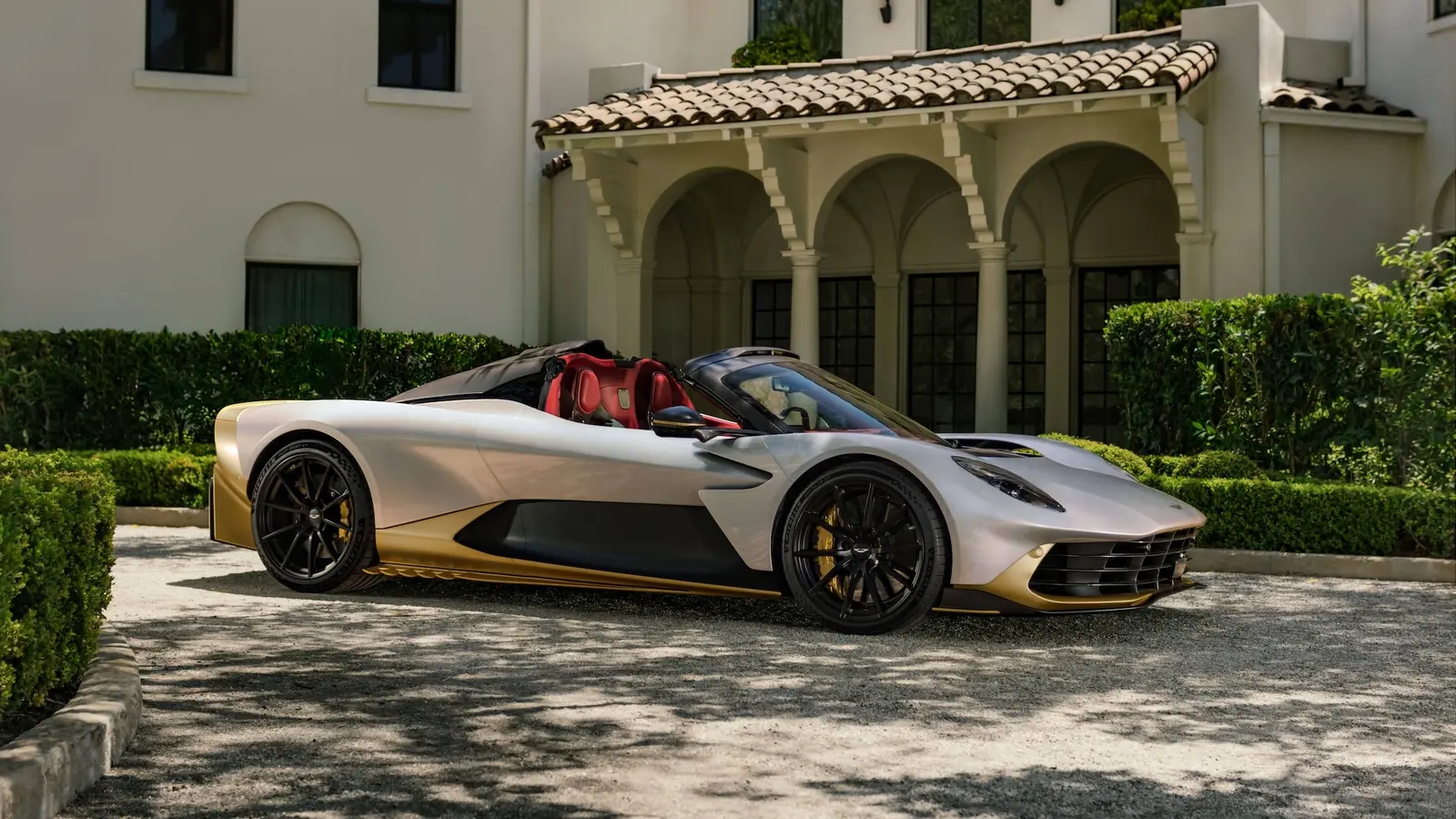
The Valhalla Spider uses the same 1,064 horsepower hybrid powertrain as the coupe, keeping the V8 and three-motor layout intact while shedding the roof to become Aston Martin's first mid-engined open-cockpit production supercar.
Aston Martin unveiled the Valhalla Spider at the 2026 Concours at Wynn Las Vegas, presenting a drop-top that preserves the coupe's performance and most of its engineering after a prolonged development that followed the AM-R 003 concept first shown in 2019. The convertible arrives nearly two years after the coupe's December 2024 production debut and keeps the core specifications of the hardtop despite the reinforcement required for an open car.
Powertrain and performance
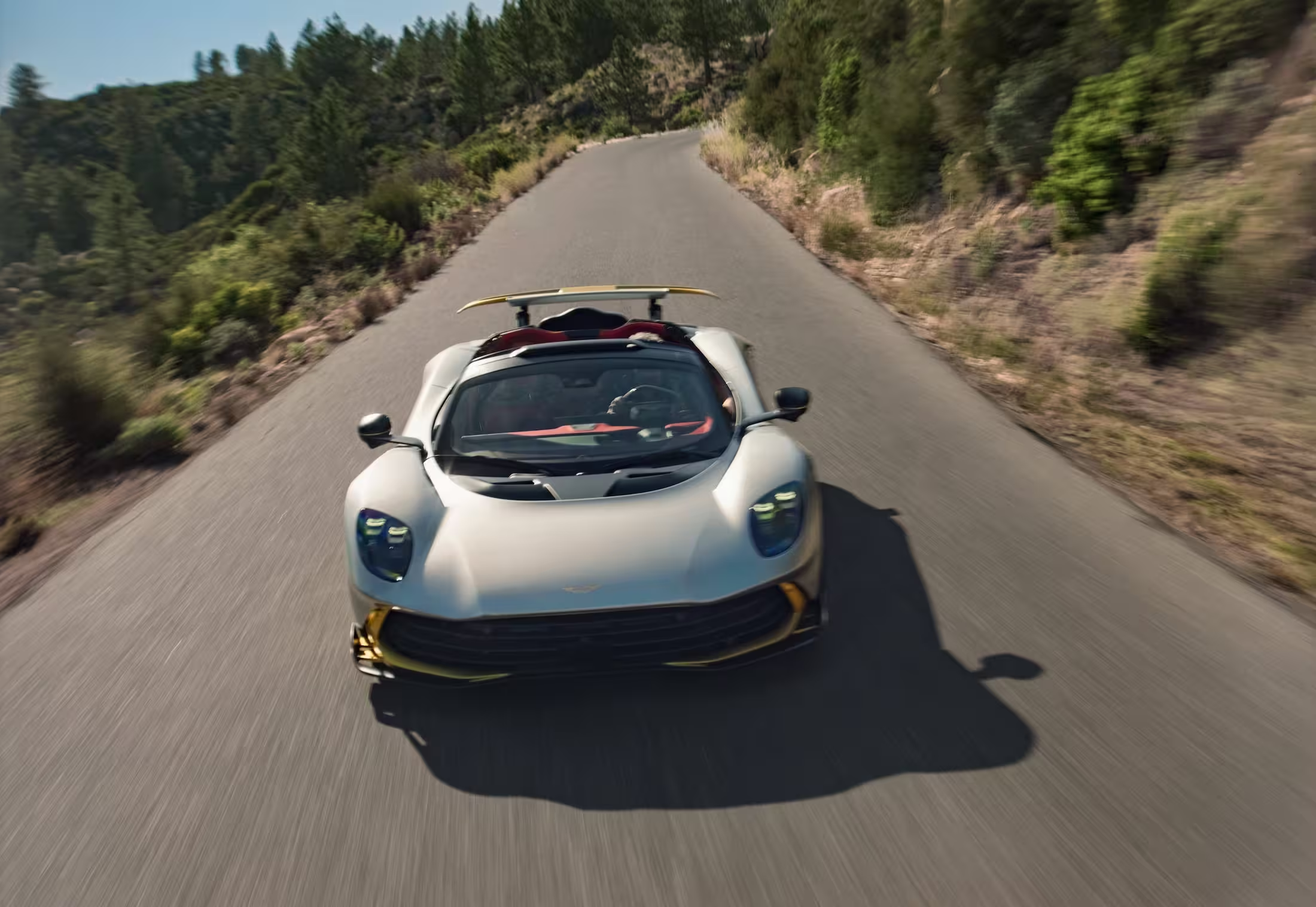
The Spider retains the flat-plane crank 4.0-liter twin-turbo V8 that produces 817 horsepower (828 PS) and 627 pound-feet (850 Newton meters) of torque, working alongside three electric motors that add 247 horsepower (251 PS) and 184 pound-feet (250 Newton meters). Two electric motors are mounted on the front axle to drive each front wheel independently, while the third motor drives the rear axle. Combined output is stated as 1,064 horsepower (1,079 PS) and 811 pound-feet (1,100 Newton meters).
An eight-speed dual-clutch transmission delivers drive through an e-AWD system. The gearbox omits a mechanical reverse gear, using the electric motors for an e-reverse function to reduce gearbox weight. Aston Martin quotes a 0 to 60 mph time of 2.4 seconds (0 to 97 kph) and a top speed of 217 mph (350 kph), matching the coupe's figures.
Aerodynamics, structure and motorsport tech
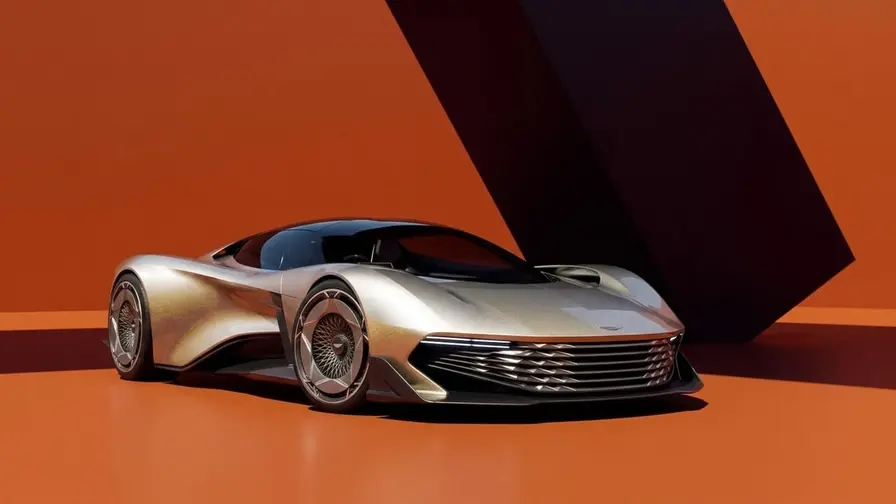
The Valhalla Spider is a direct conduit for Aston Martin's F1-derived technology developed with Aston Martin Performance Technologies and the Aston Martin Aramco Formula 1 Team. The core carbon fiber tub is produced using a mix of Resin Transfer Moulding and F1-grade autoclave processes to keep weight under control. The front suspension uses an F1-style pushrod layout with inboard dampers to optimize mass distribution and lower the center of gravity.
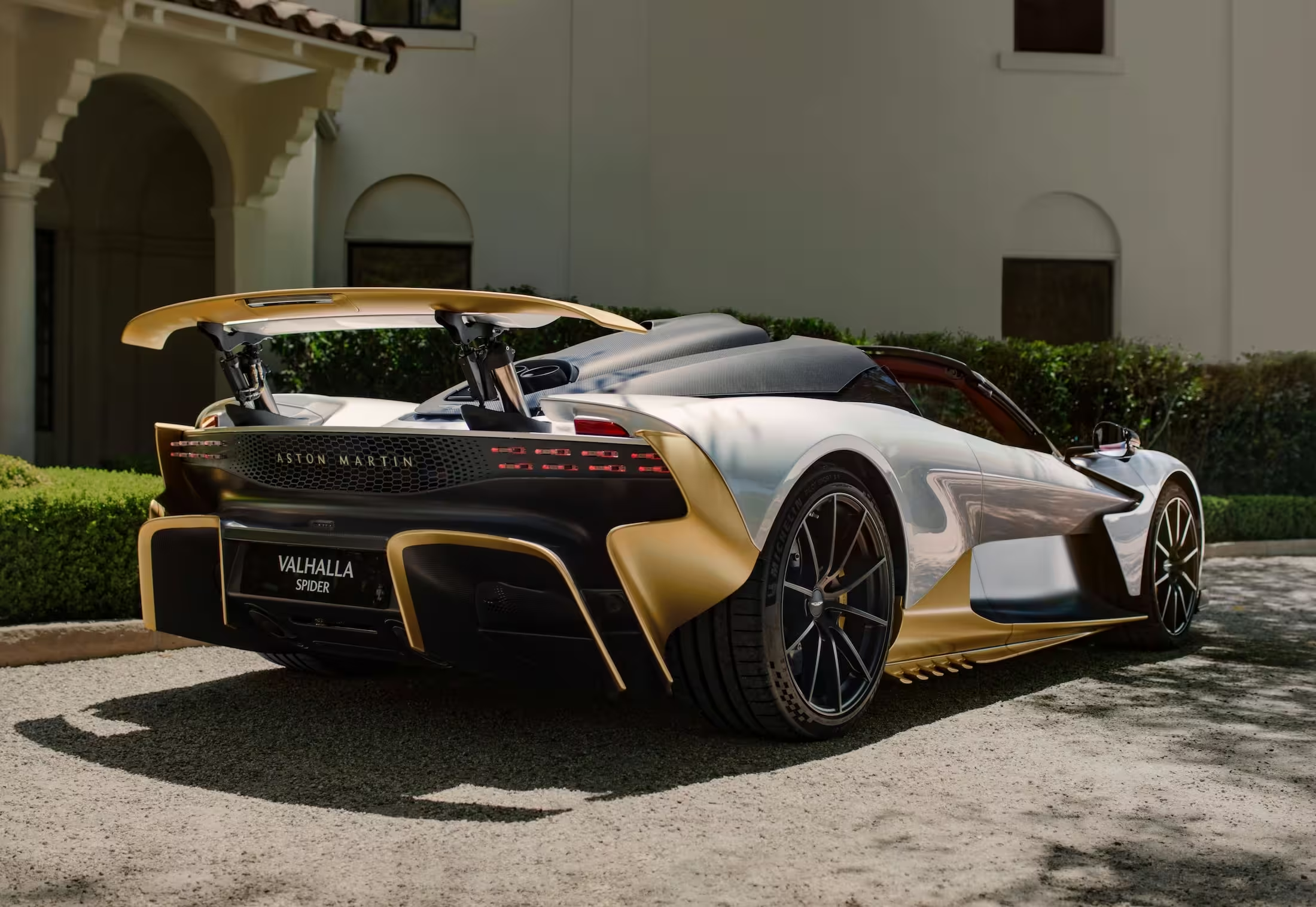
Active aerodynamic elements are integrated but often hidden, with front and rear wings that change angle to act as a Drag Reduction System or to generate downforce. Aston Martin states the car produces 1,323 pounds (600 kilograms) of rear downforce with the roof fitted. The underfloor is concave and fitted with small slotted louvers described as vortex generators to accelerate air out from beneath the car and enhance ground effect.
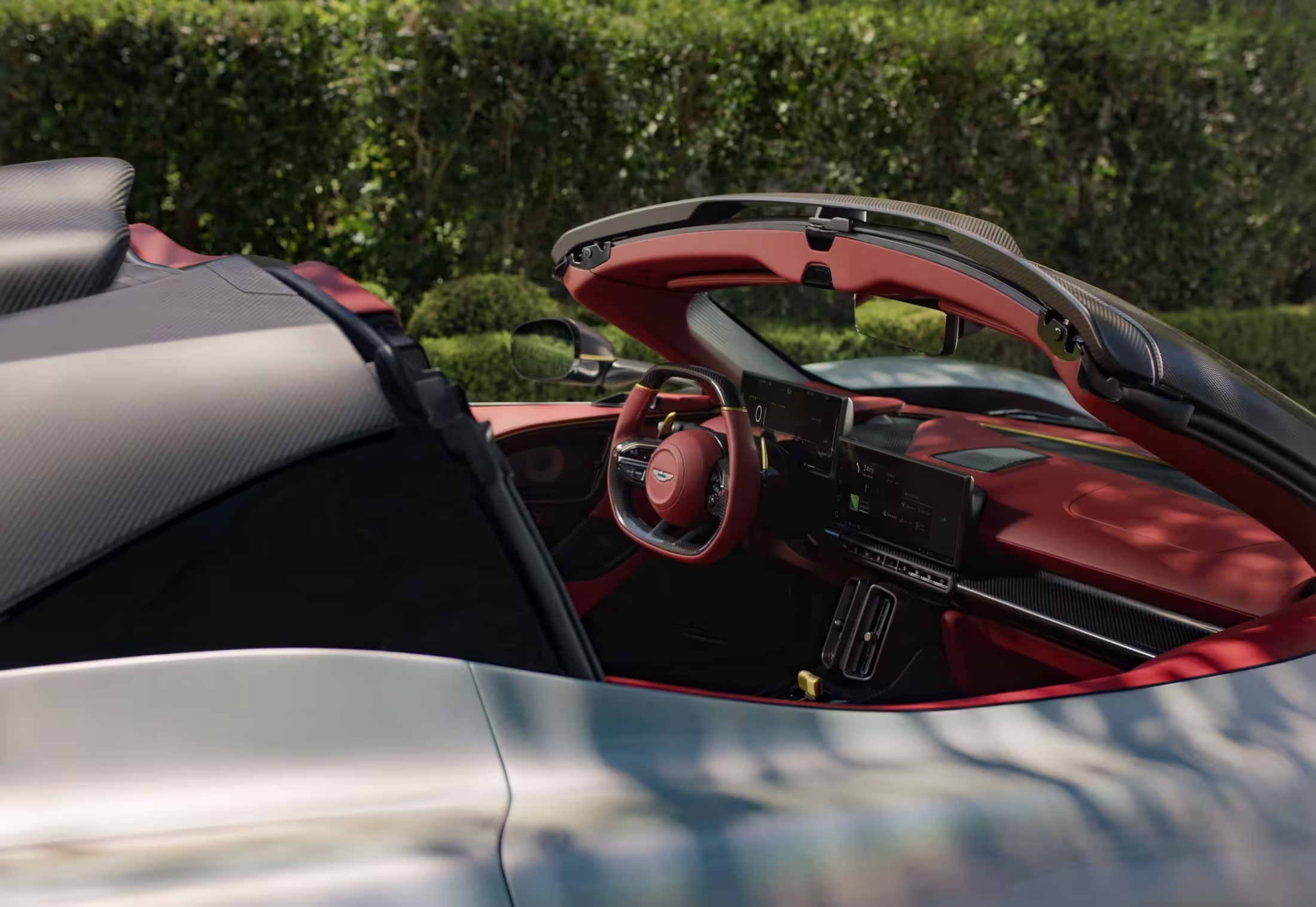
Despite the open cockpit, cooling and intake architecture was revised rather than compromised. The coupe's roof-mounted snorkel moved to the rear deck spine behind the seats and is 35 millimeters higher so it remains fully functional with the roof removed. A three-piece clip-on wind deflector attaches to the upper edge of the windshield frame to reduce buffeting and channel airflow to the mid-mounted snorkel; a rain cover for static use is also included with the car.
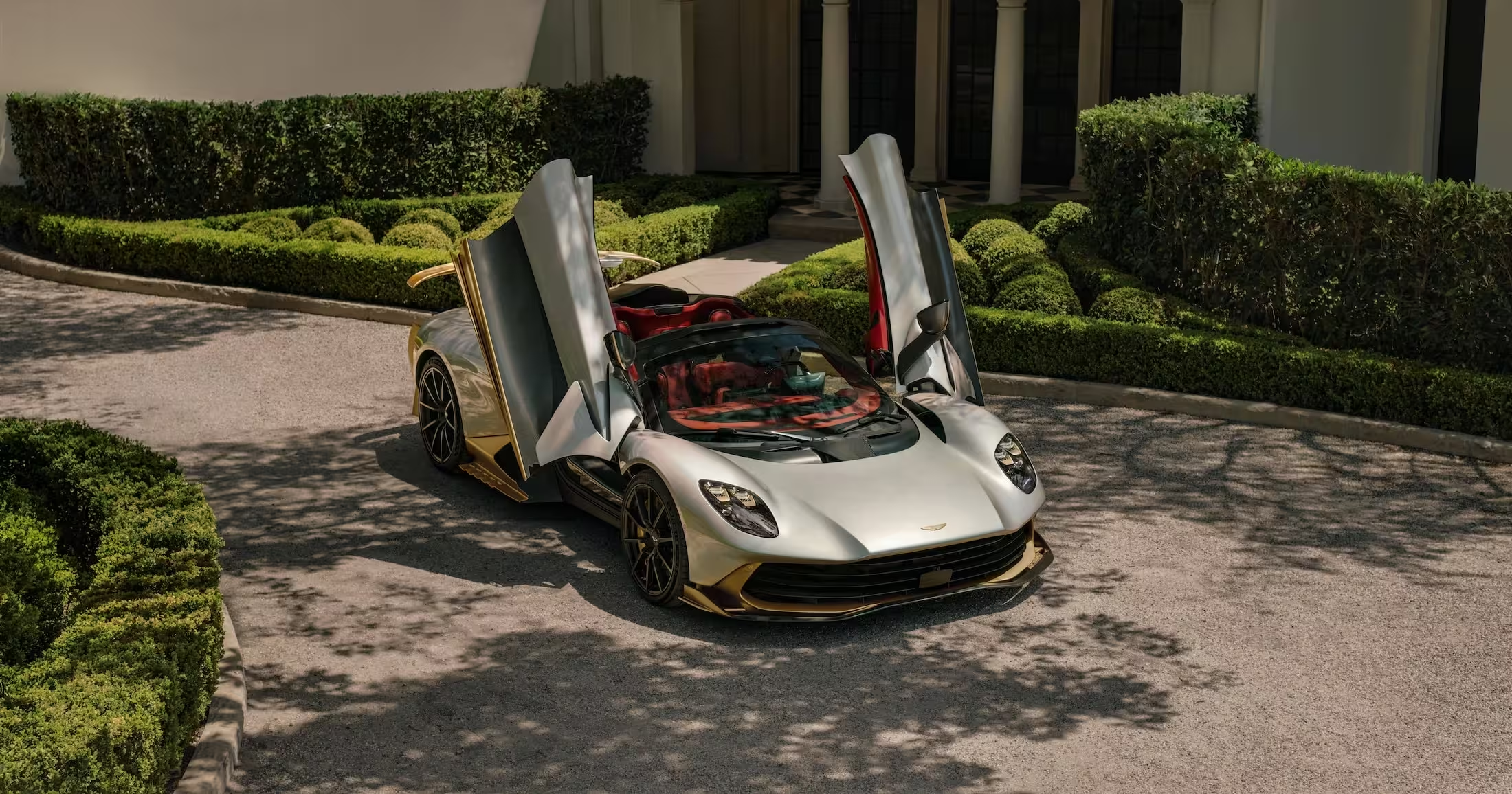
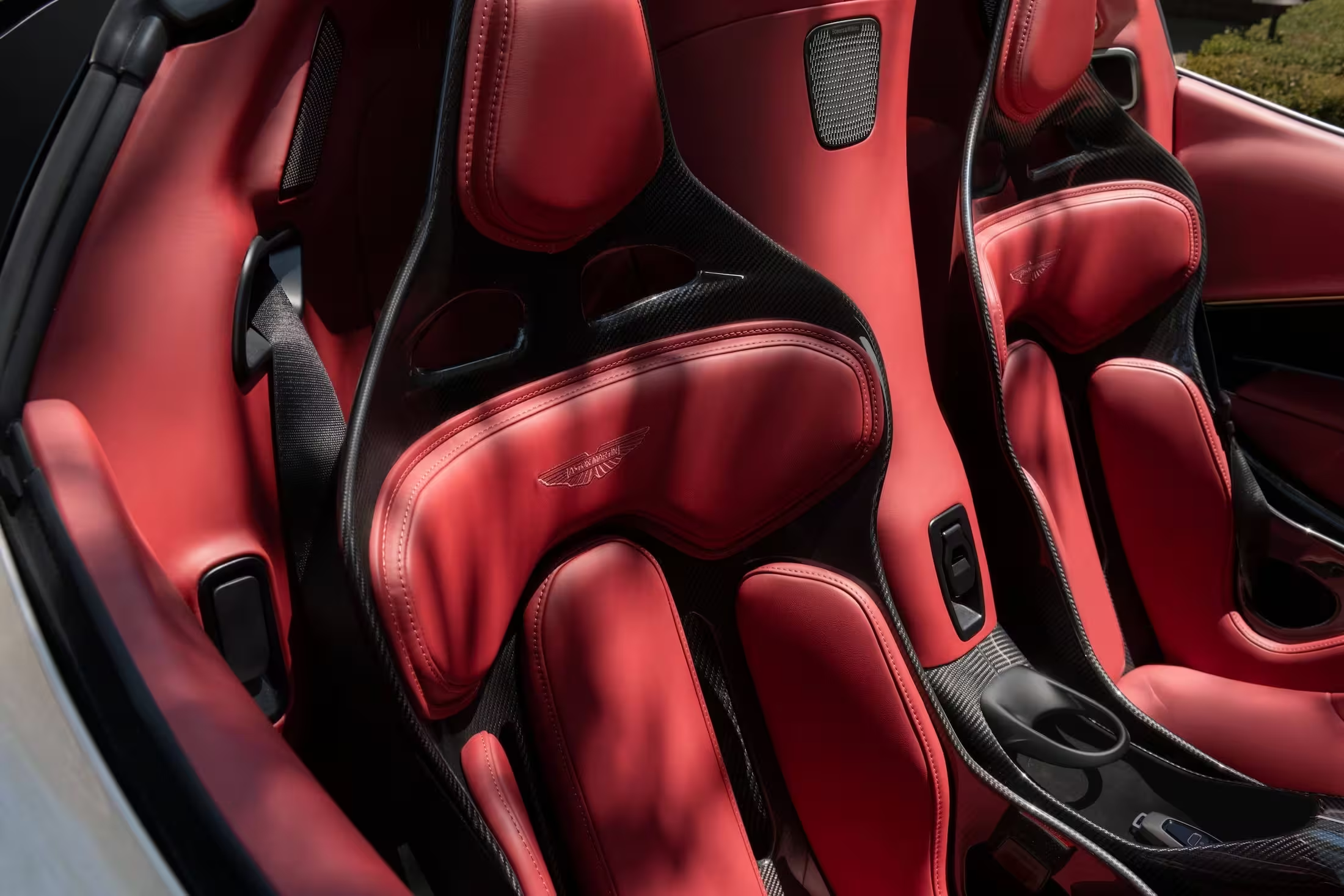
The car's ergonomics mirror Aston Martin's racing and Valkyrie-inspired approach, with a heavily reclined seating position. The Spider comes standard with a new carbon fiber Touring Seat designed to ease entry and exit; buyers may select the original coupe carbon seat at no extra cost. Dihedral doors are retained, with a slight increase in curvature at the door glass top edge for the convertible.
Production is expected to be limited, following the coupe's 999-unit run, and the Spider will sit in a small field that includes the Lamborghini Revuelto Roadster and the Ferrari SF90 XX Spider. Aston Martin has not published official Spider pricing; the Valhalla coupe was priced at $1,051,000 when new, and industry estimates place the Spider at roughly $1.5 million.

Deliveries are scheduled to begin in the third quarter of 2027, with Aston Martin indicating the Spider will be a low-volume, high-cost addition to its line-up.

Leave a Comment
Comments
No comments yet. Be the first.