
3 Minutes
A forgotten prototype that still turns heads
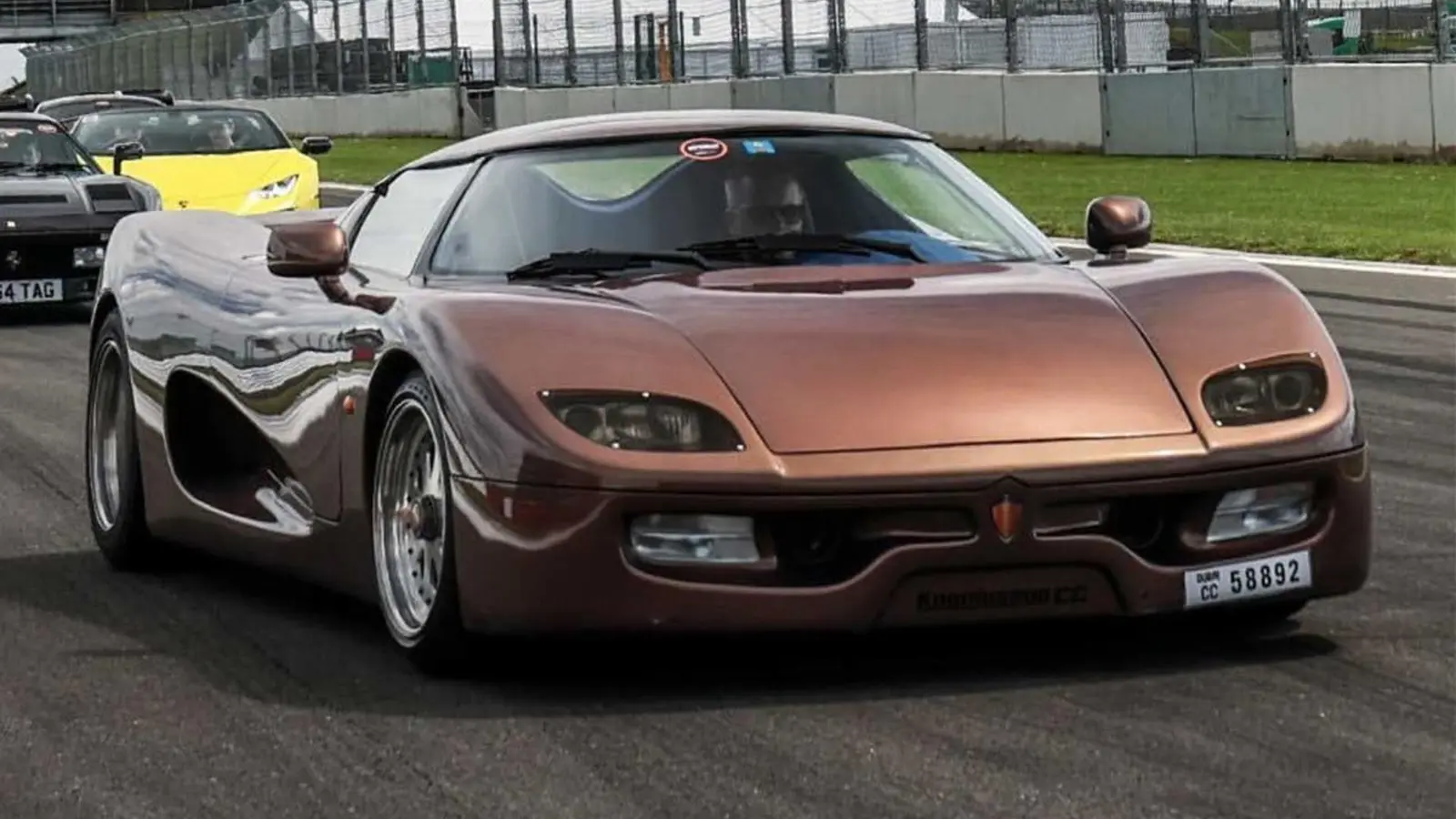
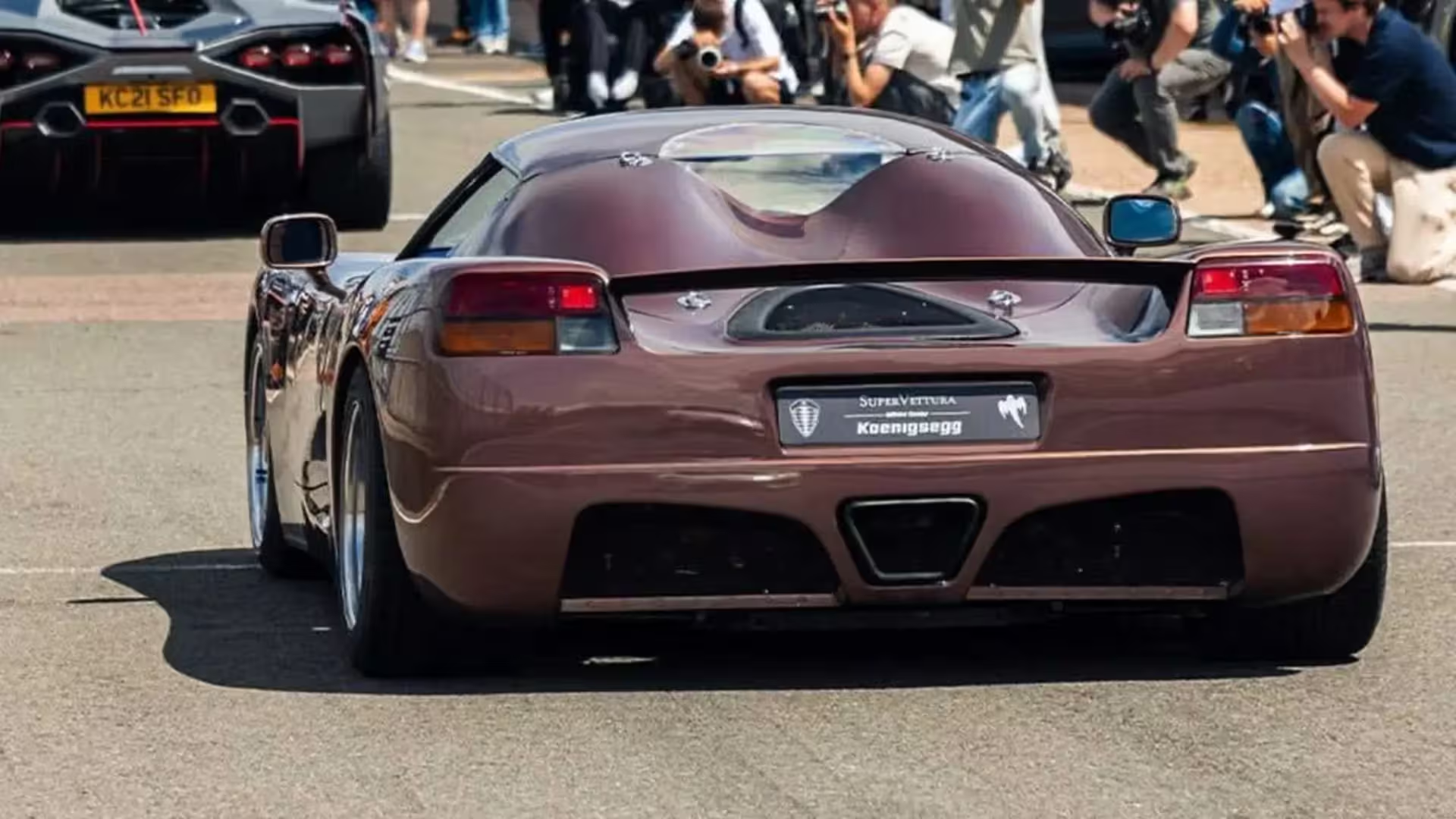
The story of Koenigsegg began long before the Agera and Regera made headlines. At the heart of that origin lies the CC project — a hand-built prototype conceived in the 1990s when the automotive world was shifting from analog simplicity to electronic sophistication. Recently the XP 001 chassis, one of the three early CC prototypes, stole the show at Secret Meet 2026 at Silverstone, reminding enthusiasts how a small Swedish workshop set out to challenge the established hypercar order.

Design cues from legends, executed in Swedish steel
Christian von Koenigsegg looked to icons like the Ferrari F40 and McLaren F1 for inspiration, but the CC designs translated those influences into something uniquely Koenigsegg. The prototype used a semi-carbon monocoque and featured a removable targa-style roof. Its most enduring visual legacy was the signature door mechanism — a twin-axis, outward-and-upward rotation that differs from Lamborghini's scissor doors by freeing space in tight garages while creating a dramatic entry experience.

Under the hood: Audi's V8 and the path to Koenigsegg power
The XP 001 that appeared at Silverstone was fitted with a 4.2-liter Audi V8 — an accessible choice for a startup prototype. That engine would not be the brand's final word. Koenigsegg's first production car, the CC8S, introduced a bespoke 4.7-liter supercharged V8 based on Ford's modular architecture and tuned in-house. With 655 hp, the CC8S set a Guinness World Record in 2002 as the most powerful production engine at the time — an early sign of the company's appetite for performance records.
Highlights:
- Prototype chassis: XP 001 (one of three CC prototypes)
- Prototype engine: 4.2L Audi V8
- Production milestone: CC8S with 4.7L supercharged V8, 655 hp (2002 Guinness record)
Performance DNA and modern rivals
Koenigsegg's drive for measurable excellence — from acceleration and braking to top speed and lap times — remains central to its identity. Today the marque competes, in different ways, with Bugatti and Hennessey: Bugatti pushes top-speed benchmarks with massive W16 powertrains, Hennessey tunes high-performance derivatives, while Koenigsegg chases efficiency, lightweight engineering and innovative hybrid systems to deliver record-setting performance.
At Secret Meet 2026, the XP 001 lined up alongside modern hypercars like the Bugatti Chiron, Aston Martin Valhalla and Lamborghini Revuelto. Despite originating in 1996, the prototype did not look out of place next to a much newer Agera RS in the pit lane — a tribute to timeless proportions and functional design.
“Seeing XP 001 on track is seeing the first chapter of Koenigsegg’s playbook,” said one attendee at Silverstone. Indeed, the physical car is a reminder that hypercar breakthroughs often begin with simple, clever engineering.

Legacy and market positioning
Only one of the three early prototypes is confirmed to have been brought to the UK on Dubai plates for the event; the fate of the other two remains murky. What is clear is that these early CC cars laid the foundation for Koenigsegg's reputation as a boutique hypercar maker focused on low-weight construction, innovative doors and powertrain ingenuity.
For modern car enthusiasts, the XP 001 is more than an oddity: it is a milestone showing how small teams can influence global automotive performance culture. For the market, it illustrates how heritage and engineering credibility help boutique brands command attention, premium pricing and, ultimately, record books.

Leave a Comment
Comments
No comments yet. Be the first.