
3 Minutes
Imagine a trillion-parameter AI that runs not on Western GPUs but on hardware made inside China. It sounds like a tech rewrite, and that is exactly what DeepSeek is attempting with its next-generation model.
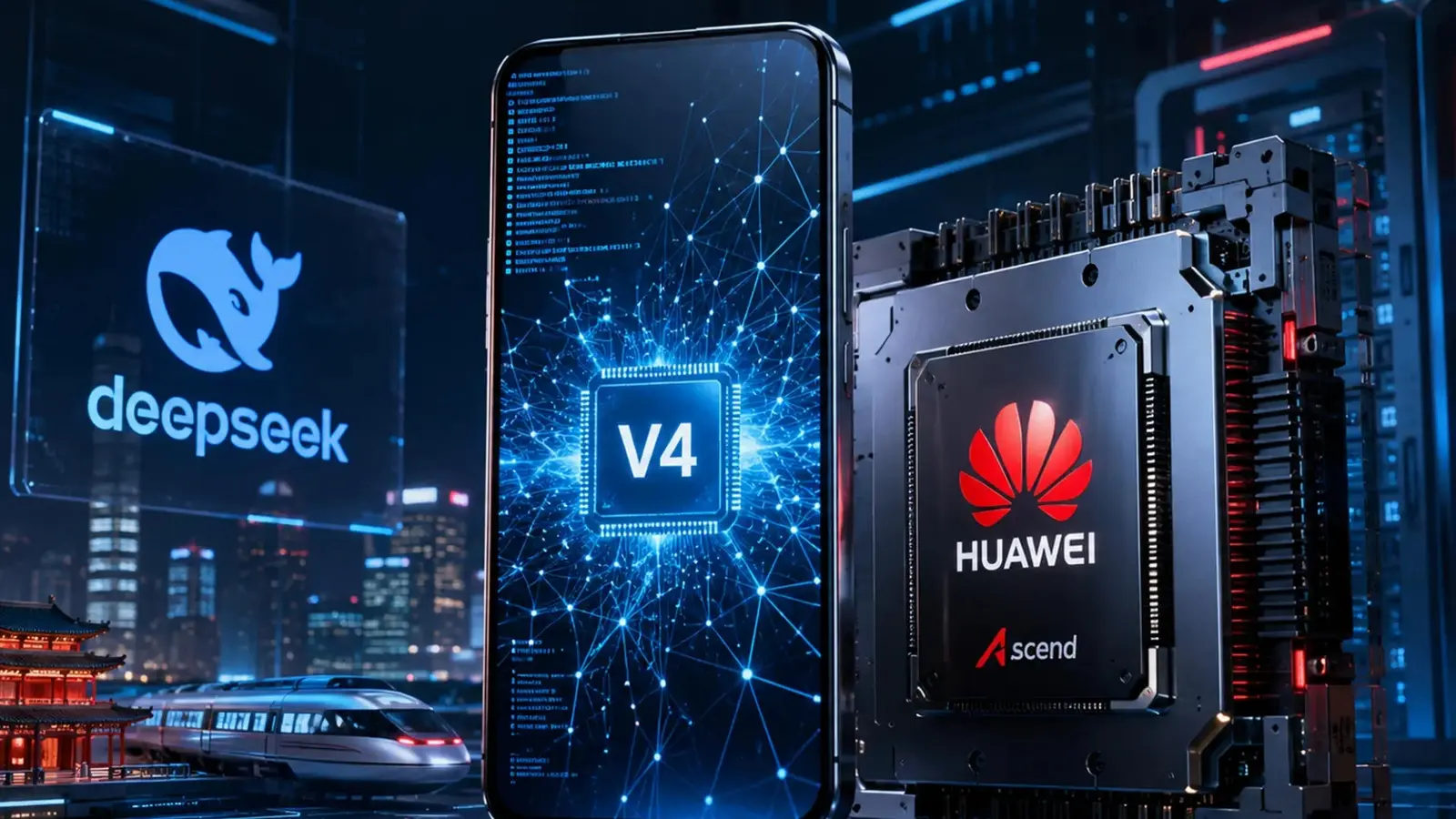
Reports suggest DeepSeek V4 will run exclusively on Huawei's latest Ascend chips. This is no small pivot. It reflects a broader push to stitch advanced models to domestic silicon as export controls make access to Nvidia's H-series chips harder for Chinese developers.
Why the shift? Partly because scale now demands tight coordination between model architecture and the chip that will carry it. DeepSeek aims to deploy roughly a trillion parameters, and the startup is expected to tap hundreds of thousands of Ascend 950PR processors to reach target inference speeds and capacity. The goal: about 1.8x faster inference, a context window approaching one million tokens, and efficiency gains driven by Engram-style optimizations.

That last detail matters. Engram techniques rework how models store and recall information, trimming memory overhead while preserving reasoning depth. For a model the size of V4, such tricks are the difference between feasible and fantasy. DeepSeek has reportedly spent months rewriting core code and bench-testing it with Huawei and Cambricon engineers to squeeze performance from the new stack.
Other Chinese tech behemoths are placing similar bets. Alibaba, ByteDance and Tencent have placed large orders for Ascend 950PR silicon, signaling that domestic chip ecosystems are rapidly becoming the default platform for major AI projects inside China. In that sense, DeepSeek’s move is both strategic and practical.
There is also a timing angle. Nvidia’s H20 chips have faced tighter export scrutiny, nudging startups and cloud providers to accelerate migrations to locally produced accelerators. DeepSeek had already used Ascend variants in earlier models, so a full migration to Huawei-centered infrastructure is an extension of existing work rather than an abrupt leap.
Functionally, V4 is said to emphasize advanced coding capabilities and improved multi-step reasoning. In plain terms: better at writing complex programs, better at holding long conversations, and better at piecing together logic across huge swaths of text. Two additional V4 variants tailored to other Chinese-made chips are reportedly in development and may arrive before year-end.
There’s a larger takeaway here. The AI race is fragmenting into hardware ecosystems, each tuned to its own stack of compilers, runtimes and optimization tricks. For startups like DeepSeek, the path to cutting-edge performance may now run through domestic silicon as much as through algorithmic innovation.
Whether this approach pays off will depend on how well software teams can squeeze raw chips into usable, reliable services — and on how quickly the global AI hardware landscape keeps changing.


Leave a Comment
Comments
No comments yet. Be the first.