
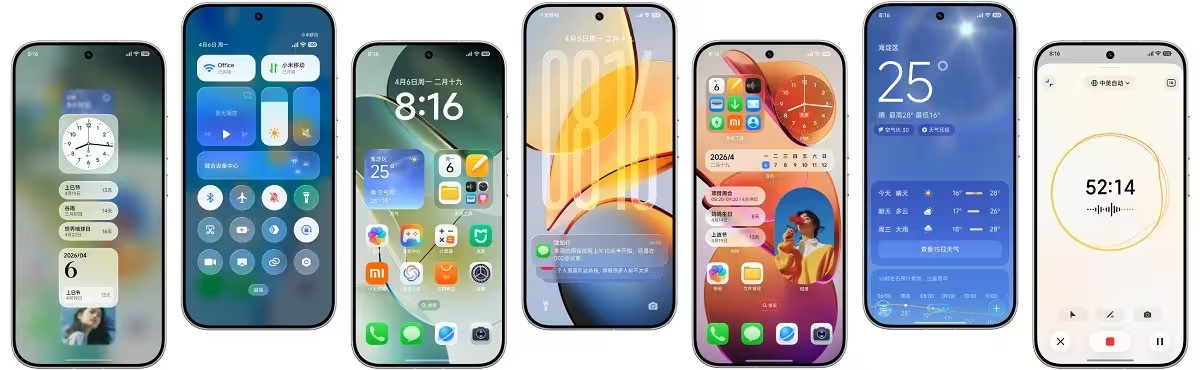
Remember when Android skins felt like minor face-lifts? Xiaomi just tore up the playbook. HyperOS 4 arrives with a glass-like visual language that leans hard into light, depth and realistic refraction — think frosted panes and reflections that actually look alive.
Customization suddenly matters again. The lock screen can be rearranged to taste; clocks, notifications and widgets are no longer locked into a single layout. Folders become resizable containers, widgets can be grouped differently, and floating apps rotate to match your device orientation. Small touches, big feel.

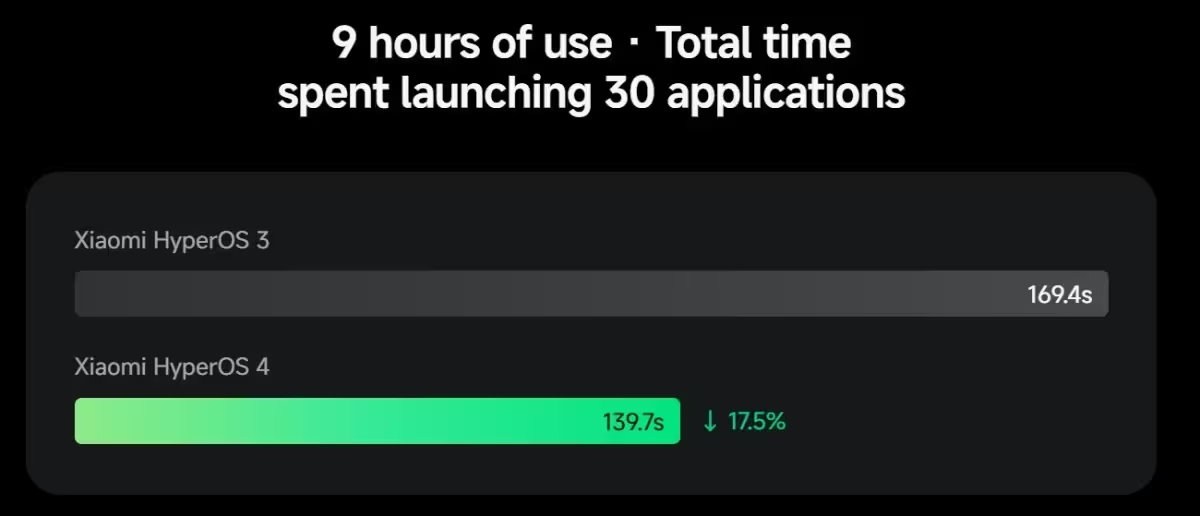
Performance gets attention too. Xiaomi says HyperOS 4 reduces app load times after typical daily use — roughly an 18% improvement after nine hours on the device, according to its internal tests. That comes from smarter memory management: an AI-backed preloader predicts which resources you'll need next and primes RAM so the moment you tap, the app is ready.
The camera pipeline sees measurable gains. HDR processing moves from around 310ms to 240ms, and cold-start latency for the camera app has been trimmed by about 200ms. Video playback has been beefed up as well, with dropped frames reportedly minimized, so clips and livestreams should feel smoother.
Where HyperOS 4 gets ambitious is on the AI front. Xiaomi stitches its in-house LLM, MiMo, into a Super AI Assistant 2.0 that handles voice transcription, organizes notes, searches photo libraries and helps plan trips. It also reaches into the smart home — and yes, the smart car — if you want it to.
The interaction layer is clever. Ask something complex and the Super Island — a compact popup around the punch-hole camera — signals that the assistant heard you and is processing. Only when a useful result is ready does it expand to a fuller interface, keeping interruptions minimal and context immediate.
Another new toy is Inspiration Ball, a contextual pointer that gives the UI a way to act on what you point at. Drag it over an address and say "navigate here" to open maps with a destination preset. Drag it over a product photo and ask the assistant to hunt for that item online. It sounds familiar because the idea overlaps with other visual search tools, so global availability may vary.

Beta rollout and supported devices
HyperOS 4 enters public beta on August 14, with staged waves for different hardware tiers. Expect the earliest builds to land in China first, then broaden to internationally sold models in the following weeks.
- Batch 1 — August 14: Xiaomi 17 Ultra (incl. Leica Edition), Xiaomi 17 Pro Max, Xiaomi 17 Pro, Xiaomi 17, Redmi K90 Pro Max (incl. Champion Edition), Redmi K90, Xiaomi Pad 8 Pro, Xiaomi Pad 8
- Batch 2 — August 27: Xiaomi 17 Max, Xiaomi 17T Pro, Xiaomi 17T, Xiaomi 15 Ultra (incl. Satellite Edition), Xiaomi 15S Pro, Xiaomi 15 Pro, Xiaomi 15, Redmi K90 Max, Redmi K90 Ultra, Redmi K Pad 2
- Batch 3 — September 17: Redmi K100 Pro Max, Redmi K100 Pro, Redmi K80 Pro, Redmi K80 Pro Extreme Edition, Redmi K80, Xiaomi Mix Flip 2, Xiaomi Pad 7 Ultra, Xiaomi Pad 7S Pro 12.5
First-batch phones should see the new software appear in the afternoon of August 14, with later batches arriving more gradually. If you love interface polish and background AI that actually speeds things up, this is one to watch — or to try, if a beta slot opens for your device.

Leave a Comment
Comments
No comments yet. Be the first.