
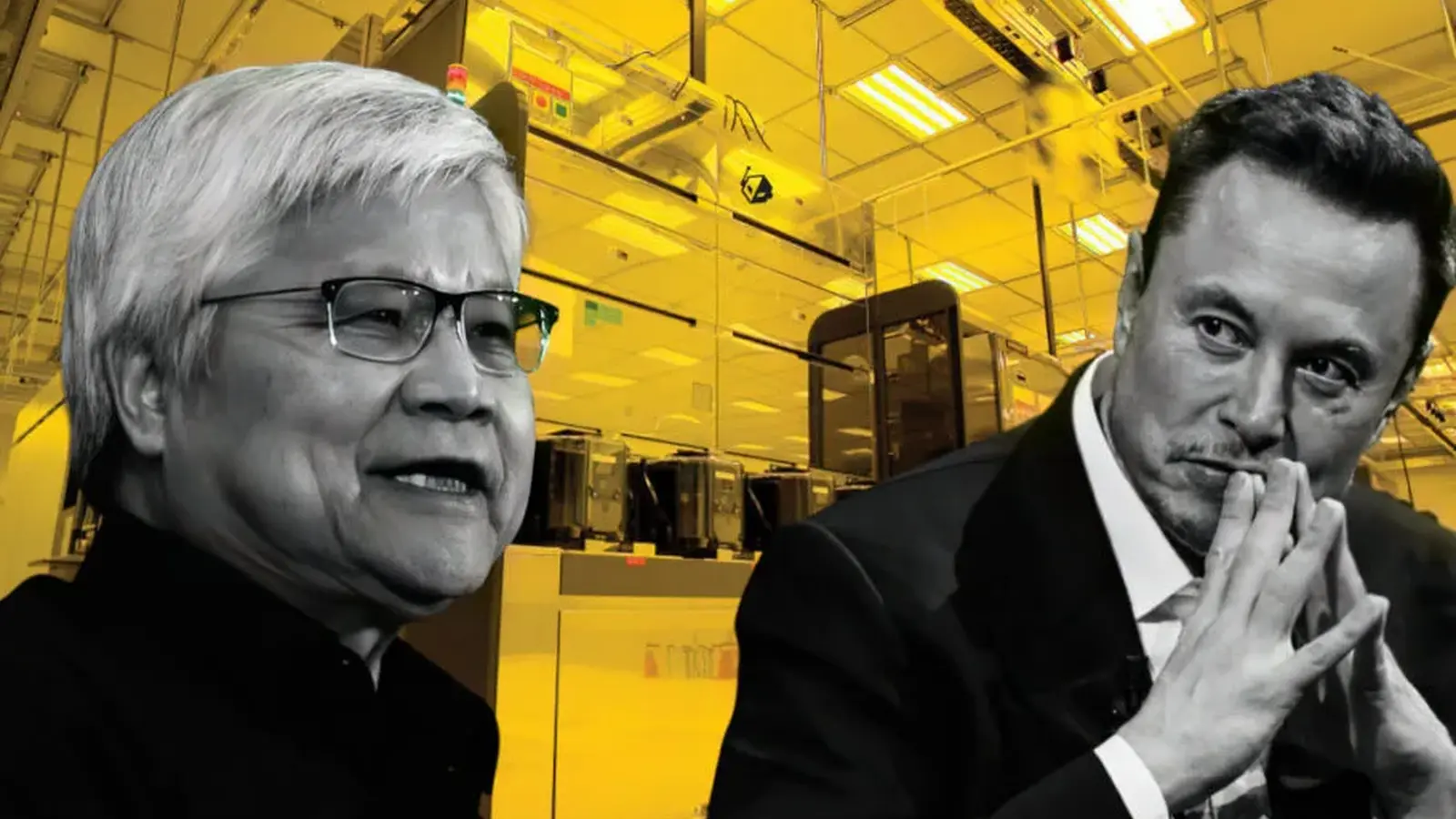
Elon Musk confirmed talks with Taiwan Semiconductor Manufacturing Company about producing chips for his Terafab semiconductor project, and he flagged the possibility of a TSMC-built, TSMC-run facility whose output would be reserved for Tesla, SpaceX and xAI.
On the social platform X, Musk wrote "It's only talks, but maybe something will come of it." TSMC has not issued any official comment so far.
According to the scenario that has gained the most traction, TSMC would own and operate the new fab while SpaceX or Terafab would participate as investors, commit to purchasing a defined volume of chips, or combine both approaches. The precise ownership structure remains unresolved. An alternative model under discussion would see SpaceX hold the majority stake and lead the joint investment, with TSMC contributing less capital but supplying operational and technical expertise.
.avif)
Models of collaboration and the Intel variable
Observers point to precedents such as the JASM joint venture in Japan and ESMC in Germany, where local partners supplied capital and demand while TSMC provided lithography know-how and production management. If SpaceX were to become the dominant shareholder and TSMC limited to a technical role, that would represent a notable departure from TSMC's established practice.
The evolving talks also cloud the previously reported role for Intel. Intel had been lined up to bring its 14A node, a technology described internally as a 1.4 nanometer class process, to Terafab to make chips for Tesla, SpaceX and xAI. If TSMC becomes the primary fabricator, Intel's 14A could be sidelined because TSMC would likely apply its own process nodes.
That outcome is not the only technical possibility. TSMC is an industry leader in advanced packaging, so one practical compromise would be to manufacture logic with Intel's 14A tooling in Texas and hand off packaging to TSMC. Patent issues complicate that picture. Intel and TSMC have a comprehensive mutual patent use agreement, but Terafab does not. Producing chips on the basis of lithography developed by Intel could risk infringing TSMC patents unless specific cross‑licensing or other arrangements are put in place.
.avif)
Musk's stated objective is not to launch a foundry to compete head-on with Intel, Samsung or TSMC; he wants resilient, surplus supply of custom chips to feed his AI systems, vehicles and space hardware, and therefore seeks strategic flexibility.
Separately, earlier rumors that TSMC planned a plant in Texas now appear relevant to Terafab's aims. If those plans were linked, a Texas facility could serve as the physical anchor for whichever collaboration model is chosen. For now, however, no agreements have been signed and all proposed structures remain speculative.
As the talks continue, the one documented fact closing this chapter for now is Musk's own post: "It's only talks, but maybe something will come of it."

Leave a Comment
Comments
No comments yet. Be the first.