
Meta has published open-source code that lets users build Muse gadgets and connect them to Meta's AI agents, with explicit support for programming off-the-shelf ESP32 boards or running Muse on a Raspberry Pi using Meta's SDKs.
The company framed the release as a way for hobbyists and developers to attach Muse to physical hardware. Meta suggested projects such as installing Muse on a color E Ink display for showing reminders, adding Muse to an HDMI dongle to present Muse on a large screen, or embedding Muse in a small device with a touch display—an approach the company compared to a handmade Muse Charm.
Meta said, "Muse gadgets are text-based devices that you build yourself. You can program an off-the-shelf ESP32 board or set up a Raspberry Pi with our SDKs and then connect Muse to displays, buttons, sensors, actuators and anything else on your desk." The company also warned that users should undertake these builds at their own risk.
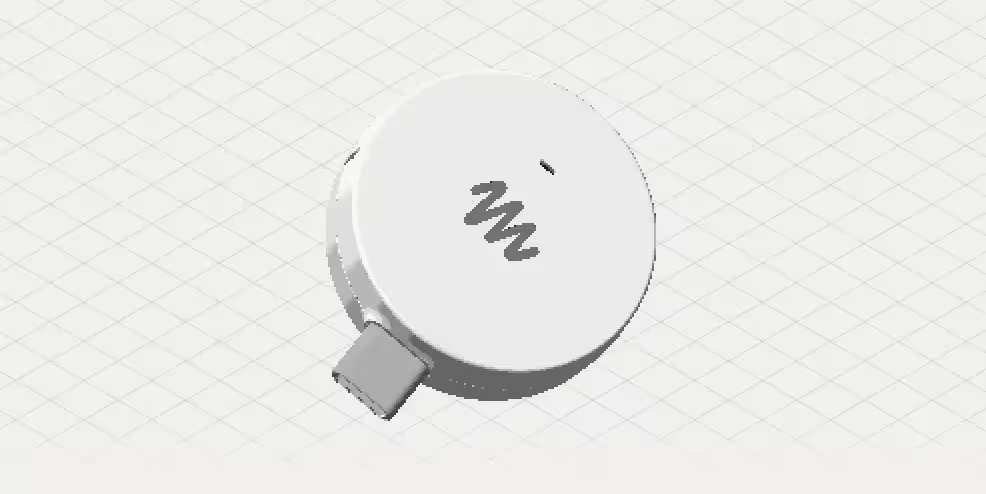
Muse Home Link rollout
Alongside the code, Meta built a Muse Home Link device and is making it available for free. Meta said that with Muse Home Link and skills developed by the community, an AI agent can "turn on a light, control a TV, send a document to a printer and do more; functionality depends on your equipment."
According to Net Friedman of Meta's superintelligence lab, the company manufactured 5,000 Muse Home Link units. Users can sign up on a waitlist to receive one, and Meta said shipments are due to start this month.

Product position and data collection
Muse is Meta's next-generation AI agent platform, designed to automate tasks and perform a range of actions on users' behalf. Meta's Muse app reportedly surpassed ChatGPT to become the most-downloaded AI app in the U.S. App Store.
A recent study, cited without further detail by Meta's materials, indicates that Muse collects more user data than any comparable service.


Leave a Comment
Comments
No comments yet. Be the first.