
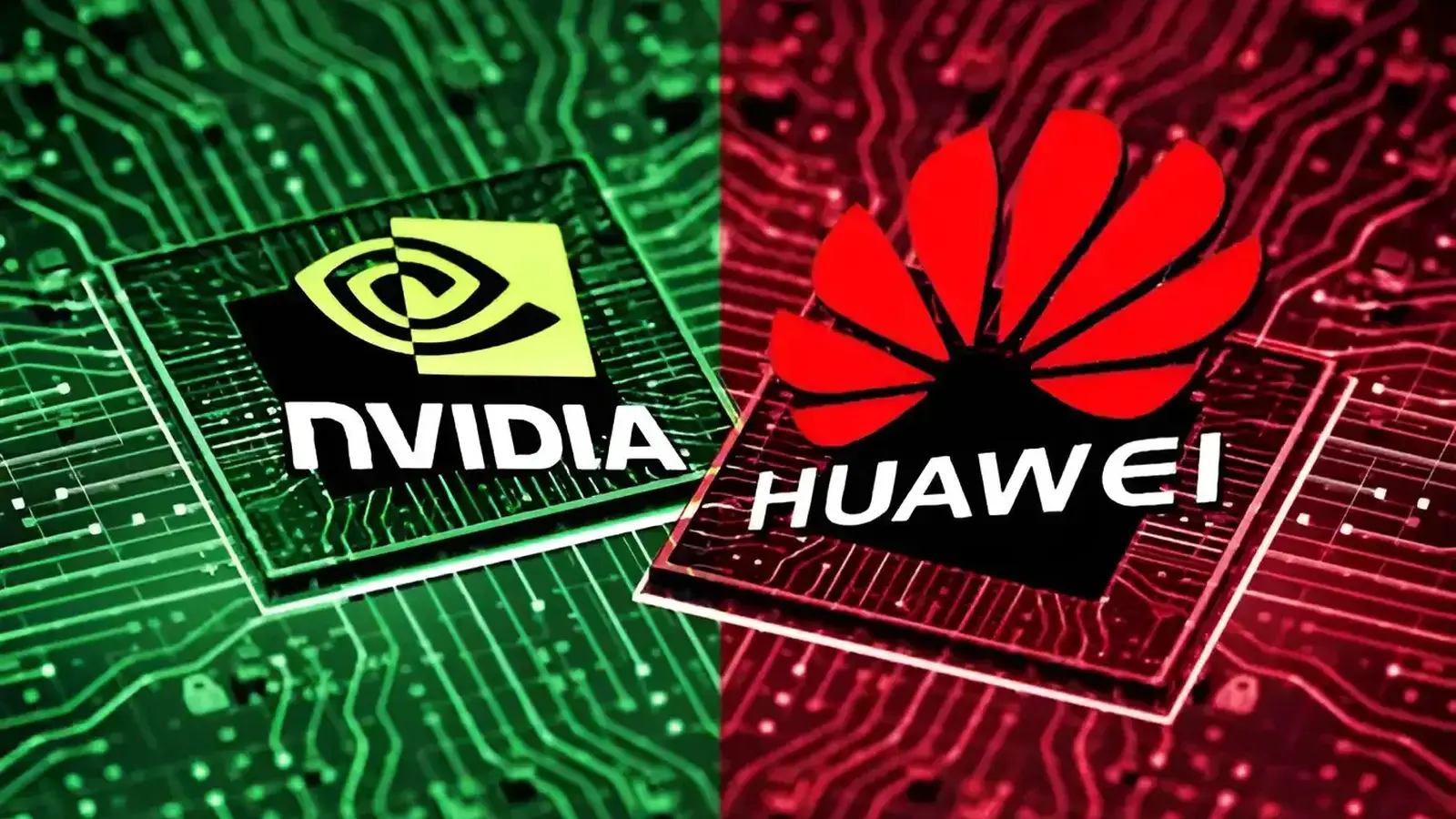
A single purchase order can redraw the map for an entire sector. DeepSeek's recently placed order for 160,000 Huawei Ascend 950DT chips is exactly that kind of disruptive stroke, and it arrives at a moment when China is doubling down on homegrown AI hardware.
Bloomberg first reported the deal, which will feed a new 1 GW data center DeepSeek is building in Inner Mongolia. At roughly 111,000 yuan per Ascend 950DT, or about 16,000 dollars each, the headline price tag for the purchase approaches 2.56 billion dollars. For context, NVIDIA's H20 GPUs trade in the neighborhood of 15,000 to 25,000 dollars, so the per-unit cost gap is not the only factor in this procurement choice.
Supply constraints complicate the picture. Huawei's production of the 950DT is tightly limited right now — only a few hundred thousand units annually — which means fulfilling DeepSeek's order could stretch into a year or more. That delay, and a reported fourfold performance gap compared with NVIDIA silicon on some workloads, did not deter DeepSeek. Why? Because latency, local supply chains, and geopolitical certainty increasingly matter as much as raw throughput.
The Ascend 950DT is built on Huawei's DaVinci v3 architecture and manufactured on SMIC's N+3 process, a leading edge offering in the 7 nm class. It supports both model training and decode operations, although DeepSeek is reportedly buying these primarily for inference tasks. Each chip pairs with 144 GB of HiZQ 2.0 HBM, delivering around 4 TB/s of memory bandwidth and 2 TB/s of GPU-to-GPU interconnect. Native support for low precision formats like FP8, FP4, and Huawei's HiF8 helps drive inference efficiency.

Huawei also bundles these chips into the Atlas 950 SuperPoD. A fully populated SuperPoD can link up to 8,192 Ascend 950DT units and reach theoretical peaks near 8 exaflops. It is an architecture that aims to trade density and system-level integration for raw per-chip dominance.

There has been public posturing around parity with NVIDIA. Liang Wenfeng, DeepSeek's CEO, suggested in July that Huawei's supernode can match the GB300 in latency, though he conceded that roughly four of Huawei's GPUs are needed to equal one NVIDIA GPU and that Huawei trails by about two years on some fronts. Still, DeepSeek appears willing to accept a performance and timing penalty in exchange for a closer alignment with domestic suppliers.
DeepSeek's order signals more than a single vendor choice; it hints at a turning point where Chinese hyperscalers opt for local silicon despite measurable tradeoffs.
Not everyone sees this as a temporary blip. Steven Glinert, CEO of Sphere Semi, has suggested that NVIDIA is effectively ceding ground in China. Whether that reading is fair depends on how quickly domestic fabs and chip designers can expand capacity and narrow the efficiency gap.
Location matters too. Inner Mongolia is quietly becoming a strategic base for AI infrastructure. Cold, dry weather helps cooling. Wide swaths of clear sky make large-scale solar feasible. Operational power costs are a big part of the calculus: Alibaba's Ulanqab data center pays about 0.32 to 0.35 yuan per kWh, roughly 0.05 dollars per kWh. ByteDance is reportedly negotiating to add 5 to 6 gigawatts of capacity in the region. At the same time, estimates put the cost of adding a gigawatt of capacity at around 23.8 billion dollars, a figure that underscores how capital intensive this buildout is.
One order will not settle a global competition. But when a high-profile buyer chooses local silicon at scale, it accelerates a larger feedback loop: demand boosts production, production lowers unit risk, and risk-averse buyers lean even harder on domestic supply. If DeepSeek gets its Ascend fleet stitched into service, expect more procurement decisions to follow the same logic.
So what happens next? Watch supply timelines, watch pricing, and watch Inner Mongolia. The race for AI infrastructure in China is getting louder, and 160,000 chips are the opening stanza, not the finale.

Leave a Comment
Comments (2)
Interesting move, but is this realistic long term? Supply caps, 4x performance gap, massive infra costs — if they really pull it off then... timeline looks optimistic, imo
Whoa 160k chips? That's wild. China going all-in on local silicon makes sense, but 4x perf gap and year+ delays could be brutal... curious if SMIC can scale fast, and yeah Inner Mongolia feels like a political play too