

Rapid BTC Withdrawals From Binance
Bitcoin experienced the largest single-day net outflow from Binance since 2023, according to on-chain exchange flow trackers. More than 13,800 BTC left the platform in the latest daily reading as BTC held above the $84,000 level after a robust rally. Over a four-day span, Binance’s Bitcoin reserves declined by roughly 20,000 BTC, reflecting a shift in where supply is being stored and how market participants are positioning amid the current price advance.
Key takeaways
- Binance recorded over 13,800 BTC in net withdrawals during the biggest single-day outflow seen since 2023.
- The exchange’s total BTC holdings dropped from about 705,000 to 685,000 BTC across four days.
- Exchange netflow figures identify moving coins but cannot alone determine whether the outflows represent accumulation, private custody, or transfers to institutional custodians.
CryptoQuant snapshot and social embeds
CryptoQuant analyst Darkfrost highlighted the spike in withdrawals on Sept. 25, noting that withdrawals dominated recent activity on Binance, an exchange that still holds close to 30% of the Bitcoin supply available across major trading venues. The on-chain charts showed a seven-day average netflow near negative 2,000 BTC and the latest daily reading exceeding negative 13,800 BTC — the most extreme single-day outflow since 2023.
Exchange reserves and immediate liquidity
Binance’s Bitcoin balances fell from roughly 705,000 BTC to about 685,000 BTC in the four-day window described by the data. That reduction removes a significant amount of Bitcoin that would otherwise be immediately available for spot selling on the exchange, which can reduce short-term liquidity pressure. Still, on-chain netflow metrics do not reveal the final destination or intent behind the transfers — whether coins went to cold storage, institutional custody, another exchange, or on-chain activity.
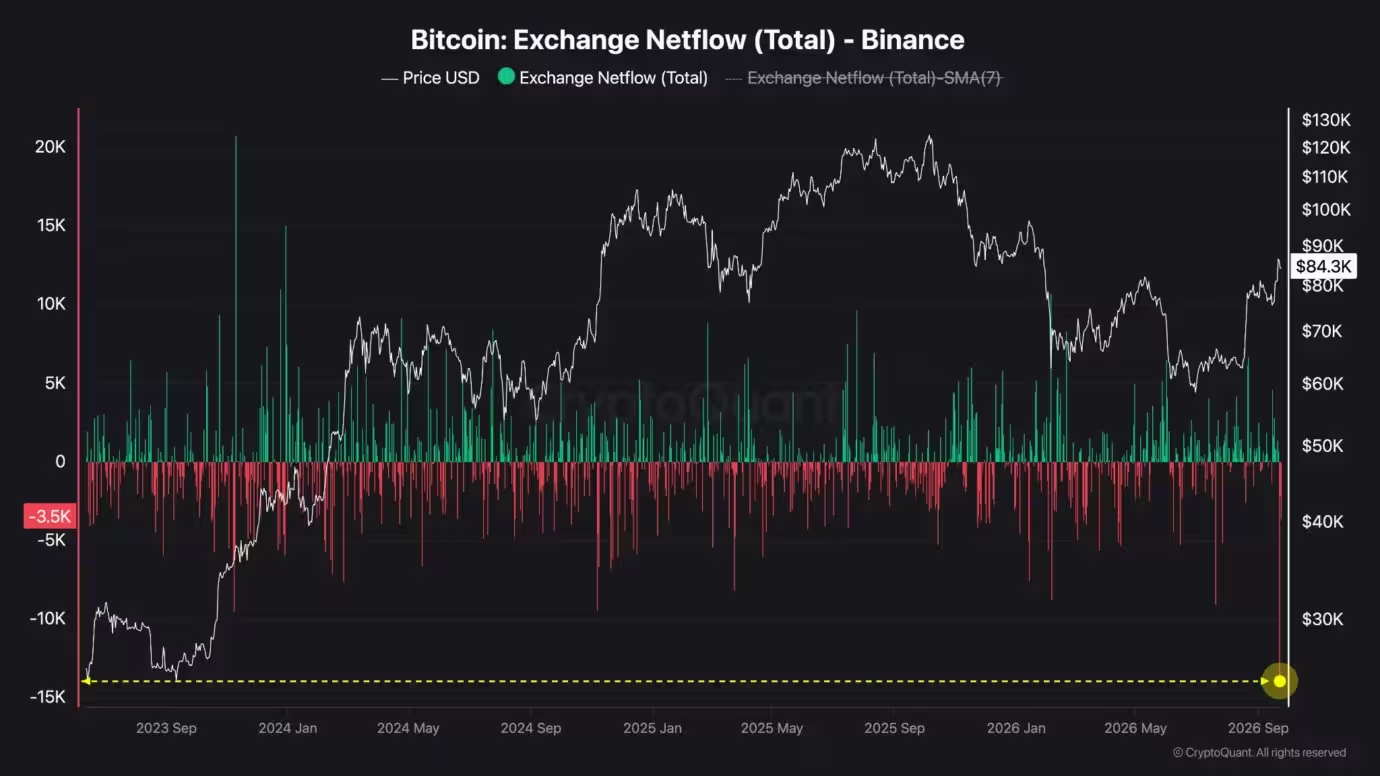
Bitcoin exchange netflow.
Price action and structural breakout
Bitcoin’s recent price advance has helped drive the change in exchange flows. BTC closed above its May high near $82,000 for multiple days, a development Darkfrost characterized as a structural shift in market dynamics. At the time the outflow data was captured, BTC traded around $84,300 after rallying roughly 45% from its July price levels and briefly testing the $87,000 area.

The breakout above prior resistance likely encouraged some market participants to withdraw funds from exchanges, either to self-custody or to alternative custody solutions, contributing to the observed outflows.
Who accumulated during the run-up?
On-chain wallet analysis shows sustained accumulation by certain large holders over the summer and early fall. Wallets holding between 100 and 1,000 BTC reportedly accumulated more than 113,000 BTC from July 15 to Sept. 24, pushing their combined balance to about 5.24 million BTC. Institutional demand via U.S. spot Bitcoin exchange-traded funds (ETFs) also continued, with ETF inflows of $346.98 million reported on Sept. 23 — the fifth straight positive session for spot BTC funds.
ETF demand has been an important part of market dynamics this month. While inflows moderated during some weeks, the return of consistent ETF buying has helped underpin price and could be encouraging long-term custody allocations outside of centralized exchanges.
Comparing inflow periods earlier in 2026
Earlier in 2026 the direction of Binance flows was different. In May, weekly average inflows to Binance increased rapidly — rising from roughly 378 BTC to 1,190 BTC in under 10 days. During that period, Binance reserves climbed by about 16,000 BTC over a month. A single daily inflow exceed 3,600 BTC on May 18, putting more Bitcoin on the exchange and potentially increasing short-term selling pressure.
Now, the trend has reversed: withdrawals are outpacing deposits, creating a drawdown in exchange-held supply during a period of rising BTC prices.
What the outflows could mean for price and liquidity
When large amounts of Bitcoin leave centralized exchanges, two primary market effects can occur:
- Reduced short-term sell liquidity: Less BTC on exchanges means there are fewer coins readily available for instant market sell orders, which can support price during rallies.
- Increased self-custody and institutional allocation: Withdrawals often suggest that holders prefer to keep coins in cold wallets or segregated institutional custody solutions, signaling longer-term holding horizons.

However, outflows do not guarantee accumulation. Transfers can involve internal custody adjustments, movements between platforms, or reallocation into services with different trading profiles. Exchange netflow data is a directional tool — useful for assessing liquidity trends — but not a definitive indicator of intent.
Historical context: exchange supply trends
Earlier in the year, a broader decline in exchange reserves was already underway. In May, total BTC reserves across major platforms fell to around 2.67 million BTC — levels last seen in August 2019 — even while BTC traded near $73,000. Between February and early May, nearly 100,000 BTC left reserves across Binance, OKX and Gemini, with Binance accounting for about half of that decline.
Those previous withdrawals reduced readily available supply on trading venues, but periodic whale deposits and outflows to exchanges continued to occur, illustrating how fluid exchange balances can be.
Scenarios to watch
- Continued negative netflows: If withdrawals persist, exchanges will have fewer BTC on hand, potentially amplifying price moves during demand surges.
- Large deposits return: A sudden return of sizable deposits to Binance would increase exchange liquidity and could exert selling pressure if participants decide to monetize gains.
- Institutional custody transitions: More institutional investors choosing third-party custodians or OTC counterparties would mute exchange-centric liquidity signals and shift where supply is visible on-chain.
Interpreting the market psychology
Darkfrost suggested part of the withdrawal behavior may reflect late entrants responding to fear of missing out (FOMO) as BTC continues to climb. Some investors who waited for another large correction like those seen in past bear markets may be moving into the market now that BTC’s recovery has persisted.
This behavioral shift — combined with the concrete movement of coins off exchanges — can be a sign that a segment of the market is rotating into longer-term custody and away from quick-turn trading positions.
Final thoughts
The latest Binance outflows are a clear example of how on-chain exchange metrics can illuminate liquidity trends during price rallies. While the data confirms a substantial removal of BTC from Binance during a brief window, it does not, on its own, define holder intent. Traders, analysts and institutions will be watching whether negative netflows continue or reverse with new deposits, and how those flows interact with ETF demand and broader macro sentiment as Bitcoin trades near the mid-$80,000s.
Monitoring exchange reserves, institutional flows, and large-wallet behavior remains essential for assessing supply-side dynamics that influence BTC liquidity and price discovery.


Leave a Comment
Comments
No comments yet. Be the first.