
4 Minutes
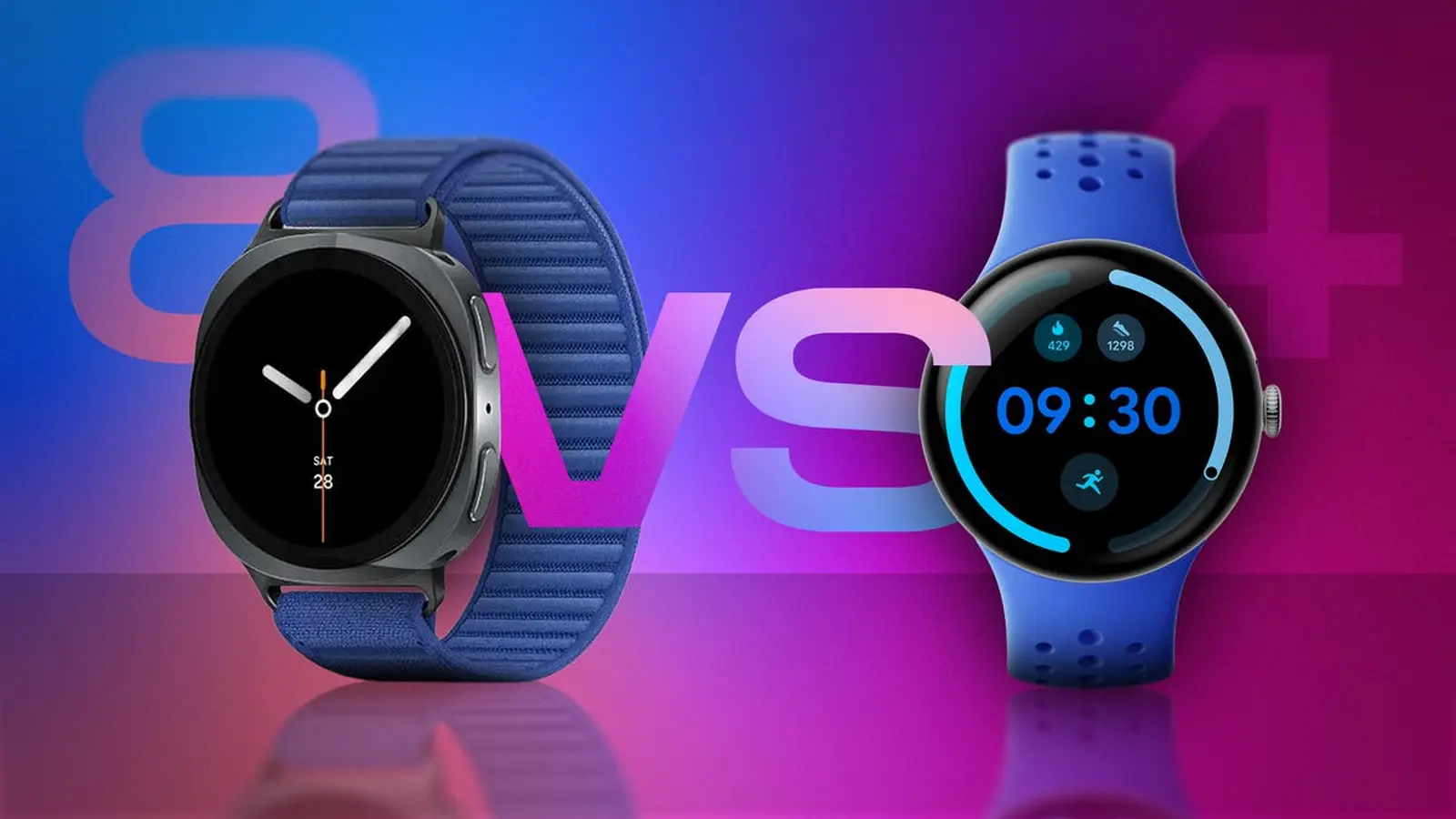
After Samsung unveiled the Galaxy Watch 8 series in July and Google followed with the Pixel Watch 4 at its August 20, 2025 Made by Google event, Android users now have two of the most refined Wear OS 6 smartwatches on the market. Both models are clear evolutions from last year’s hardware, but they emphasize different strengths: Google targets performance and charging, while Samsung prioritizes a sleeker profile and expanded fitness tools.
At a glance, both watches feel like flagship upgrades. Google fitted the Pixel Watch 4 with Qualcomm’s Snapdragon W5 Gen 2 plus a Cortex-M55 coprocessor for background tasks, aiming to improve responsiveness and battery efficiency.
Google says the base Pixel Watch 4 can run for roughly 30 hours with the always-on display enabled and supports fast charging that reaches 50% in about 15 minutes.
Samsung’s Galaxy Watch 8 keeps its Exynos W1000 chipset but rethinks the chassis with an 8.6mm wave-like “cushion” design that makes the watch feel thinner and more comfortable during exercise and sleep.
But which one is the better buy? Below we break down features, comparisons, advantages, practical use cases, and market relevance to help you decide.
Key specifications and performance
Processor & memory: The Pixel Watch 4’s move to the Snapdragon W5 Gen 2 paired with a Cortex-M55 coprocessor is the biggest internal change — the combination improves multitasking and offloads low-power jobs to the M55, extending usable battery life without increasing battery size. The larger 45mm Pixel Watch 4 can reportedly reach up to 40 hours in lighter use scenarios. Samsung’s Galaxy Watch 8 retains the Exynos W1000, which continues to deliver competitive day-long battery life.
Both devices ship with 2GB of RAM and 32GB of onboard storage, enough for apps, music, and offline maps.
Charging and battery practicalities
Google emphasizes fast charging: the Pixel Watch 4 can recover up to 50% battery in roughly 15 minutes, which is useful for quick top-ups. Samsung’s Galaxy Watch 8 takes closer to 30 minutes to reach the same 50% mark. Real-world battery life will depend on display settings, always-on display use, and health tracking frequency.
Design, display and wearability
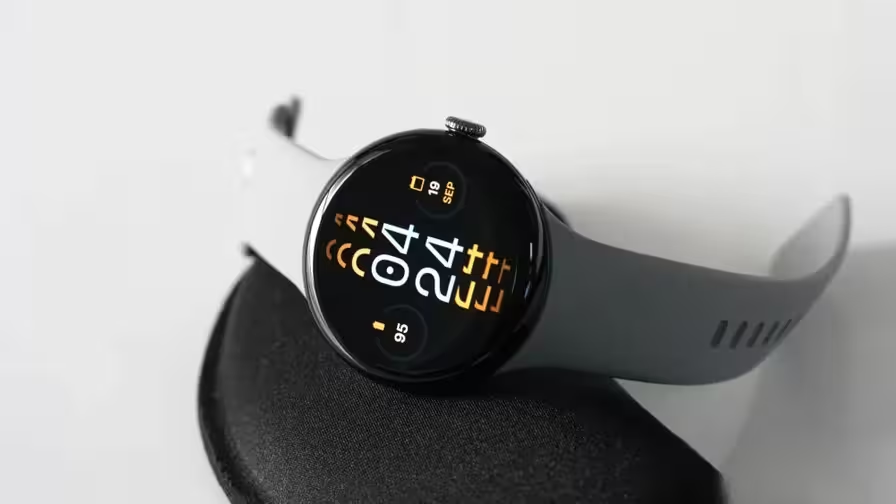
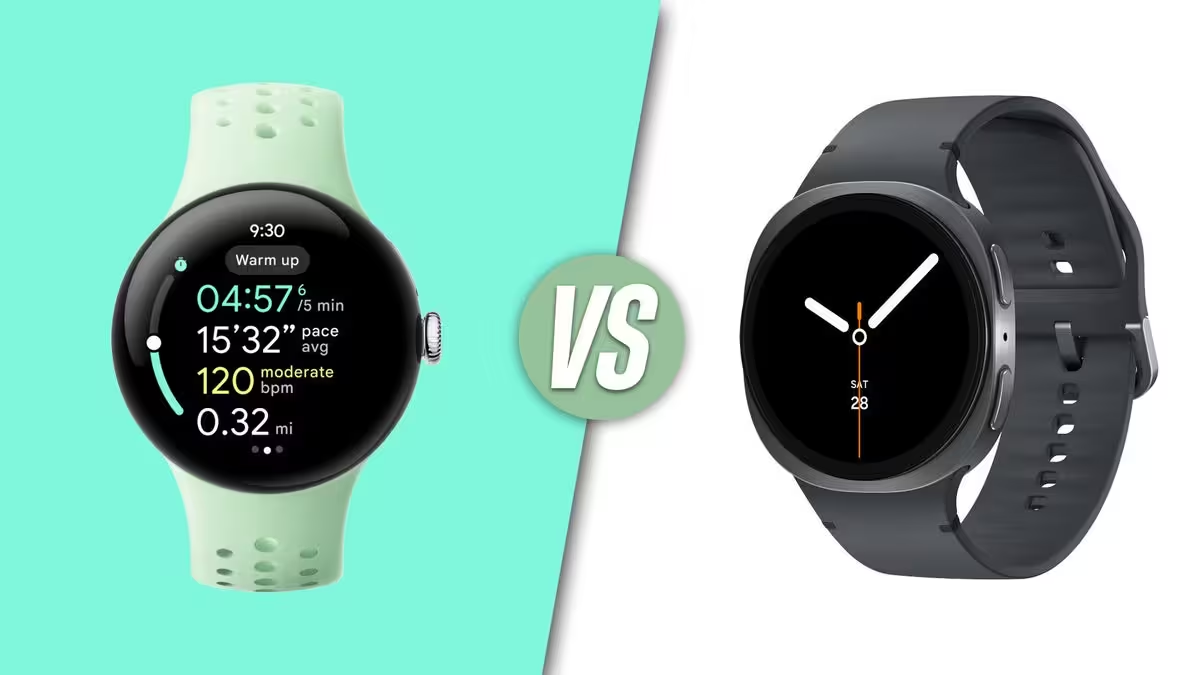
Pixel Watch 4: Keeps the domed aesthetic but switches to a curved OLED with narrower bezels for a more immersive feel. Google also relocated charging pins to the side, which alters docking behavior and accessory compatibility.
Galaxy Watch 8: Introduces a wave-shaped cushion chassis that distributes internals across a thinner 8.6mm case. Samsung’s display reaches higher peak brightness (advertised to 3,000 nits) and includes a touch-sensitive digital bezel for tactile navigation without a physical rotating ring.
Health, fitness and ecosystem
Fitness features are a primary differentiator because each watch ties into a distinct health ecosystem. The Galaxy Watch 8 expands Samsung Health with tools like Running Coach — which builds performance-based training plans — and new sensors offering an Antioxidant Index to suggest dietary adjustments. Samsung Health is free to use and integrates especially well with Samsung phones and wearables.
The Pixel Watch 4 centers Fitbit services: it offers 40+ workout modes and a Fitbit Morning Brief summarizing sleep and activity. Advanced analytics and deeper insights, however, still live behind the Fitbit Premium subscription, which is important to factor into long-term costs.
Advantages and practical use cases
Choose the Pixel Watch 4 if: You want snappier general performance, faster charging for travel or busy days, and a minimalist design with tight Fitbit integration. It’s ideal for users who prioritize quick top-ups, polished Wear OS app experience, and a clean aesthetic.
Choose the Galaxy Watch 8 if: You value a thinner, more comfortable watch for workouts and sleep, maximum display brightness for outdoor visibility, and advanced training tools built into Samsung Health. It’s a strong pick for performance-oriented athletes and Samsung ecosystem users.
Market relevance and final verdict
Both smartwatches underscore how Wear OS 6 has matured — Google and Samsung have produced two premium devices that target different user priorities. For tech enthusiasts and professionals deciding between the two, the choice often comes down to ecosystem and ergonomics rather than raw capability: Pixel Watch 4 emphasizes chipset-level efficiency and charging convenience, while Galaxy Watch 8 focuses on slim design and fitness features tied into Samsung’s broader health platform.
In 2025, Android users finally have two flagship Wear OS options that feel equally premium but distinctly angled. Consider your daily routines, phone brand, fitness needs, and whether you value speed and convenience (Pixel Watch 4) or a sleeker, fitness-first wearable (Galaxy Watch 8).
SEO note
Key search terms covered: Pixel Watch 4, Galaxy Watch 8, Wear OS, Snapdragon W5 Gen 2, Exynos W1000, smartwatch battery life, fast charging, Fitbit, Samsung Health, wearable tech.




Leave a Comment
Comments
No comments yet. Be the first.