
3 Minutes
Comparing Long-Term Returns on Apple Stock and Bitcoin
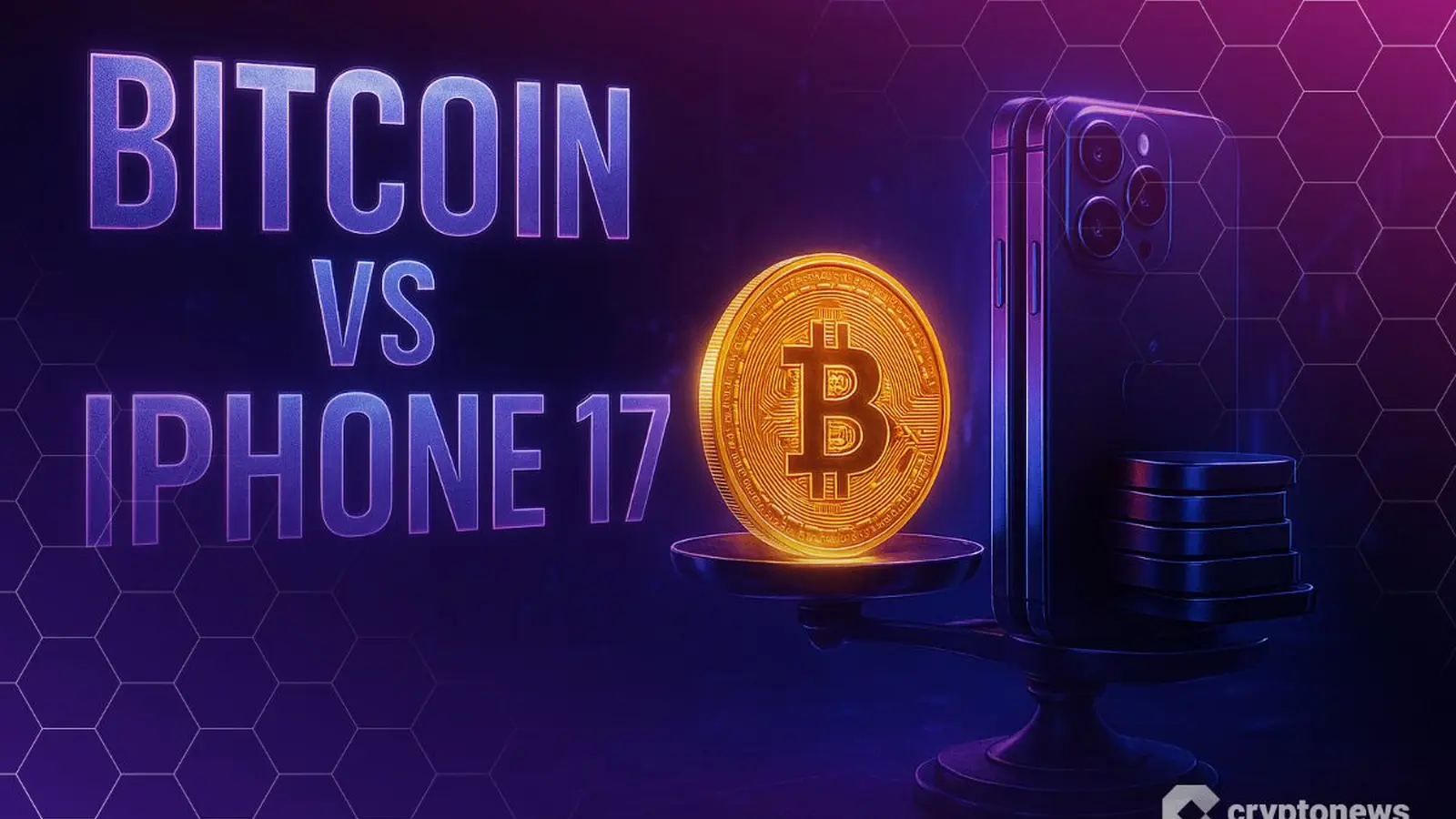
Investors weighing a modest $799 allocation to either Apple (AAPL) stock or Bitcoin face two very different risk-reward profiles. Using conservative growth assumptions, Apple’s annual gains are often projected in the mid-single digits to low-double digits, while Bitcoin proponents cite higher annualized returns but with pronounced volatility. Below we reframe recent projections to show how each asset could translate into real-world purchasing power — specifically, how many future iPhones the investment might buy by 2033.
Projected Outcomes: Apple’s Conservative Growth
Analysts using steady growth forecasts—ranging from roughly 7% to 15% annually—estimate that an initial $799 invested in Apple could grow to between about $1,400 and $2,500 by 2033. At a midpoint assumption of 10% compound annual growth, that $799 would rise to approximately $1,719 after eight years. In practical terms, this equates to the ability to buy one to two future iPhone base models, assuming Apple maintains a $700–$900 price band for flagship devices.
Why Apple’s Market Cap Matters
Apple’s roughly $3.7 trillion market capitalization positions it as a mature technology leader. For investors, that means the company must generate very large revenue and earnings advances to produce dramatic share-price appreciation. Stability and steady dividend or buyback-driven returns are realistic expectations, but explosive upside is less likely compared with smaller or emerging assets.
Bitcoin’s Upside: Higher Returns, Higher Volatility
By contrast, a commonly cited scenario for Bitcoin assumes a 20% annualized return over the same eight-year horizon. Under that assumption, a $799 stake could balloon to roughly $3,437 — enough to buy three to four future iPhones at today’s pricing assumptions. That growth reflects Bitcoin’s historical capacity for outsized gains driven by network effects, scarcity mechanics, and growing institutional adoption within the digital-asset ecosystem.
Volatility and Corrections
However, Bitcoin’s history also includes deep drawdowns: 50%–80% corrections have occurred during major market cycles. Such declines can temporarily erode purchasing power and investor confidence. That said, since broader institutional adoption accelerated, year-to-year corrections have tended to moderate in several periods, sometimes falling below 20%—a sign that liquidity and investor base diversification are changing the risk profile.
Market Capitalization Context: Room to Run?
Comparing market caps gives additional perspective. Bitcoin’s market cap of around $2.2 trillion (at the reference point) is large for a digital asset but still small relative to traditional stores of value such as gold, which clocks in near $24 trillion. That gap suggests there may be room for further institutional inflows and adoption, potentially amplifying Bitcoin’s upside if it continues to win credibility as a digital store of value within the broader blockchain and crypto markets.
Key Takeaways for Crypto and Equity Investors
- Apple offers steady, lower-volatility returns consistent with a mature tech giant; price appreciation requires large fundamental growth.
- Bitcoin offers higher theoretical upside and additional purchasing power potential but comes with pronounced volatility and risk.
- Diversification across equities and crypto may help manage risk while retaining exposure to both growth and disruption themes.
- Institutional adoption, regulatory clarity, and macro trends will continue to shape both assets’ future trajectories.










Leave a Comment
Comments
No comments yet. Be the first.