
5 Minutes
Why crypto didn't ride the latest rally
Digital assets have not mirrored the fresh all-time highs seen in gold and US equities this month. While traditional markets extended upward, Bitcoin and many altcoins stalled or declined — a divergence that has raised questions about crypto's maturity as a mainstream asset. New analysis from on-chain analytics provider CryptoQuant, including work by XWIN Research Japan, points to several structural and liquidity-driven reasons why crypto has not kept pace.
1) Liquidity flows favor established safe havens first
When monetary policy shifts toward easing, institutional capital tends to migrate first into the most liquid and familiar instruments: equities and gold. According to CryptoQuant contributors, that pattern repeated itself after recent US Federal Reserve rate-cut signals. Investors front-loaded positions into stocks and bullion, leaving crypto further down the queue in the liquidity pipeline.
This sequencing matters because crypto markets, particularly smaller-cap altcoins, sit at the tail end of capital rotations. Only after risk appetite broadens and liquidity cascades through other markets does on-chain demand typically pick up for Bitcoin and Ethereum. The effect is not immediate; historical cycles show crypto often lags then accelerates once broader market momentum subsides and liquidity can be redeployed into digital assets.
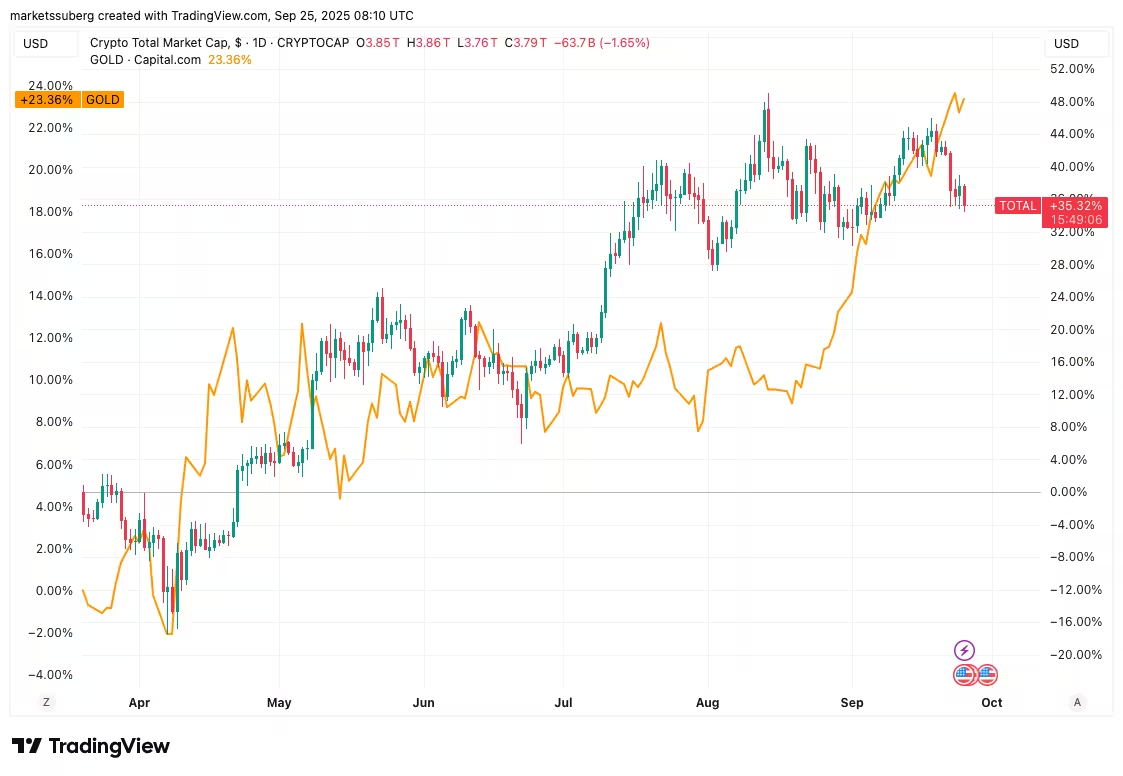
Crypto market cap vs gold one-day chart
2) Stablecoin dynamics are creating a temporary liquidity bottleneck
Stablecoins are a vital on-ramp for crypto buying on exchanges. Even though the total stablecoin supply recently reached record levels, a growing share of that supply is leaving centralized exchange order books. Traders are withdrawing stablecoins to private wallets, bridging them to DeFi pools, or placing liquidity into over-the-counter and private-market vehicles. That means the stablecoins exist, but they are not actively available on exchanges to finance spot purchases of BTC and ETH.
CryptoQuant data highlights this shift in exchange stablecoin reserves. With liquidity parked off-exchange, the immediate firepower to push Bitcoin and altcoins higher is diminished. Traders' behavior — shifting to off-exchange custody or into longer-term allocations — signals a more cautious or strategic stance rather than active market-making.
Why exchange-listed stablecoins matter
Exchange reserves are a proxy for deployable buying power. When stablecoins sit on exchanges, market participants can quickly convert them into spot positions. When those reserves fall, it suggests reduced capacity for immediate purchase pressure. That dynamic can keep crypto prices rangebound even as other asset classes surge.
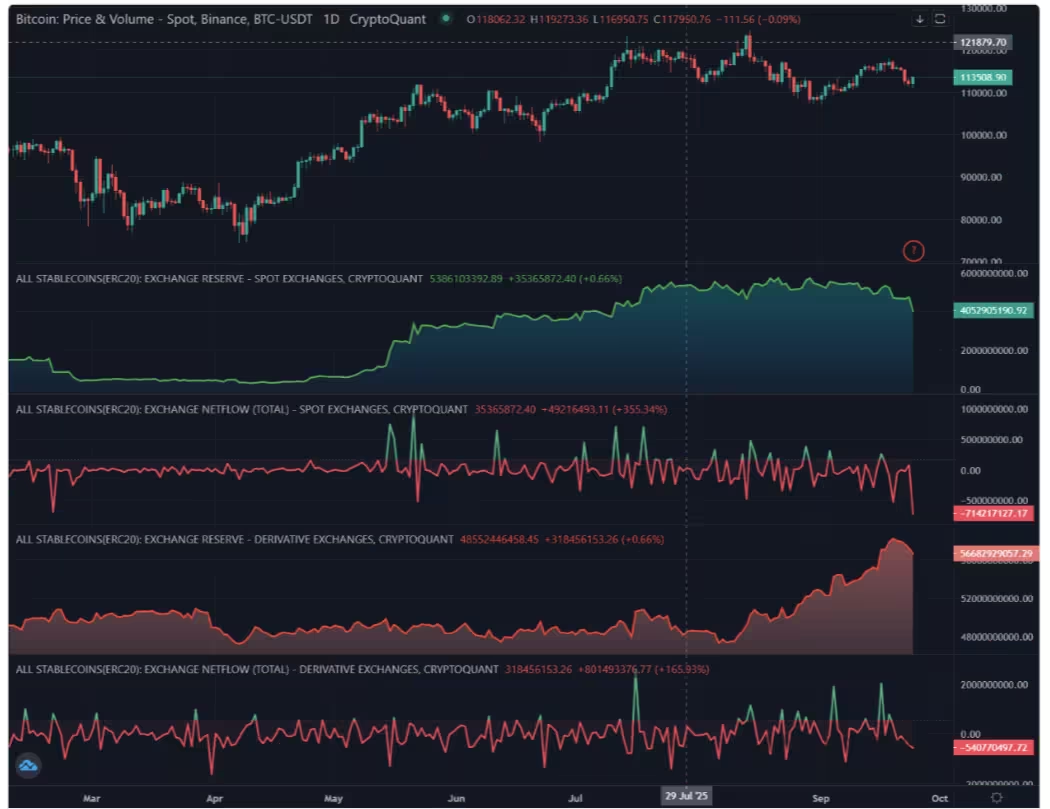
BTC/USDT one-day chart with exchange stablecoin data
3) Derivatives activity and leveraged positioning are dampening upside
Derivative markets show another layer of caution. Rather than aggressively accumulating spot exposure, many traders have favored hedging and leverage strategies in response to choppy price action. That reflects classic market behavior when volatility remains elevated and directional conviction is uncertain.
Open interest in futures and activity in options markets suggest participants are protecting portfolios or seeking asymmetric bets instead of piling into long-only positions. An upcoming options expiry worth roughly $22.6 billion could further heighten short-term volatility and weigh on prices, as large expiries often lead to squeezes, directional compressions, or temporary liquidity gaps.
Short-term headwinds: QT and Treasury liquidity
Beyond exchange-level dynamics, macro factors such as quantitative tightening (QT) and reduced Treasury liquidity absorption can subtract from the pool of investable capital. When central banks are still withdrawing liquidity or when treasury actions absorb market cash, the marginal buyer for risk assets like crypto can be absent until conditions ease.
4) Historical patterns: crypto lags, then often outperforms
Looking back over past cycles, Bitcoin has frequently followed a 'lag and leap' pattern relative to equities. XWIN Research notes that after major equity all-time highs, BTC has historically posted gains — averaging around +12% in the 30 days following equity peaks and approximately +35% over a 90-day window. This suggests that Bitcoin's late participation is a recurring feature of liquidity rotations rather than conclusive evidence that a crypto bull market is over.
Institutional demand often arrives in waves. Early movers allocate to deep, liquid markets; only after those markets 'cool' can capital rotate into higher-risk, less liquid assets. If historical rhythms persist, crypto could experience outsized returns once exchange-stablecoin reserves and on-chain liquidity realign.
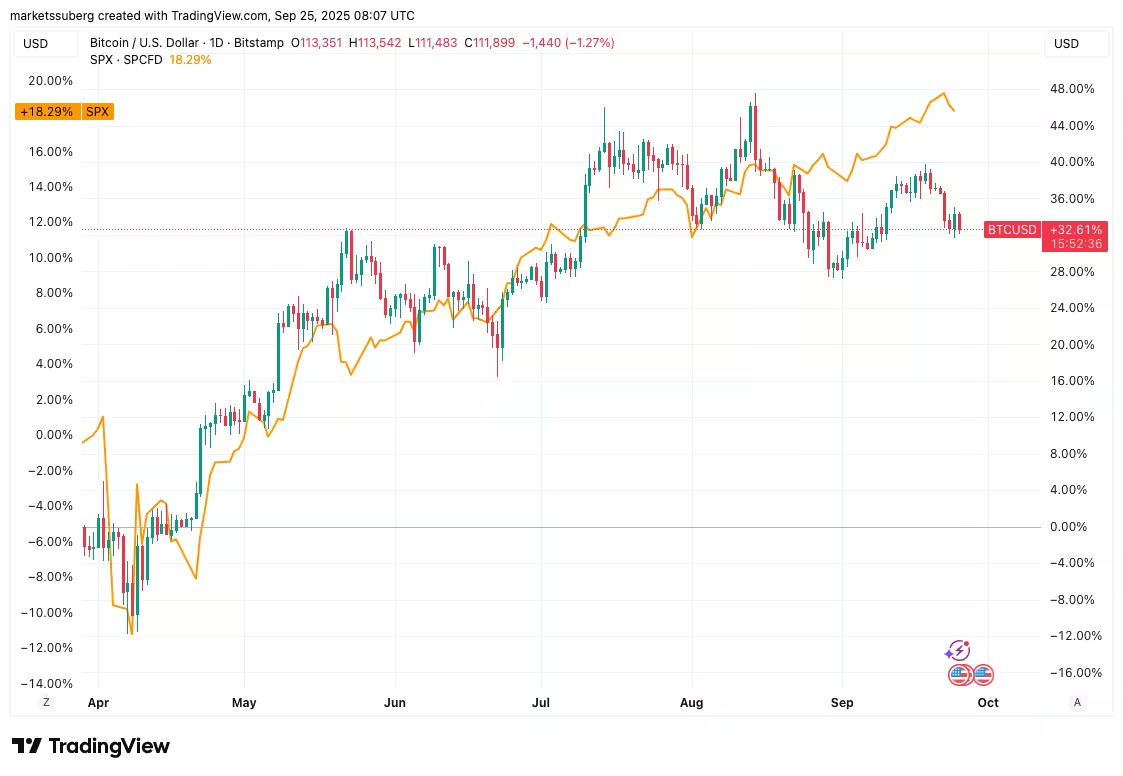
BTC/USD vs S&P 500 one-day chart
What this means for traders and investors
- Stay focused on liquidity indicators: Exchange stablecoin reserves, on-chain flows, and derivatives positioning can offer clearer signals than headline price action alone.
- Monitor macro catalysts: Fed communications, QT cadence, and major options expiries remain relevant to crypto price trajectories.
- Expect phased participation: Institutional adoption of crypto is often non-linear. The market can lag traditional assets during early easing phases before catching up once risk appetite spreads.
Practical portfolio considerations
For traders, the current environment favors nuanced risk management. Hedging and selective use of leverage can help navigate potential whipsaws around large expiries and macro shifts. For longer-term investors, periods when crypto underperforms other risk assets may present accumulation opportunities, especially if on-chain indicators show liquidity is building off-exchange rather than disappearing entirely.
Conclusion: temporary lag, not necessarily terminal decline
The divergence between crypto and the recent rallies in gold and US stocks can be largely explained by liquidity sequencing, stablecoin reserve movements, derivative market behavior, and familiar historical patterns. Crypto's placement at the end of the liquidity pipeline means it often requires a second wave of capital rotation to see the strongest gains. While short-term headwinds are real, the structural backdrop suggests that once liquidity becomes available on exchanges and risk appetite widens, Bitcoin and major altcoins could accelerate their outperformance.

Investors should watch exchange stablecoin balances, derivative open interest, and macro liquidity trends as leading indicators. These metrics will help determine when the market moves from a phase of stalled performance into a renewed leg higher for digital assets.









Leave a Comment
Comments
No comments yet. Be the first.