
3 Minutes
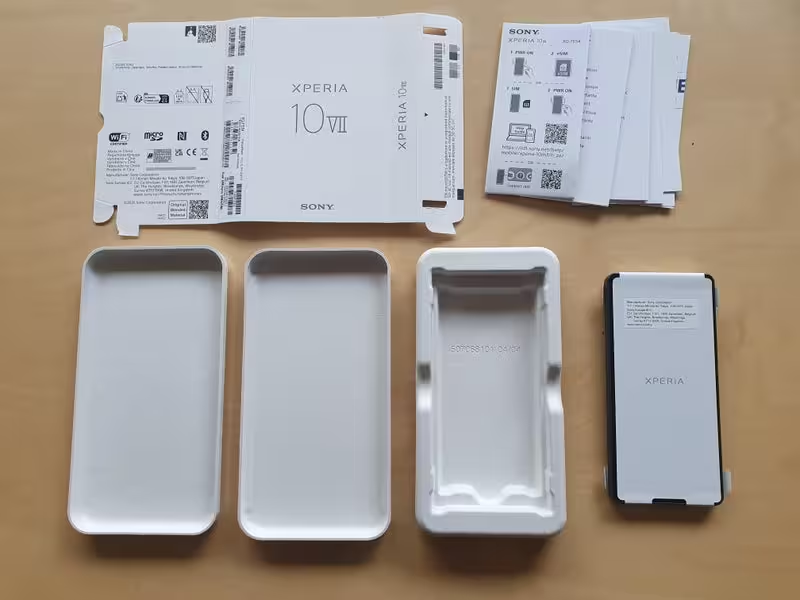
Sony has quietly become the first smartphone maker to ship a handset without a USB cable in the box. The mid-range Xperia 10 VII arrives with only printed manuals, a packaging icon confirming the omission and nothing else — continuing a recent industry trend of removing accessories.
Small change, big reaction: what Sony did
Pictures posted to Reddit show the Xperia 10 VII retail box containing only documentation. An unmistakable icon on the pack indicates no USB cable is included, which means buyers will need to supply their own cable or buy one separately.
Why this move was predictable
Manufacturers have already removed charging bricks from phone boxes to reduce size, weight and — they say — electronic waste. Removing cables is the next logical step. From a business perspective it also trims unit costs: no more millions of cheap cables to include in every phone.
Is it really about the planet?
Brands argue that fewer included accessories reduce shipping emissions and e-waste. That’s a fair point — but it’s also fair to ask how much of that saving is environmental versus purely financial. Many consumers already own several USB-C cables, but not everyone does. The optics are similar to the earlier charger removal controversy.
The USB-C complication: not all cables are equal
The real user-facing issue isn’t the absence of a cable so much as the confusing state of USB-C accessories. Two cables that look identical can have very different capabilities: some support fast charging and high-speed data, others are barely adequate for slow charging. That means if your phone no longer comes with a cable, you must choose carefully.
- Look for cables rated for the wattage and data speeds you need (USB 2.0 vs USB 3.x vs USB4).
- Buy from reputable brands or check the specifications — not just the connector shape.
- Reuse existing cables when possible, but verify they support fast charging if you rely on it.
Apple already set a precedent
Apple removed chargers years ago and has even shipped some AirPods models without a USB-C cable, so Sony’s decision doesn’t come out of nowhere. With expectations building that future flagships like the Galaxy S26 or iPhone 18 might follow, the industry seems to be settling into a new normal.
What this means for consumers
For many people, this will be a minor annoyance—reuse an old cable and move on. For others, especially those buying a phone for the first time or replacing a non-USB-C device, it adds friction and potential extra expense. The responsibility shifts to buyers to check compatibility and durability before purchase.
Ultimately, whether you see Sony’s choice as sensible or short-sighted depends on how much you already own and how picky you are about charging speeds. Either way, the industry is nudging us toward buying fewer bundled accessories — and more standalone ones.
Will you miss that cable in the box?

.webp "Redmi 17C 5G: 6.9-inch Screen and 6,000mAh Power Lands")
Leave a Comment
Comments
No comments yet. Be the first.