

2 Minutes
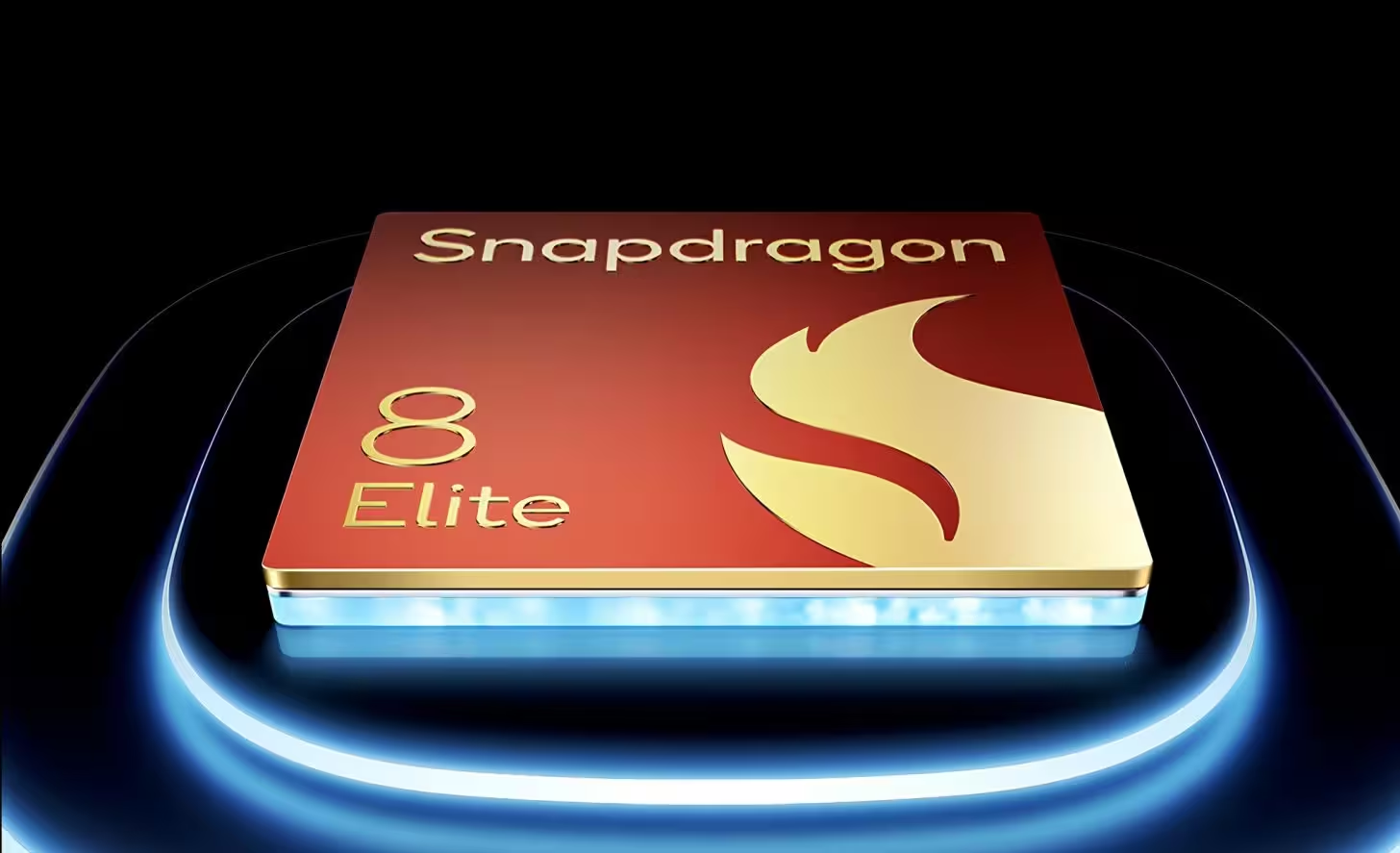
Fresh leaks from China sketch a clearer picture of Qualcomm's rumored follow-up to the recently released Snapdragon 8 Elite Gen 5. The twist: next year could see two distinct chips — a standard Gen 6 and a higher-end Gen 6 Pro.
Two chips, one platform — where they diverge
Insiders say both the Snapdragon 8 Elite Gen 6 and the Gen 6 Pro will be built on TSMC's 2nm node and will use Qualcomm's third-generation in-house CPU cores arranged in a 2+3+3 configuration. That suggests a continued focus on a balanced mix of ultra-fast prime cores, performance cores, and efficiency cores.
But the Pro model appears to be the real differentiator. Early details claim the Gen 6 Pro will be the only one to support LPDDR6 memory — a step up that could unlock higher sustained performance and faster memory bandwidth for flagship phones. The two chips are also expected to ship with different GPUs, reinforcing a clear performance tiering between them.
Specs at a glance
- Process: TSMC 2nm for both Gen 6 and Gen 6 Pro
- CPU cores: Third-generation in-house design, 2+3+3 layout
- Memory: LPDDR6 supported only on the Pro model
- GPU: Different GPU configurations between standard and Pro variants
- Price: Pro rumored to cost roughly $70 more than this year’s Gen 5
Imagine flagship phones next year offering two distinct Snapdragon-equipped options: one that targets peak performance and premium memory bandwidth, and another that balances cost with high-end features. That choice will likely shape OEM product planning across price tiers.
What this means for phone makers and buyers
If the $70 premium for the Pro version holds true, manufacturers will face a straightforward trade-off. Will they chase the highest benchmark scores and premium camera/AI features by adopting the Gen 6 Pro — and its LPDDR6 advantage — or will they save on bill of materials by choosing the non-Pro Gen 6 and pass the savings to consumers?
Brands that position devices as performance showcases or want to push advanced AI and imaging workloads may favor the Pro. More price-sensitive flagships or slightly trimmed models could opt for the standard Gen 6 and still benefit from the 2nm process and third-gen CPU cores.
Qualcomm has only just debuted the Gen 5 chip, so timelines remain speculative. But these leaks suggest an aggressive cadence and clear segmentation strategy for next year’s Android flagships — and that’s something both consumers and industry watchers should keep an eye on.










Leave a Comment
Comments
No comments yet. Be the first.