

5 Minutes
U.S. XRP ETF launch race intensifies as firms eye November
Major asset managers including Franklin Templeton, Bitwise and Canary Capital have moved swiftly to amend their SEC filings as they position spot XRP exchange-traded funds (ETFs) for a potential November listing in the U.S. market. By trimming language that could allow the SEC to delay approvals, these issuers aim to accelerate the launch timeline for XRP-backed ETFs, which could materially change institutional access to the token.
What changed in the SEC filings
ETF analyst commentary and updated S-1 filings show that Franklin Templeton removed specific "8(a)" delaying language from its registration, shortening procedural steps that previously allowed the Securities and Exchange Commission to extend review or hold off an ETF effective date. As James Seyffart noted, this adjustment makes a fund automatically effective after the statutory 20-day waiting period once a listing is approved.
Franklin Templeton’s filing signals an expected mid-November debut—around November 13—if the exchange accepts the registration. Bitwise and Canary Capital have taken similar steps by removing a so-called "delaying amendment" from their S-1 forms, positioning their spot XRP ETFs for quicker activation pending routine exchange approvals.
Nasdaq Form 8-A and the final procedural step
Even with shortened S-1 language, the final hurdle for most issuers is exchange-level acceptance of Form 8-A (or equivalent registration). Journalist reports indicate Canary Capital could be first to list if Nasdaq accepts its Form 8-A on schedule. If so, Canary and Franklin Templeton might launch ETFs on the same day or in close succession; Bitwise’s ETF is currently projected for a slightly later window, roughly November 19–20.
At least seven U.S. spot XRP ETF applications remain pending, including notable issuers such as Grayscale, 21Shares and WisdomTree—each with amended S-1 filings suggesting industry-wide urgency to clear administrative obstacles before year-end.
Market implications: institutional demand and price action
Historically, approval and launch of spot crypto ETFs have acted as catalysts for institutional inflows, offering a regulated, custodian-backed route for investors to gain exposure without self-custody. The narrative for a U.S. spot XRP ETF is similar: enhanced market access could broaden liquidity, attract institutional capital, and normalize XRP exposure in many portfolios.
However, precedent also cautions that listings do not guarantee sustained rallies. Recent Solana ETF activity showed a sharp immediate pop after a staking ETF launch—SOL briefly topped $200 before retracting back toward lower support. That episode highlights that ETF listings can trigger short-term spikes but may not overturn bearish technical trends without continued demand.
Technical outlook for XRP ahead of launch
.avif "SEC Postpones Decision on Truth Social Bitcoin ETF Until September: What Crypto Investors Should Know")
XRP’s on-chain narrative is now complemented by a mixed technical picture. After a sizable correction, price action consolidated near the $2.10 area. The 30-period moving average sits roughly at $2.23, providing near-term resistance. Traders are watching for the Relative Strength Index (RSI) to continue recovering from oversold levels—currently around 48—which could indicate a potential shift from sellers to buyers if sentiment improves.
Analysts estimate that a confirmed ETF listing could push XRP into the $2.40–$2.60 range, where prior support has flipped to resistance. Sustained buying above that zone could open the path to $3 and beyond. Conversely, if ETF listings fail to produce meaningful inflows, XRP could retest the $2.00 psychological support and remain trapped in a neutral-to-bearish short-term structure.
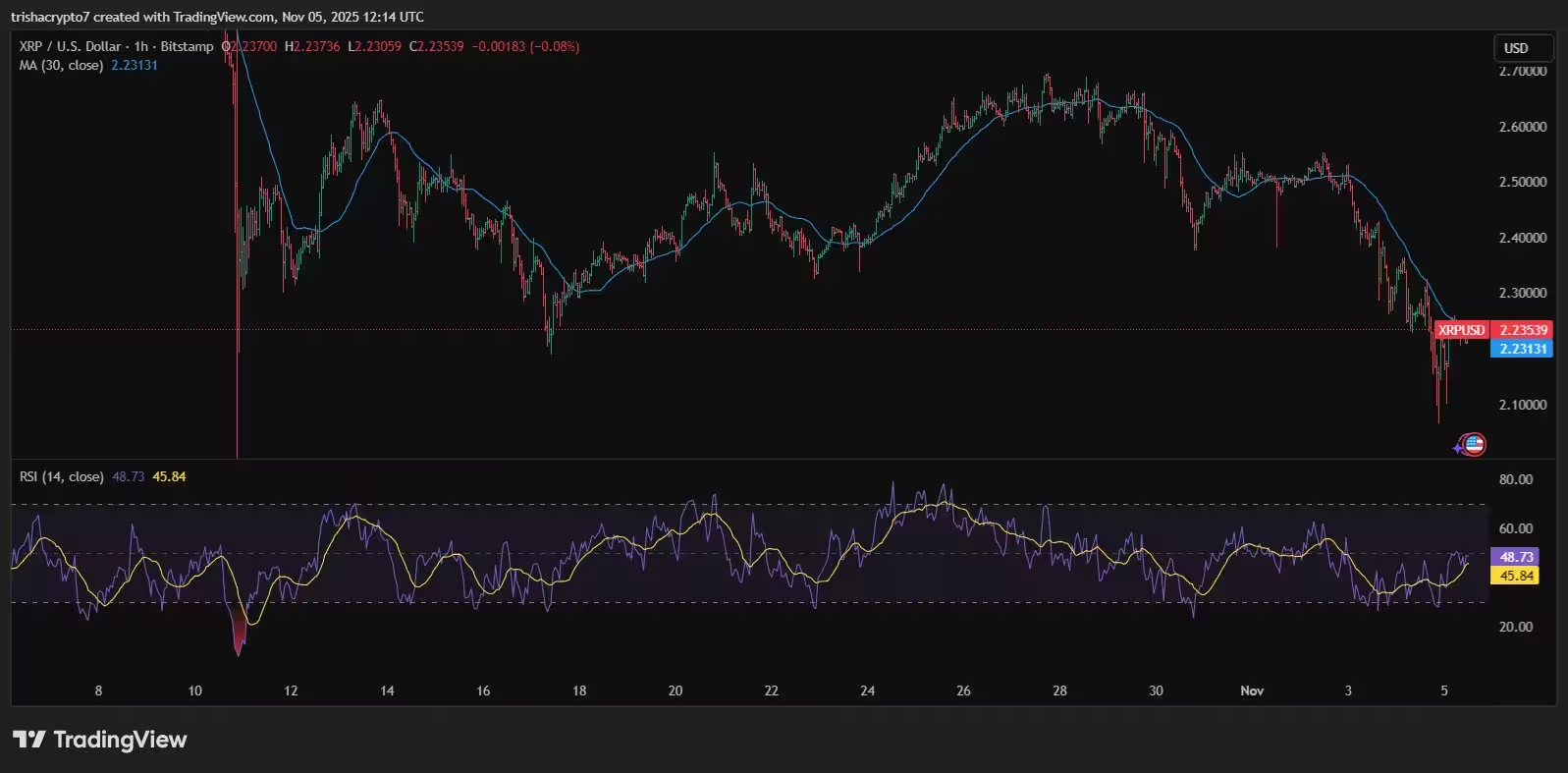
XRP price could potentially receive a boost from the upcoming launch of XRP ETFs in the U.S market
Why an XRP ETF matters for crypto markets
A spot XRP ETF would give investors a regulated vehicle tied directly to XRP token holdings, increasing transparency and lowering operational friction for institutional allocators and retail investors who prefer ETF wrappers. For market makers and exchanges, ETF listings typically improve liquidity depth and reduce trading spreads, which benefits price discovery.
From a regulatory perspective, streamlined S-1 filings reflect issuers’ efforts to limit avoidable procedural delays and reduce reliance on discretionary agency actions. That approach suggests issuers are confident in meeting listing standards and are prioritizing time-sensitive market windows.
Risks and watch points
Investors should remain mindful of several risks: macro volatility, SEC regulatory developments, exchange-level approvals (Form 8-A acceptance), and how much actual capital flows into XRP ETFs after launch. Technical indicators currently show mixed signals; therefore, any ETF-driven rally could be volatile and subject to quick reversals if buying momentum fades.
Bottom line
The race to list U.S. spot XRP ETFs in November represents a pivotal moment for XRP and crypto capital markets. By amending SEC filings to remove delaying language, Franklin Templeton, Bitwise and Canary Capital have put themselves on a fast track to listing, provided exchanges complete routine registration steps. A successful ETF rollout could boost institutional adoption and improve liquidity for XRP—but traders and investors should weigh technical conditions and macro risks when positioning around potential launch dates.
For traders tracking price action, key levels to watch remain $2.00 (support), $2.40–$2.60 (near-term resistance), and $3.00 as a medium-term upside target if inflows materialize. Continued coverage of SEC filings, Form 8-A approvals, and announced ticker listings will provide the clearest signals about timing and market impact.












Leave a Comment
Comments (2)
Feels a bit overhyped, imo. ETF listing = likely quick pop but long term needs real institutional flows. watch $2 support and $3 target
SEC fast-tracking XRP ETFs? sounds too neat. Who's actually gonna pour in big $$ or is this just another short-term pump mania...