
3 Minutes
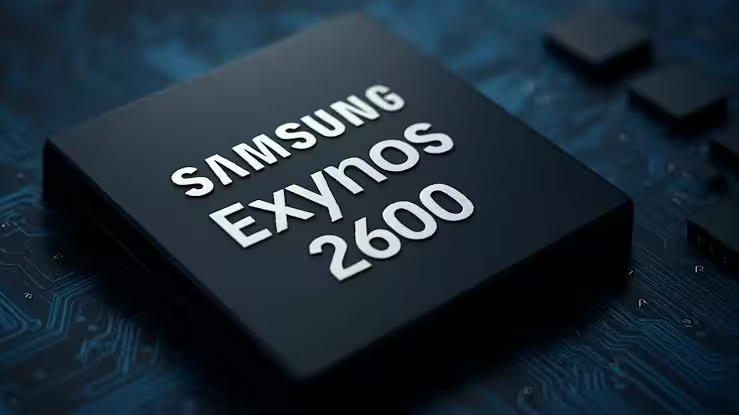
Samsung has started talking openly about the Exynos 2600, its first chip built on a 2nm Gate-All-Around process. The headline numbers are modest — but behind them lie yield improvements, cost savings, and major contracts that could reshape Samsung's chip strategy heading into the Galaxy S26 launch.
Small gains on paper, big implications in the supply chain
On its own, the Exynos 2600’s spec sheet doesn’t look revolutionary: Samsung cites roughly a 5% performance increase, an 8% boost in power efficiency, and about a 5% reduction in die size versus its second-generation 3nm process. Still, those incremental gains are already translating into tangible business wins.
- Target shipping window: 2026, starting with European Galaxy S26 models
- Performance uplift: ~5%
- Efficiency gain: ~8%
- Die shrink: ~5%
- Reported yield so far: ~60%, enough to begin serious production
Those yield figures have helped Samsung lock in roughly a quarter of Galaxy S26 orders and secure a headline-grabbing $16.5 billion deal from Tesla for AI6 chips — deals that hinge on early 2nm capabilities rather than dazzling single-core benchmarks.
What buyers can expect from S26 models
Reports indicate that the standard Galaxy S26 and S26+ sold in Europe will likely use Exynos 2600 silicon, while the S26 Ultra is expected to ship with Qualcomm’s Snapdragon 8 Elite Gen 5 globally. For years, Exynos-powered variants trailed Snapdragon counterparts in real-world tests, and that legacy raises questions about whether modest process gains can close the gap.
One key reason for the performance gap remains architectural. Qualcomm and Apple rely on heavily customized CPU designs tuned for real-world workloads, while Samsung continues to use ARM's standard core designs for Exynos, which often lag in optimization.
Why the industry is watching yields and costs
Even small process improvements can have outsized commercial effects. Samsung says the current yields could already enable a per-unit saving of about $20 to $30 versus using Snapdragon chips, potentially lowering the bill of materials for European S26 models. For a mass-market flagship, that adds up fast.
Imagine the impact across millions of units: slightly smaller dies, a few percent better battery life, and lower manufacturing costs can make Samsung a more competitive supplier to partners beyond its own phones — which may explain deals like the Tesla contract.
Is this the turning point for Exynos?
Samsung argues that incremental, reliable gains are the path back to competitiveness. Skeptics point to Exynos' history: promising on paper but inconsistent in users' hands. The big questions now are whether yields will improve beyond 60%, whether Samsung will invest more in custom CPU design, and if real-world performance will match expectations when the S26 ships.
In short: the 2nm jump is important, just not dramatic. For customers and rivals, the real story will be whether those modest numbers turn into consistent, measurable improvements in everyday use.











Leave a Comment
Comments
No comments yet. Be the first.