
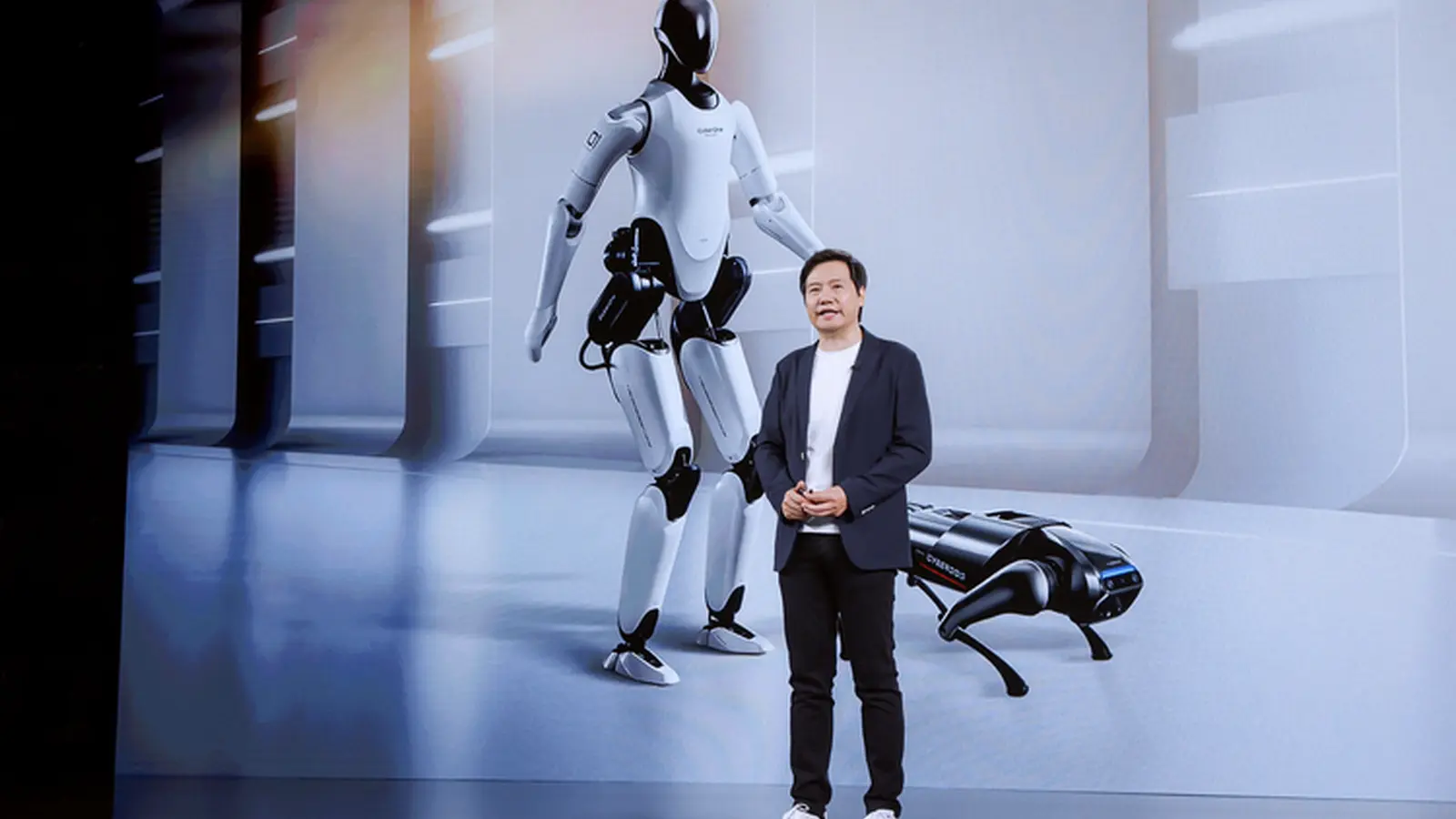
Xiaomi CEO Lei Jun says humanoid robots will be rolled out at scale across the company's factories within five years, marking a move from human-centered assembly lines to AI-driven production. He argues that artificial intelligence is no longer a peripheral tool but the core force reshaping industrial work.
Inside Xiaomi's AI-driven factory leap
Lei pointed to Xiaomi's electric-vehicle plant as a preview of what deep AI integration can deliver. Tasks that once relied on slow, error-prone manual checks are now handled by an X-ray system paired with vision AI — completing inspections in two seconds with roughly ten times the speed and more than five times the accuracy of a human inspector. That kind of jump in throughput and precision is exactly what manufacturers crave.
He believes those efficiency gains could unlock a trillion-yuan (about $140 billion) industrial market. But Lei was also clear that this transformation won’t happen in isolation: scaling AI and robotics demands partnerships, shared standards and an open ecosystem rather than lone-wolf efforts.
Humanoids on the assembly line: what to expect
According to Lei Jun, humanoid robots will soon assume many assembly-line tasks currently done by people — from repetitive handling to fine manipulation and high-accuracy inspection. Xiaomi plans to deploy these robots across its factories at scale within five years, and the company expects the consumer/home market for humanoids to be even larger and more demanding.
- Faster inspections and fewer defects with machine vision
- Higher precision for die-cast and assembly work
- New services and product categories as robots move beyond the line
Lei also warned against the outdated playbook of competing on cheap labor. He urged Beijing’s manufacturing sector to take the lead in intelligent production, capturing the strategic high ground in the global race to upgrade industry.
From CyberOne to broader robotics bets
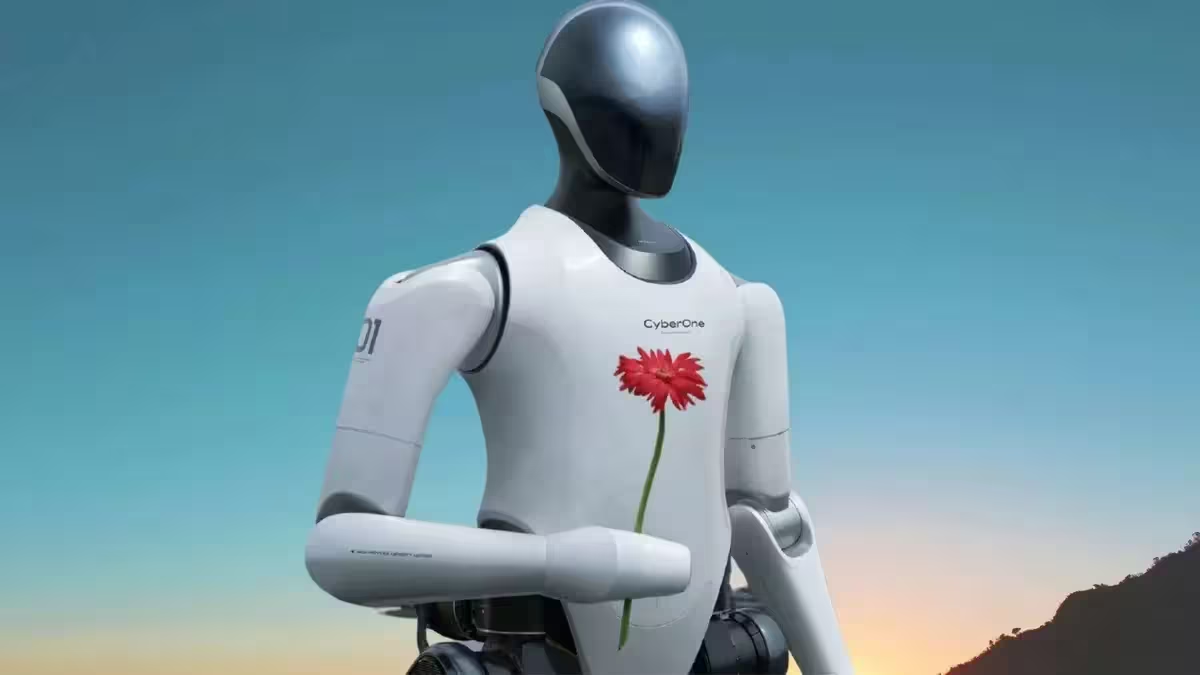
Xiaomi’s public robotics journey began with CyberOne, a humanoid proof-of-concept revealed in 2022. Since then the company has quietly expanded its AI and robotics research, tying those efforts into its broader push on smart electric vehicles and advanced automation.
Hitting Lei Jun’s five-year timeline will depend on technical breakthroughs, regulatory clarity and the ability to forge cross-sector partnerships. Still, the CEO’s timeline signals a bold bet: industrial humanoid robots are moving from niche experiments to mainstream manufacturing tools, and China aims to be at the forefront.


Leave a Comment
Comments
No comments yet. Be the first.