
Think desktop CPUs have hit a ceiling? Think again. AMD is reportedly preparing a radical step up for its next-gen Ryzen family, a lineup that could put a 24-core part squarely in the hands of consumers for the first time.
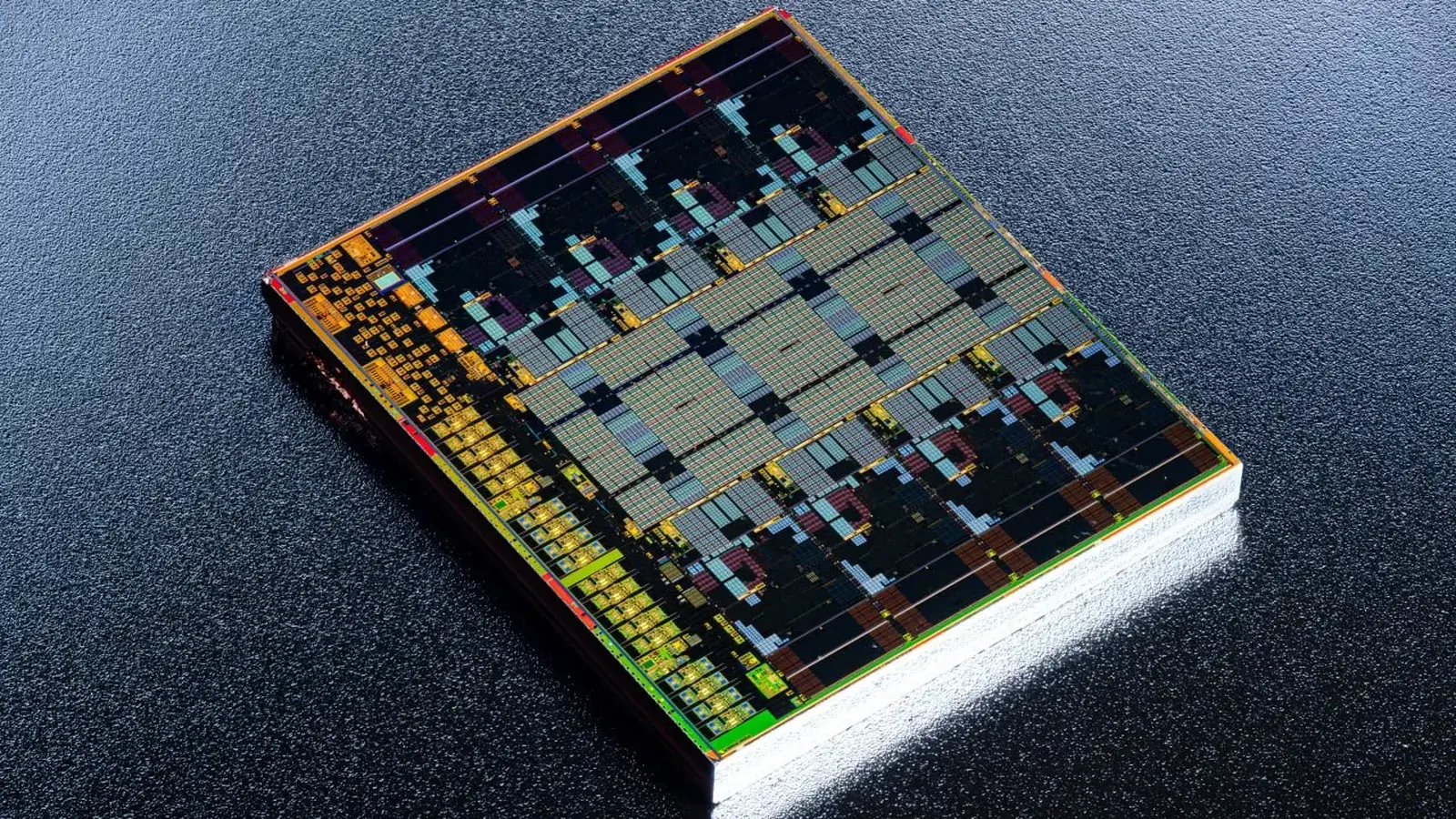
Leaks from credible hardware sources point to a Ryzen 10000 series — codenamed Olympic Ridge — built on a new Zen 6 architecture. The most striking change isn't just raw core count. It's an architectural rethink of the chiplet itself. Until now, each CCD (chiplet) topped out at eight cores. Zen 6 allegedly boosts that to twelve, and that tweak alone reshuffles how AMD can scale desktop designs.
What does that mean in practical terms? AMD is believed to be planning seven configurations across single-CCD and dual-CCD designs. Single-CCD SKUs would span 6, 8, 10 and 12 cores. Dual-CCD chips could be configured as 16 (8+8), 20 (10+10) and the headline 24 cores (12+12). Simple arithmetic, big implications.
Cache numbers are part of the conversation, too. Reports suggest each new CCD will carry 48 MB of L3 cache. Put two together and the flagship non-X3D model would claim 96 MB of L3 — a substantial pool that helps feed those cores, especially in threaded workloads.
Raw core density is only half the story. Zen 6 is expected to bring meaningful IPC uplift and higher frequencies, so even chips with similar core counts to today's models should show noticeable performance gains. Single-threaded performance matters just as much as multi-threaded throughput for many real-world tasks, and that balance looks to be a priority.
Good news for enthusiasts: AM5 compatibility is reportedly staying on the table. In other words, upgrading could be as simple as swapping chips rather than motherboards — a welcome contrast to Intel's more frequent platform breakpoints.
How does Intel respond? Leaks around Intel's next-generation Nova Lake hint at a very different approach: heterogeneous clusters that could reach as many as 52 cores by mixing big and small cores. Two divergent philosophies. One favors uniform, large cores that push single-thread strength; the other stacks quantity with a hybrid mix.
AMD's move to 12-core CCDs could rewrite desktop CPU expectations and reshape upgrades for gamers and professionals alike. Expect a lively battle at the high end, where architecture and software optimization will decide winners more than raw numbers. Are you ready to rethink what a consumer desktop chip can be?

Leave a Comment
Comments
No comments yet. Be the first.