
10 Minutes
Why Gorden Wagener matters for Mercedes-Benz
Gorden Wagener's departure from Mercedes-Benz at the end of January 2026 closes a defining chapter in contemporary automotive styling. Over nearly three decades in Stuttgart — and officially leading Mercedes design since 2008 — Wagener didn't just refresh badges or tweak bumpers; he recast the visual identity of a company that had become famously conservative. The result is a body of work that polarizes as much as it captivates: some models are unanimously celebrated, others criticized, but together they mark one of the most consequential design eras in Mercedes history.
His title, Chief Design Officer, will be retired with his exit. Succeeding him in the core head-of-design role is Bastian Baudy, currently head of Mercedes-AMG design. Whether Baudy will preserve Wagener's stylistic momentum or chart a new direction is now one of the industry’s most-watched transitions.
From engineering rigor to emotional sculpture
When Wagener took the helm in 2008 he inherited a Mercedes-Benz that had grown sleek and efficient but often emotionally distant. The late-1990s and early-2000s design DNA prioritized proportion, functionality and an engineering-first ethos. Wagener introduced a counterpoint: he brought back sculptural surfaces, richer interplay of light and shadow, and what he famously termed 'sensual purity' — a design language that simplified forms while emphasizing expressive curves and balanced proportions.
That shift was neither instant nor trivial. Mercedes had built its reputation on restrained authority; Wagener pushed the brand toward desirability. He kept the house rules of proportion and balance but layered in fluid surfaces, muscular haunches, and dramatic silhouettes. Where Mercedes once resembled a bank vault on wheels, it began to look like something people wanted to be seen driving.
Design philosophy: simplify, then add lightness
Wagener often echoed the spirit of Lotus founder Colin Chapman’s engineering maxim: 'Simplify, then add lightness.' For Wagener, simplification meant removing visual noise and focusing on clear, sensual lines. Lightness was often figurative — slimming down cluttered profiles, exposing tension in a panel, and letting surfaces breathe. This approach yielded vehicles that look confident from every angle, whether they carry a V8 at the front or a battery pack under the floor.
He also understood the power of iconography — long hoods, pronounced rear haunches, and grille treatments that act as identifying faces. His changes were evolutionary, not accidental: the Mercedes star remained central, but the surrounding language was refreshed to be aspirational.
What he got right — and where he tripled
No designer has a flawless record, and Wagener's output is no exception. When Mercedes nailed a design, it was often outstanding: cars that felt both contemporary and timeless. When they missed, the results were more polarizing — especially early EV designs where aerodynamic demands produced forms some critics called 'blob-like.' Interiors also faced growing pains as the brand leaned into large touchscreens and digital interfaces that traded tactile elegance for minimalist display-driven layouts.
Yet the high points of Wagener’s tenure have had measurable commercial and brand effects: desirability translated into broader appeal across demographics and helped Mercedes expand into new market niches — GTs, radical SUVs, premium EVs and more. Design became a central selling point in a way it had not been for decades.
Standout designs from Wagener’s era
Below are several vehicles that best capture Wagener's impact — either directly penned by him early in his career or supervised and refined under his leadership. Each car demonstrates a different facet of the design language that reshaped Mercedes.
.avif "Mansour Ojjeh’s Legendary McLaren Car Collection Hits the Market: An Unmatched Selection of Hypercars and Supercars")
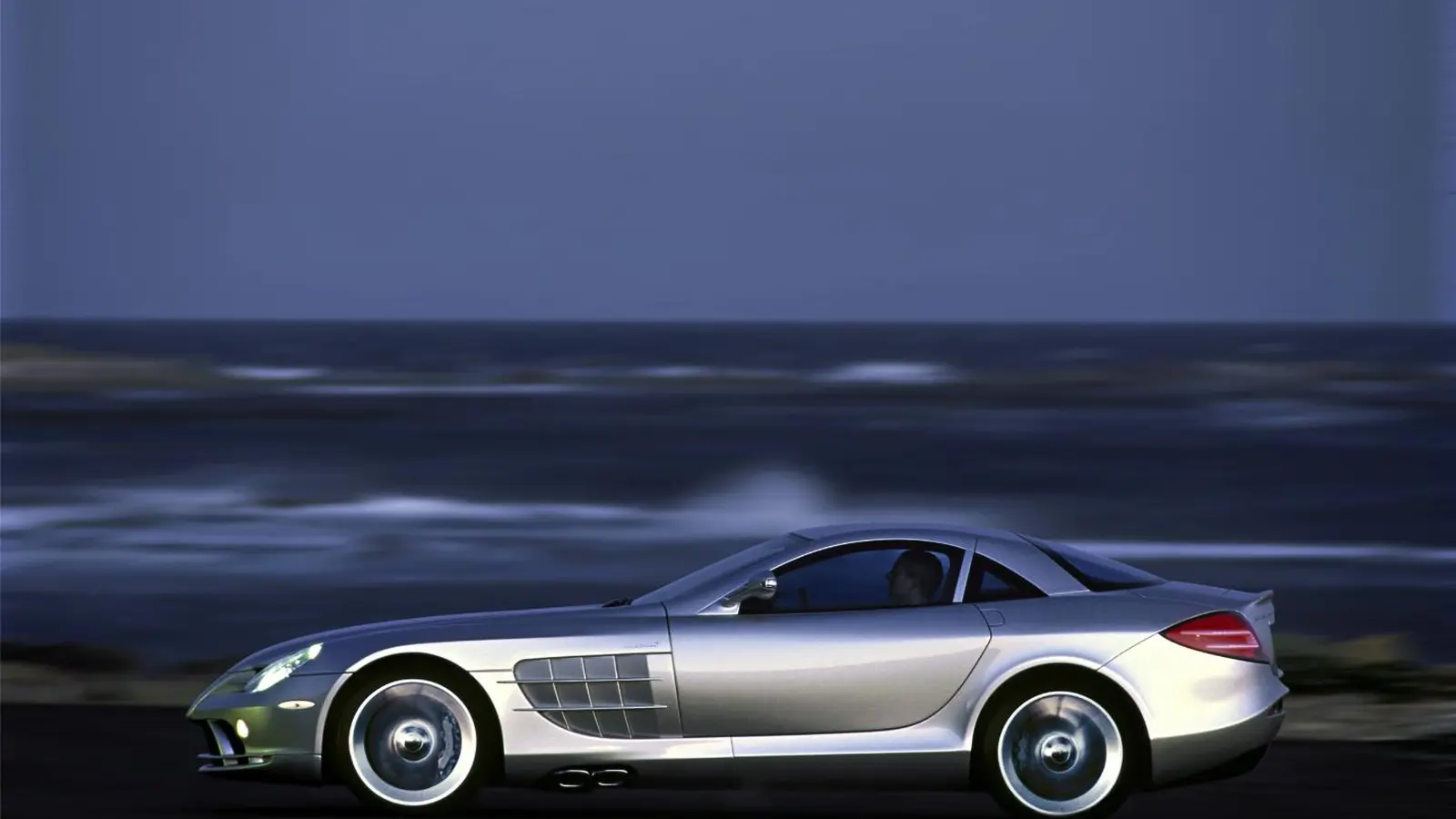
Mercedes‑Benz SLR McLaren (C199) — a collision of heritage and modernity
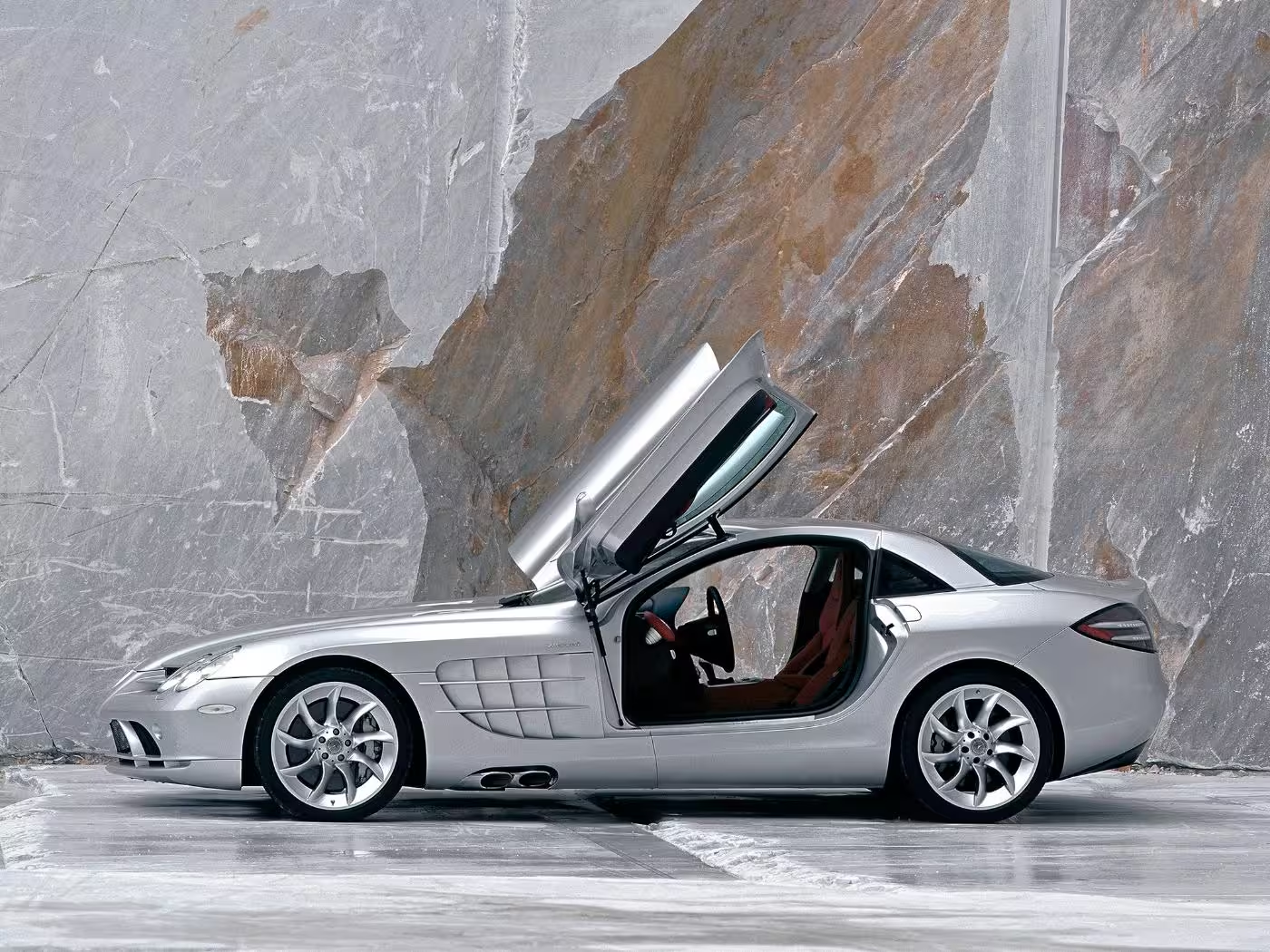
The SLR McLaren is a story of unlikely collaboration and bold styling. Conceived in the late 1990s and arriving as a production model in the 2000s, its design traces back to a younger Wagener. The SLR married Mercedes’ grand touring heritage with McLaren's racing pedigree: long hood, sweeping fenders and a presence that read more like a classic grand tourer than a track specialist.
Key design notes:
- Long, articulated hood inspired by the historic 300 SLR Uhlenhaut Coupe.
- Pronounced side vents and sculpted flanks that emphasize motion even at rest.
- A grand touring stance that prioritized drama and visual poetry over raw track aggression.
Performance summary (production SLR McLaren):
- Engine: supercharged V8 (5.4L) developed by Mercedes-AMG.
- Output: roughly in the 600–620 hp range depending on variant.
- Role: a luxurious, high-speed grand tourer rather than an uncompromising track car.
Why it matters: the SLR foreshadowed Wagener’s flair for blending historical reference with forward-looking form. It announced that Mercedes could be romantic again.
Mercedes‑Benz CLS (C219) — when Mercedes learned to out‑Jaguar Jaguar
The first-generation CLS reintroduced the 'four-door coupe' early in the century and provoked both admiration and skepticism. While the exterior was credited to designers who preceded Wagener’s formal leadership, Wagener shaped the interior character and, more importantly, championed the CLS as a signature vehicle that could shift public perception.
.avif)
Why CLS was important:
- It created a new mainstream segment: the sleek, coupe-like sedan with a dramatic roofline.
- It proved customers would accept — and buy — a more emotionally driven Mercedes.
- The CLS inspired imitators across the industry, from Audi and BMW to more mass-market brands.
Spec/positioning notes:
- Engine options ranged from efficient diesels and turbopetrols to high-performance V8s in AMG variants.
- The CLS married sporty proportions with luxury appointments, defining a new aspirational niche.
Mercedes‑Benz SLS AMG (C197) — respectful revival
With the SLS AMG, Mercedes revisited one of its most iconic silhouettes: the 300 SL Gullwing. Wagener and his team channeled the original's spirit — long bonnet, compact cabin, and dramatic gullwing doors — while adding contemporary engineering: a front-midship naturally aspirated V8 and a modern lightweight spaceframe.
.avif)
Highlights:
- Proportions that celebrated classic sports coupe drama.
- Gullwing doors as a bold theatrical flourish that reinforced brand mythology.
- A balance of retro reference and modern performance engineering.
Market impact: the SLS was an emotional halo car. It celebrated Mercedes' design heritage while giving AMG a potent symbol of exclusivity.
CLS Shooting Brake (X218) — a niche inside a niche
Wagener pushed boundaries by reimagining the CLS silhouette as a shooting brake — a sporty wagon with coupe-like cues. It was a niche product by design: visually striking, slightly eccentric, and deeply practical for buyers who wanted flair with function.
.avif)
Influence:
- Showed Mercedes was willing to create regional and lifestyle variants to broaden appeal.
- Inspired competitors to reinterpret sporty wagons and estate formats into premium lifestyle models.
Practical notes:
- The Shooting Brake combined the CLS’ low-slung roofline with usable cargo space, creating a rare balance of style and utility.
Mercedes‑AMG GT (C190) — AMG takes aim at the 911
Emerging after the SLS, the AMG GT was shorter, more affordable and designed to compete with established sports-car icons like the Porsche 911. It used a 4.0L twin-turbo V8 and adopted a more modern, athletic aesthetic that hinted at Wagener’s broader 'sensual purity' movement while being authored by a team including his protégé Robert Lesnik.
.avif)
Key features:
- Low-slung, wide stance with a classic front-engine/rear-transaxle balance.
- Distinctive LED lighting and muscular haunches signaling performance intent.
- Varied performance trims catering to both enthusiasts and luxury buyers.
Why it worked: the AMG GT democratized AMGsports-car appeal, positioning AMG as a credible 911 competitor while expanding Mercedes’ sports-car catalog.
S‑Class Coupe (C217) — the last great grand tourer
The S-Class Coupe represented a zenith for Wagener’s design brief executed by his team. Large, luxurious and visually opulent, the C217 distilled Mercedes' grand tourer ethos into a model rich in detail and presence. It was one of the last true two-door flagship coupes in a market that increasingly favored SUVs.
Design traits:
.avif)
- Seamless side profile without a B-pillar, evoking classic 1960s grand tourers.
- An exterior that balanced restrained elegance with touches of showmanship.
- Ultra-luxury interior appointments and available exclusive options.
Cultural note: as the market shifted toward SUVs and crossovers, the S-Class Coupe became a poignant reminder of Mercedes’ coupe heritage — an era-defining swan song.
Design lessons: what future Mercedes will inherit
Several durable lessons flow from Wagener’s era:
- Brand clarity matters. Wagener gave Mercedes a language that reads across small hatchbacks and flagship GTs alike.
- Proportion first. Even the most extreme concepts retained a disciplined sense of balance and ratio.
- Heritage can be an asset, not a shackle. References to classic models were used sparingly and with reverence, not parody.
- Emotion sells. Design can be the deciding factor for premium buyers, often more than raw technical specifications.
Where the era stumbled
Not every experiment landed. Some EV designs, particularly early EQ models, favored aerodynamic efficiency over visual charm and were criticized for losing brand identity. Interiors also grappled with the transition to touch-driven interfaces: large screens can be luxurious, but they can also remove tactile warmth and clarity from a cabin.
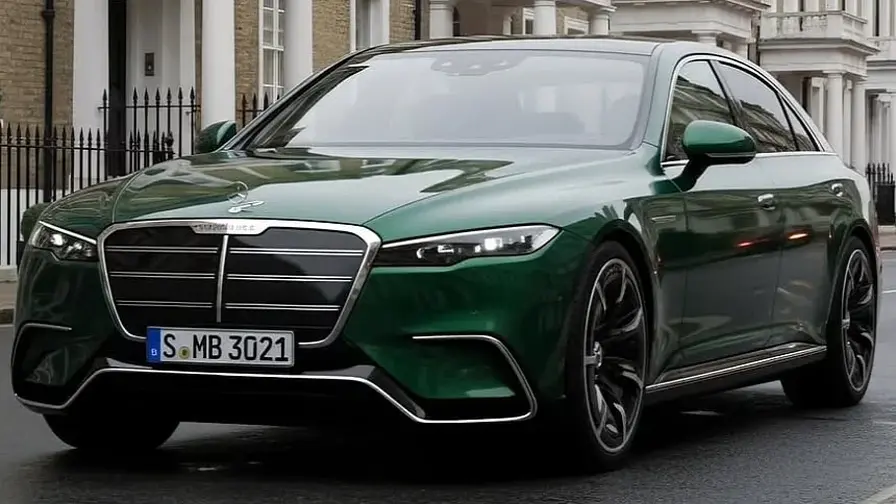
Still, even the missteps were instructive: they forced Mercedes to reconcile digital ergonomics with traditional material quality, a tension every brand is navigating in the EV age.
Market context and impact
Wagener’s run coincided with seismic shifts in the auto industry: electrification, software-defined vehicles, and changing consumer tastes. Under his watch, Mercedes broadened its portfolio, expanding into segments that previously weren’t central to the brand: compact premium crossovers, niche GTs, and premium EVs.
This expansion wasn't only product-led; it was perception-led. Design turned Mercedes into a posture brand that could compete not just on engineering pedigree, but on desirability and lifestyle signaling.
Legacy and succession
Gorden Wagener leaves behind a legacy of influential silhouettes, memorable concept cars and a refreshed design identity. His successor, Bastian Baudy, inherits both a high bar and an opportunity: to evolve 'sensual purity' into a language suited to electrification and sustainability.
Questions Baudy faces include:
- How to preserve brand recognition in aerodynamic EV bodies.
- How to reconcile large interior displays with tactile luxury.
- Which heritage cues to keep and which to reinterpret for new powertrains.
Quote highlights
- 'Design is persuasion,' Wagener once suggested in interviews — a reminder that styling shapes perception and purchase intent.
- 'Simplify, then add lightness' remained a guiding mantra, adapted to surfaces instead of just mechanical parts.
Quick comparison: Wagener’s icons at a glance
- SLR McLaren: Heritage-forward grand tourer, supercharged V8, statement-making long hood.
- CLS (C219/C218): Pioneered the four-door coupe trend, combined sporty silhouette with executive luxury.
- SLS AMG: Retro-modern halo car with gullwing drama and bespoke engineering.
- AMG GT: A more accessible sports car, aimed at performance buyers who value everyday usability.
- S-Class Coupe: Flagship luxury coupe, the last of many two-door grand tourers in the Mercedes line-up.
Final thoughts: enduring designs
Design is always subjective, but the most influential designers don't merely decorate — they define eras. Wagener repositioned Mercedes-Benz from a house of engineering authority to a brand that balances technical excellence with desire. His era produced cars that will be studied, debated and collected for decades.
Some of Wagener’s creations will age like classic sculptures; others will be reminders of an experimental period in design. But the larger achievement is clear: he restored emotional resonance to the three-pointed star and left Mercedes with a language that will inform its shapes well into the EV future.
Epilogue
Beauty will always be debated, but the tangible impact of Gorden Wagener's design leadership is measurable in market perception, expanded product breadth and an unmistakable visual identity. As Mercedes moves forward under new leadership, the brand’s design DNA — reshaped in the Wagener era — will continue to influence the next generation of vehicles, from performance GTs to battery-electric saloons.
Whether you admire his most iconic models or disagree with some of the choices, there's no denying that Wagener made Mercedes-Benz a more expressive brand. And in an industry racing toward new powertrains and digital experiences, that expressive identity might be the company’s greatest asset.

Highlight: 'When Wagener got it right, the result felt inevitable — like a classic rediscovered rather than a trend chased.'
Article highlights
- Wagener led Mercedes’ design from 2008–2026, defining 'sensual purity.'
- Signature models include SLR McLaren, CLS, SLS AMG, AMG GT and the S‑Class Coupe.
- Strengths: bold silhouettes, consistent proportions, and renewed brand desirability.
- Challenges: early EV styling and touchscreen-heavy interiors.
- Succession: Bastian Baudy will follow as head of Mercedes design, starting a new chapter.
For enthusiasts, designers and market watchers, Wagener’s legacy will be examined for years to come — not only as a catalogue of bold forms, but as a case study in how design can redefine a luxury brand.

Leave a Comment
Comments (4)
pretty balanced take. he revived proportions and emotion, tho screens stole some soul. curious how EVs will keep the face
Is this even true? retiring the CDO title feels dramatic. will Baudy keep sensual purity or toss it? curious but skeptical
makes sense tbh, he injected sex appeal into corporate slabs. EVs were messy early, interiors kinda cold
wow, didn't expect Wagener to change Merc so much… from bank-vault to art on wheels. Some designs weird tho, but overall iconic 🚗