
Samsung is leveraging a growing global memory shortage to raise prices across its HBM and DRAM product lines, as demand from AI workloads outpaces supply.
How Samsung is monetizing the memory squeeze
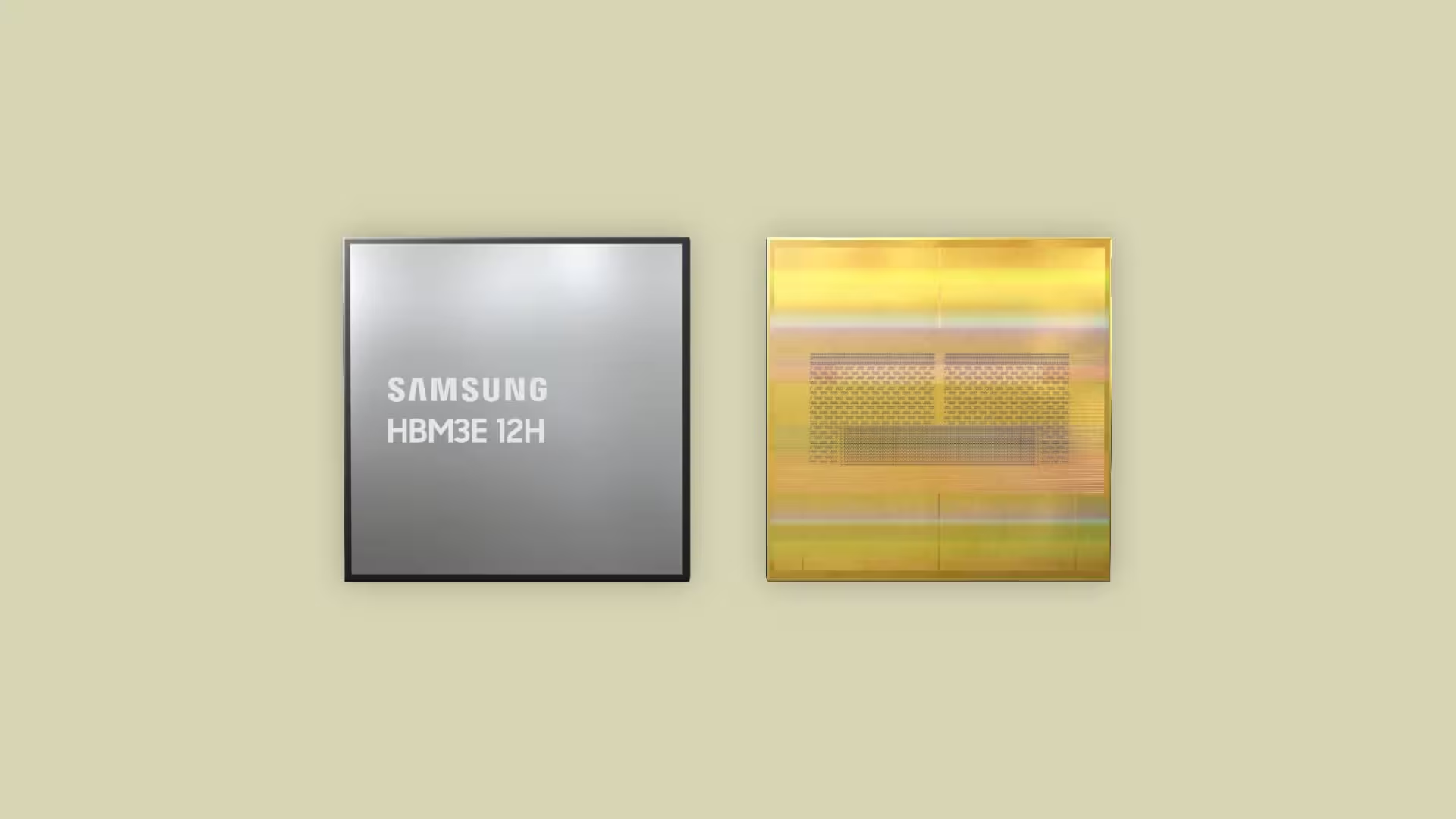
Recent reports from local Korean outlets and social posts indicate Samsung has pushed for hefty price increases on both HBM3E and standard DRAM. While earlier notices showed a 20% rise for some HBM3E parts, the company — along with other suppliers in contract renewals — is now said to be seeking as much as a 50% premium for 12-high (12H) HBM3E modules. Separately, DRAM prices reportedly jumped roughly 50% in Q4 as the market tightened.
Two factors are driving the shift. First, GenAI and AI accelerators have sent demand for high-bandwidth memory (HBM) skyrocketing. Second, margins on HBM are generally higher than on commodity DRAM, encouraging suppliers to prioritize HBM production. Micron and SK Hynix dramatically increased HBM focus and dialed back DRAM output, creating broader DRAM scarcity.
Why Samsung’s approach stands out
Unlike some rivals, Samsung appears to have maintained a larger DRAM output footprint instead of cutting production as sharply. That strategy lets Samsung not only capitalize on HBM price gains but also monetize the short supply of DRAM, contributing to record profits in Q4 2025 for its memory division.
What this means for the industry and buyers
- OEMs and cloud providers may face higher component bills, which could push up prices for GPUs, accelerators, and AI infrastructure services.
- Contract renewals are becoming a negotiation point: existing customers may be asked to accept steep price hikes to secure supply.
- Smaller buyers could struggle to secure volume as suppliers favor the most profitable contracts and large strategic customers.
Where the market could head next
If GenAI demand continues to grow, HBM will remain tight and costly. Samsung’s dual strategy — keeping DRAM output relatively high while also exploiting HBM demand — gives it a short-term advantage, but the situation could shift as rivals expand capacity or new investments come online. For now, memory prices and profit margins look set to stay elevated, and buyers should plan for volatility in procurement and budgeting.


Leave a Comment
Comments
No comments yet. Be the first.