

3 Minutes
Analyst: Liquidity problems, not crypto-specific failures
A dramatic market movement that erased roughly $250 billion in crypto market capitalization over a single weekend is best explained by a temporary US liquidity drought — not a collapse unique to digital assets, says Raoul Pal, founder and CEO of Global Macro Investor. According to Pal, the synchronized decline in Bitcoin and major Software-as-a-Service (SaaS) stocks points to a macro liquidity shock rather than a sector-specific breakdown.
Bitcoin and SaaS falling in step
Bitcoin (BTC) and SaaS equities — both considered long-duration assets because their valuations depend heavily on long-term adoption and future cash flows — have recently declined in near lockstep. That parallel movement is significant: when two fundamentally different asset classes move together, it typically signals a common macro driver. Pal argues the primary factor is constrained liquidity and shifting expectations for interest rates, not an isolated crypto narrative.
Gold and the competition for scarce liquidity
Pal asserts that a rally in gold consumed much of the marginal liquidity that might otherwise have flowed into BTC and high-growth software stocks. With limited capital available, the riskiest, most duration-sensitive assets were the first to be sold, amplifying the crypto selloff.
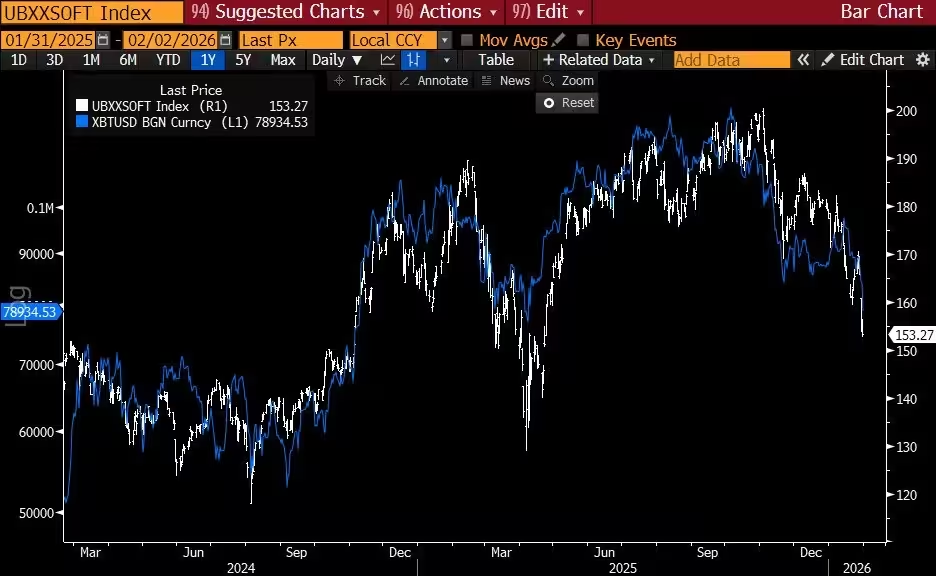
UBS Saas Index and BTC are highly correlated.
US plumbing, reverse repo and the TGA: why liquidity tightened
The analyst also highlights technical US funding issues that intensified the liquidity squeeze. The Federal Reserve's Reverse Repo Facility (RRP) — where banks and money market funds park overnight cash at the Fed — has largely been depleted. In past episodes, when the US Treasury rebuilt its Treasury General Account (TGA), the negative liquidity effect was offset by draining the RRP. With the RRP now empty, TGA rebuilds translate directly into pure liquidity drains on markets.
Compounding this, two temporary government shutdowns and other frictions in US banking plumbing further reduced marginal liquidity, creating an environment where risk assets like BTC and SaaS equities were especially vulnerable.
Fed leadership, rate expectations and market reaction
Some market participants have linked the selloff to anxiety over the Fed's next chair. Jeff Mei, COO at exchange BTSE, suggested the market downturn reflected fears that a prospective chair, Kevin Warsh, may not cut interest rates as quickly or as deeply as investors hoped. Warsh's perceived hawkish stance could push investors to reprice risk and duration-sensitive assets.
Pal’s take on the Fed narrative
Pal downplays the notion that a hawkish Fed chair alone triggered the selloff. He believes Warsh will largely follow a Greenspan-era playbook: cutting rates when politically feasible while allowing the economy to run hot and relying on productivity gains (for instance, from AI) to manage inflation. Pal expects rate cuts to happen and says the broader liquidity strategy will be managed via banks by figures such as Treasury and White House economic advisors.
Outlook: liquidity tightening eases, bullish longer-term view
Closing on a constructive note, Pal says the liquidity drain is nearly complete. Once funding pressures normalize and marginal liquidity returns, risk assets — including Bitcoin and high-growth software stocks — could recover. He remains bullish on crypto for 2026, citing confidence in coordinated policy moves that should restore liquidity and support longer-term risk appetite.
For traders and investors focused on Bitcoin, crypto risk management should account for macro liquidity cycles, central bank policy expectations, and technical US funding dynamics like the RRP and TGA. These factors can dominate crypto price action even when there are no crypto-specific fundamentals deteriorating.













Leave a Comment
Comments
No comments yet. Be the first.