
When Bugatti Almost Built a Four-Door Hyper Sedan
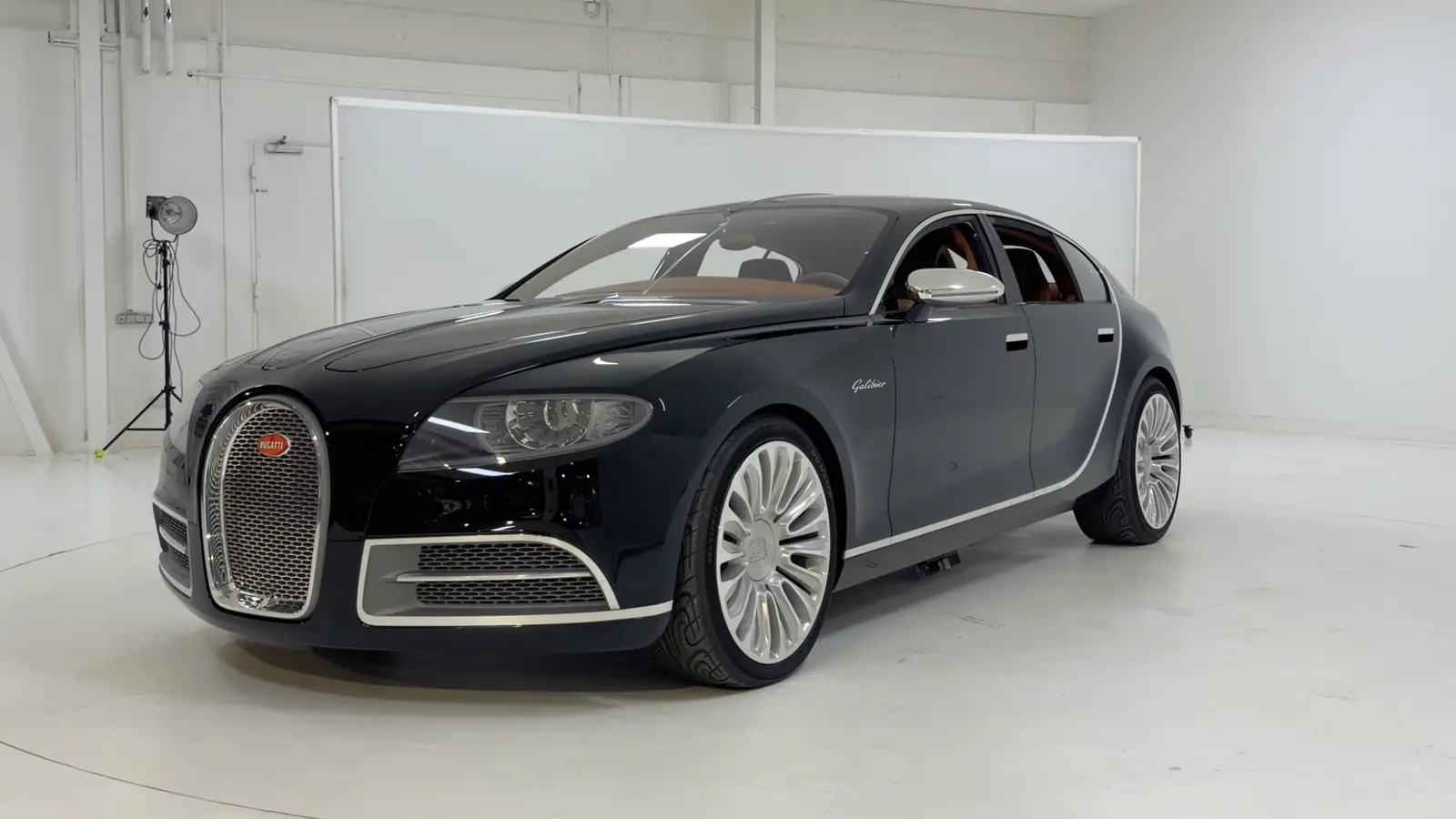
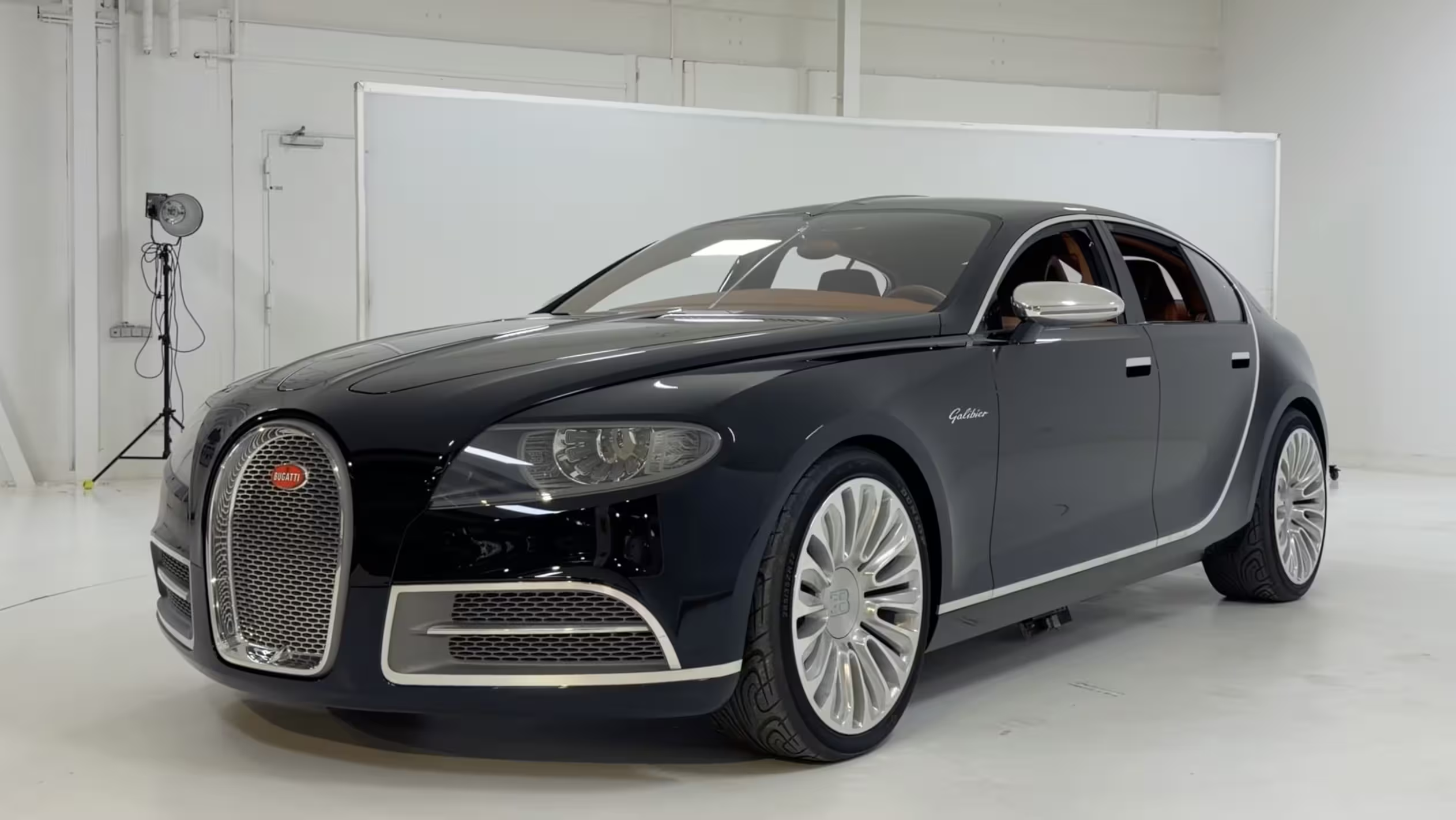
For a brief, head-turning moment in the late 2000s, Bugatti looked ready to rewrite the rules for luxury performance saloons. The 16C Galibier concept — a four-door, fastback tourer driven by a front-mounted 8.0-liter W16 — promised roughly 1,000 metric horsepower and supercar acceleration wrapped in an ultra-luxurious cabin. Revealed privately at Bugatti's Molsheim factory in September 2009 and shown publicly at the Frankfurt and Los Angeles auto shows, the Galibier teased what could have been the world's most powerful and exclusive four-door car.
From Type 57 Heritage to 21st-Century Hyper Sedan
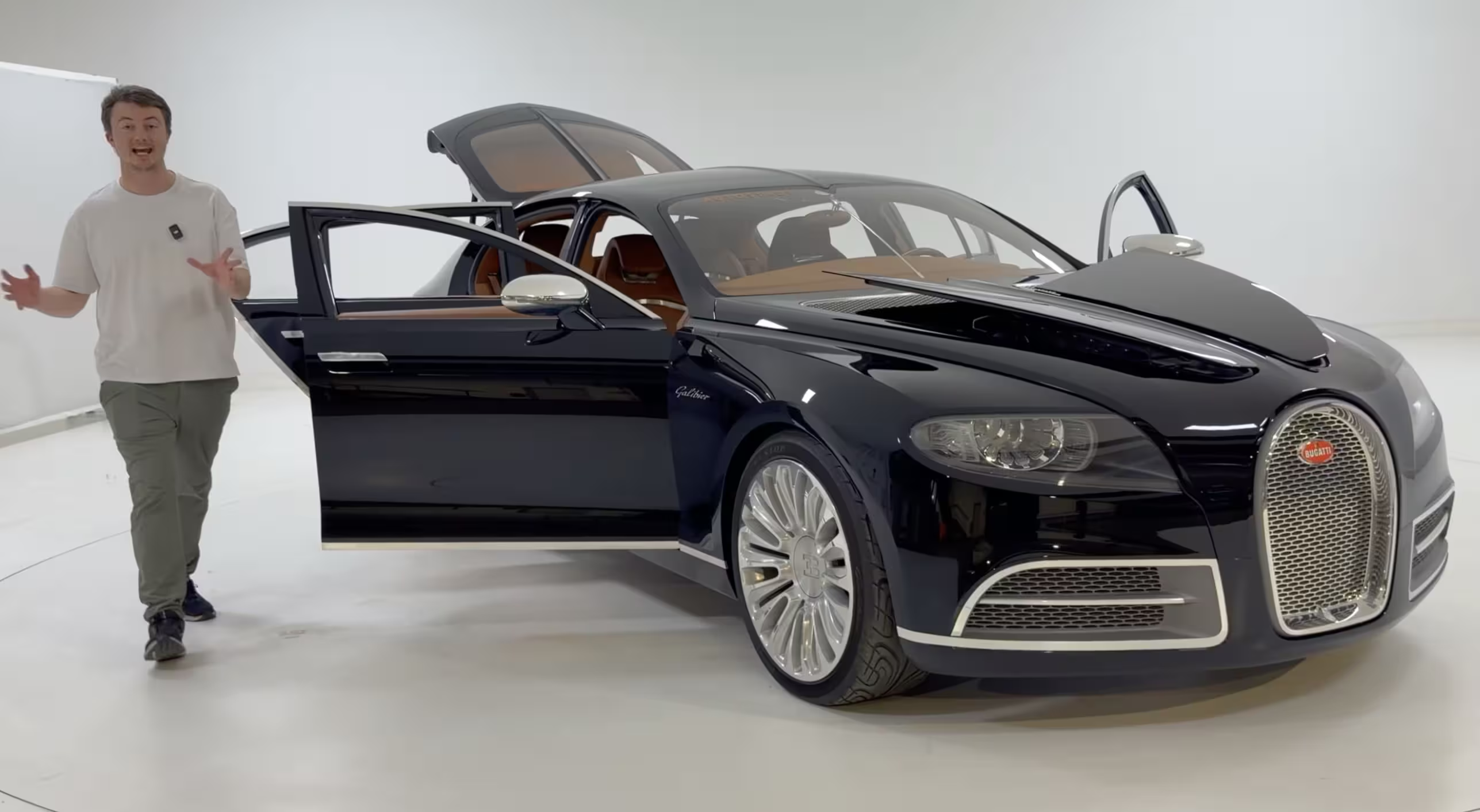
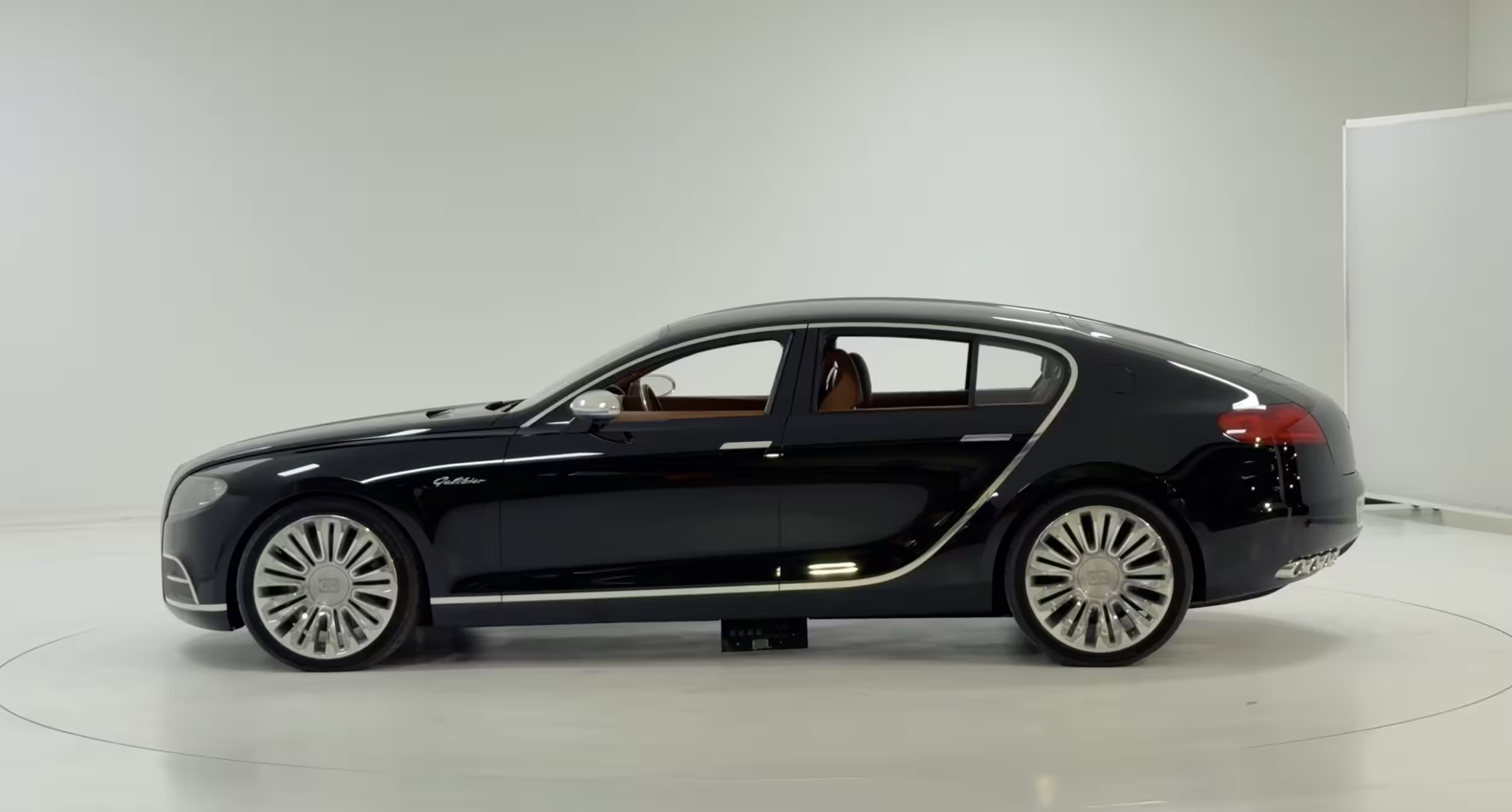
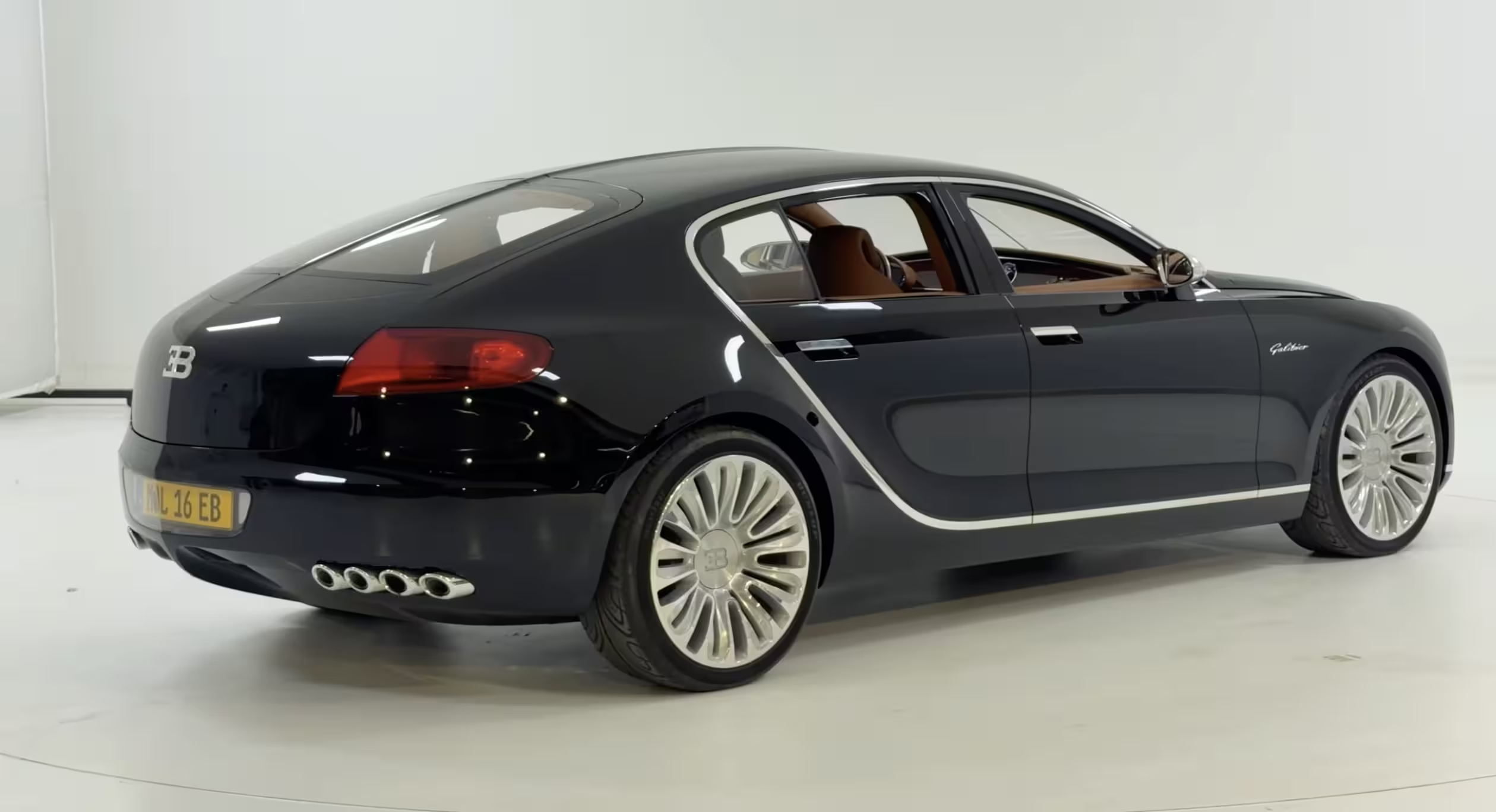
Bugatti borrowed the Galibier name from the Type 57 Galibier of the 1930s, a four-door grand tourer named after the Col du Galibier pass. The 16C Galibier paid visible homage to classic Bugatti cues: a longitudinal hood rib recalling the EB 118/EB 218 concepts and the legendary Type 57SC Atlantic, a split windshield, and two-tone finishes. Yet it was unabashedly modern under the skin, using aluminum and carbon fiber to keep mass down while delivering a truly hypercar-grade powertrain and performance.
Engine, Performance and Drivetrain
Unlike the quad-turbo Veyron setup, Bugatti engineers replaced those turbos with twin superchargers operating sequentially to deliver stronger low-end torque — a more appropriate choice for a four-door sedan intended to combine comfort with outright speed. The tuned W16 produced approximately 986 hp (1,000 PS) and was mated to an eight-speed automatic driving all four wheels.
- Engine: 8.0-liter W16, twin sequential superchargers
- Power: ~986 hp (1,000 PS)
- Transmission: 8-speed automatic
- Drivetrain: All-wheel drive
- Estimated top speed: >235 mph (378 km/h)
- 0–60 mph: Claimed under 2.7 seconds
Those acceleration figures would have left contemporary performance sedans trailing. At the time, the Nissan GT-R R35 and Cadillac CTS-V were among the quickest four-door production cars, running 0–60 mph in roughly 3.5 and 3.9 seconds respectively. The Galibier's sub-2.7-second sprint would have been in another league.
Design and Luxury Appointments
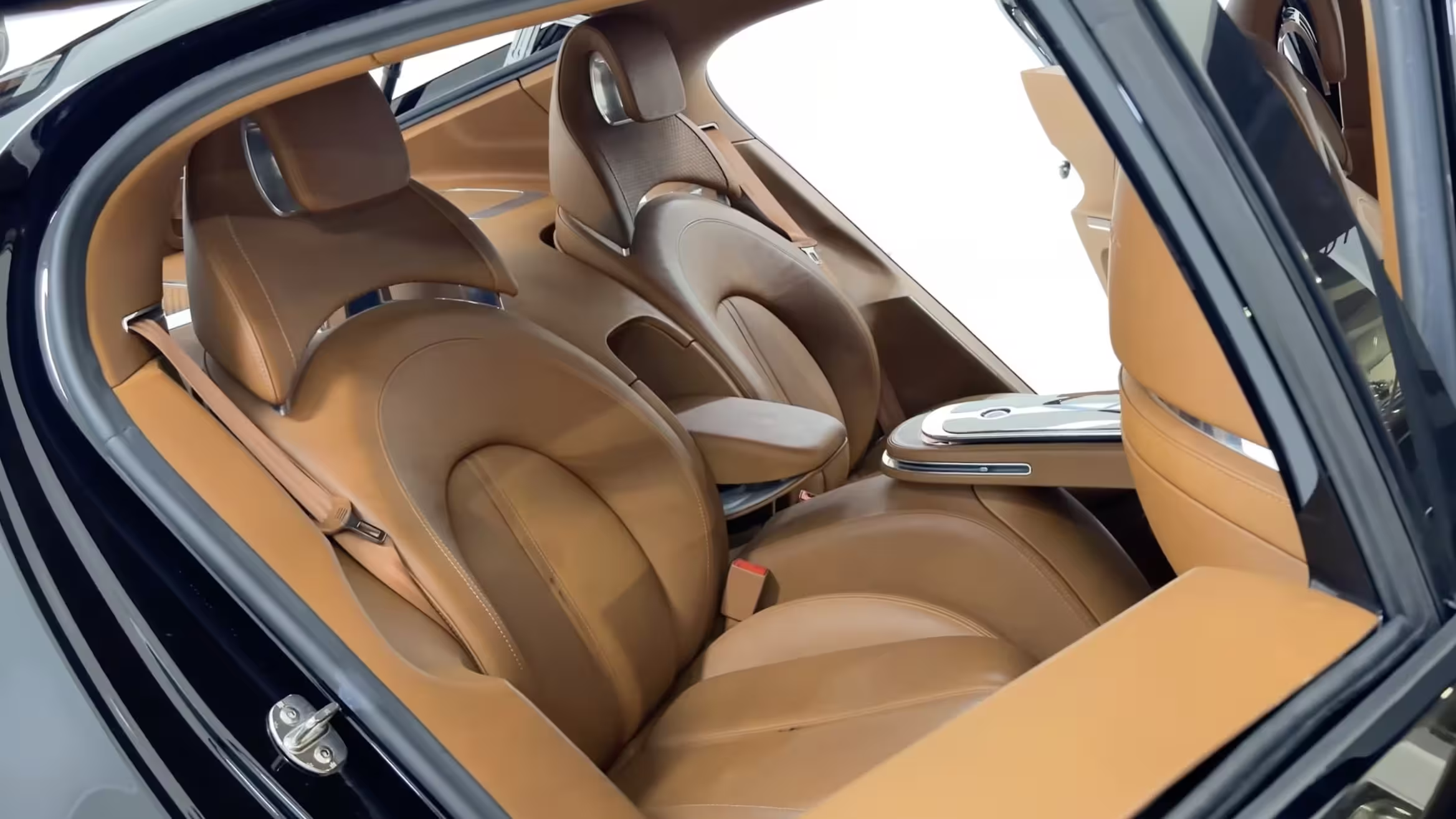
The concept stood on 22-inch wheels with self-leveling center caps and featured a split, two-section hood to house the W16. Inside, Bugatti mixed hand-stitched leather, polished wood and aluminum trim with a restrained, sumptuous layout that prioritized space and comfort without feeling crowded. The Galibier's dashboard included two analog dials dedicated to displaying W16 output and an old-school aesthetic accent: a removable Parmigiani Fleurier tourbillon watch mounted in the dash. That $100,000 timepiece could be worn on the wrist or used as the car's clock — a signature expression of hyper-luxury bespoke detailing.
Production Plans and Market Positioning
Initially, Bugatti flirted with the idea of a limited-run model — reportedly called the Royale — aimed at ultra-wealthy clients. Production estimates mentioned up to 3,000 hand-built examples from Molsheim, with an anticipated starting price near one million pounds (about $1.53 million in 2015). Rumors suggested the marque considered sharing some components with the Bentley Mulsanne to control costs, though the final product was always intended to be unmistakably Bugatti in design and execution.
Why the Galibier Never Reached Customers
Despite the concept's strengths, internal development hurdles and shifting priorities stalled progress. Over time the Galibier reportedly grew in size and lost its original liftgate design, morphing into a shape that Bugatti's then-design director Achim Anscheidt once described as looking 'like a dachshund from the side and a bowler hat on wheels from the rear.' That design drift, combined with cost and production complexity, pushed the project off course.
By May 2012 the four-door project was shelved. Officially, Bugatti redirected its financial and engineering resources to the Chiron program — a pragmatic move that ensured the company retained a competitive product in the hypercar marketplace after Veyron production concluded. Unofficial accounts point to political pressure inside the Volkswagen Group at the time; some observers have named a powerful figure from Salzburg as influencing the decision to cancel the Galibier.
Legacy and Where the Concept Lives Now
The Galibier concept did not vanish entirely. At least one example survives on display at Volkswagen's Autostadt in Wolfsburg, Germany, where it occasionally reminds visitors of an intriguing alternate path Bugatti might have taken. More than a decade later, the Galibier remains a 'what if' — an ambitious attempt to combine hypercar performance with limousine-level comfort.
What the Galibier Tells Us About Bugatti's Strategy
The decision to prioritize Chiron over a four-door model underlined Bugatti's focus on pure hypercar pedigree. The Chiron went on to become the brand's centerpiece, and that focus arguably paid off: it reinforced Bugatti's identity as a maker of the most extreme, limited-production performance cars rather than broadening the lineup into luxury sedans.
Quick highlights:
- 16C Galibier: a near-1,000-PS four-door concept from 2009
- Performance orientation with luxury intent — a true hyper-luxury sedan
- Project canceled in 2012; resources shifted to the Chiron
- One concept displayed at Volkswagen Autostadt in Wolfsburg
The Galibier remains a fascinating footnote in modern automotive history: proof that even storied hypercar makers consider diversifying into new segments, but also a reminder that focus and financial realism often determine which concepts reach customers. For enthusiasts, the Galibier is the ultimate automotive what-if: a 1,000-HP four-door that could have reshaped expectations for performance sedans, had fate — and corporate strategy — allowed it to reach production.

Leave a Comment
Comments (2)
Is it even true they aimed for 3,000 units? Sounds like VW politics killed it or bad biz math. If that's real then...
Wow, a 1,000HP four-door? Mind blown... Would've been absurdly fast for trips, and pricey AF. What a shame.