

Vitalik Buterin distinguishes 'real DeFi' from centralized yield stablecoins
Ethereum co-founder Vitalik Buterin has drawn a stark distinction between genuinely decentralized finance and yield-oriented stablecoin strategies that rely on centralized counterparties. In a recent discussion on X, Buterin argued that the core value of DeFi lies in shifting how risk is allocated — not merely in routing yield through on-chain wrappers for off-chain assets.
What Buterin said about risk decentralization
Buterin pushed back specifically against lending and yield products that he summarized as 'USDC yield' approaches. He did not single out protocols by name, but he emphasized that models which concentrate counterparty and issuer risk with centralized entities fall short of DeFi's promise. For Buterin, decentralization means reallocating and mutualizing risk across markets and participants instead of channeling it to a single point of failure.
Two stablecoin models that better align with DeFi
Buterin outlined two alternative stablecoin architectures he considers closer to DeFi's original ethos: an ETH-backed algorithmic stablecoin and an overcollateralized algorithmic stablecoin backed by real-world assets (RWAs). Both designs emphasize distributing risk away from a centralized issuer and toward market mechanisms and collateralization.
ETH-backed algorithmic stablecoins
An ETH-collateralized algorithmic stablecoin lets users mint the token by locking Ether as collateral, creating a market-driven peg mechanism. Buterin highlighted that even when liquidity primarily comes from users borrowing against crypto collateral, the distinguishing innovation is the ability to shift dollar counterparty exposure to market makers and automated mechanisms rather than a single issuing entity. This approach reduces concentrated issuer risk and makes the system more resilient to centralized failures.
Overcollateralized RWA-backed algorithmic stablecoins
Stablecoins tied to real-world assets can also improve risk outcomes if structured conservatively. Buterin argued that if an RWA-backed stablecoin is sufficiently overcollateralized and diversified, the failure of any single backing asset should not break the peg. In short, careful design — including conservative collateral ratios, diversified exposures, and transparent liquidation mechanisms — can meaningfully lower counterparty and issuer risk for holders.
USDC still dominates DeFi lending

Buterin's comments arrive as Ethereum lending markets remain heavily centered on fiat-backed stablecoins such as USDC. On Aave's mainnet deployment, more than $4.1 billion in USDC is supplied out of a roughly $36.4 billion market, with about $2.77 billion borrowed, according to protocol dashboards. These concentrations highlight the systemic reliance on a few centralized reserve issuers within the broader DeFi lending stack.
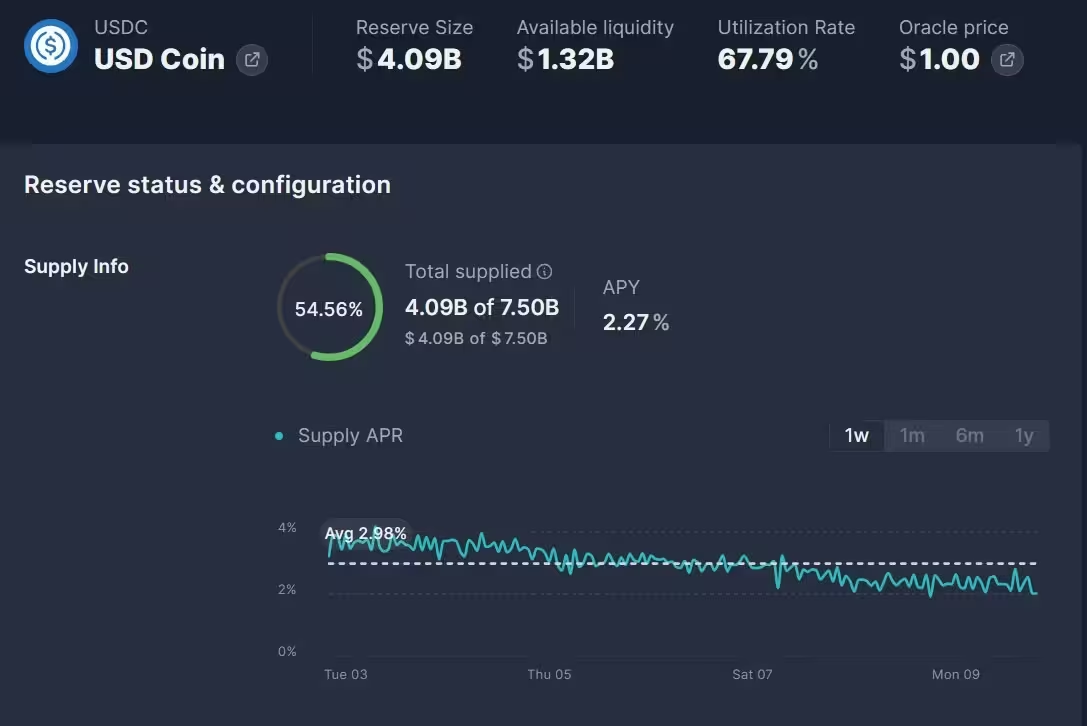
USDC reserve status and configuration.
Similar patterns appear across lending aggregators and markets. On Morpho, which optimizes lending across Aave and Compound rails, three of the five largest borrow markets are denominated in USDC and typically collateralized by wrapped Bitcoin or Ether. Compound likewise lists USDC among its most used assets, with hundreds of millions in supply and borrow balances supported by sizeable collateral positions.
Cointelegraph reached out to Aave, Morpho and Compound for comment; Aave and Morpho acknowledged the inquiry, while Compound had not replied at publication.
Why this debate matters for DeFi's future
Buterin's critique is not an outright rejection of stablecoins — rather, it questions whether current dominant models achieve decentralization of risk. If DeFi's value proposition is to rewire financial risk distribution, then dependence on centralized issuers and single fiat rails undermines that mission. His call is for designs that can withstand macro shocks, resist oracle manipulation, and avoid single points of failure.
For builders and investors, the implications are practical: prioritize algorithmic and overcollateralized architectures when possible; build robust liquidation and oracle safeguards; and diversify collateral and settlement paths. Regulators and institutions watching DeFi's maturation will likely sharpen scrutiny around how projects manage custody, reserve transparency, and counterparty exposure.
Conclusion: a push toward resilient decentralized stablecoins
Vitalik Buterin's position reinforces a broader industry conversation about resilience and decentralization in stablecoin design. As DeFi continues to scale, the community faces a choice: double down on yield products that depend on centralized reserve issuers, or invest in architectures that genuinely decentralize risk across markets. The latter path requires careful protocol design, conservative collateralization of RWAs, and innovations that distance peg maintenance from single-issuer credit risk — all essential if decentralized finance aims to fulfill its original promise.
Keywords: DeFi, stablecoins, USDC, ETH-backed stablecoin, algorithmic stablecoin, overcollateralized, real-world assets, Aave, Compound, Morpho, counterparty risk, decentralized stablecoins, oracle manipulation


Leave a Comment
Comments (2)
wow Vitalik calling out centralized yield is bold. gotta love the push for real decentralization!! but ppl will chase yield anyway, sigh
Wait, so DeFi is just USDC routing unless you build complex algo coins? sounds risky. How do you trust ETH-backed pegs under a crash tho, oracle attacks worry me