

Vietnam proposes stock-style tax on crypto transfers
Vietnam's Ministry of Finance has circulated a draft policy that would bring cryptocurrency transactions under the same tax treatment as securities trading. The proposal introduces a 0.1% personal income tax on each crypto transfer carried out through licensed service providers, a structure that mirrors Vietnam's current levy on stock trades. The draft is open for public consultation and aims to formalize taxation and licensing for the country's evolving digital asset market.
Key points at a glance
- 0.1% personal income tax applied to the value of every crypto transfer through licensed platforms.
- Crypto transfers and trading are reportedly exempt from value-added tax (VAT).
- Institutional investors face a 20% corporate income tax on profits from crypto activities.
- Strict exchange licensing rules including a 10 trillion VND minimum charter capital requirement.
Tax details and trader obligations
Under the draft circular reported by local media, individuals who transfer crypto via licensed exchanges or custodial services would have a turnover-based personal income tax of 0.1% charged on the transaction value. The turnover tax is designed to apply whenever a transfer occurs, and according to the draft it applies irrespective of investor residency. At the same time, the draft classifies crypto transfers and trading as VAT-exempt, creating a carve-out that focuses taxation on turnover and profit rather than consumption.
VAT exemption and residency
The exemption from VAT aligns with several countries' approaches that favor turnover or capital-gains style taxes over consumption taxes for digital assets. The proposal clarifies that the 0.1% levy would apply to both residents and non-residents executing transfers within the licensed system.
Corporate taxation and institutional investors
Companies and institutional investors earning income from crypto transfers would face a 20% corporate income tax on net profits. Profits would be calculated after deducting allowable costs, including purchase prices and related expenses. This treatment resembles traditional corporate tax frameworks and signals an intent to integrate crypto earnings into established corporate tax rules.
Licensing, capital requirements and foreign ownership
The draft sets stringent operational rules for digital asset exchanges. Firms seeking to operate an exchange in Vietnam must hold at least 10 trillion VND (roughly $408 million) in charter capital, a threshold notably higher than many other regulated industries and even above some bank requirements. Foreign ownership would be allowed but capped at 49% of exchange equity, limiting majority foreign control.
Pilot program and application timeline
Vietnam launched a five-year pilot program for a regulated crypto market in September 2025. Despite that, as of October 6, 2025, no companies had applied to join the pilot, citing the high capital requirements and strict eligibility criteria. The State Securities Commission began accepting license applications for digital asset trading platforms on January 20, 2026, marking the operational start of the pilot and formal regulatory oversight.
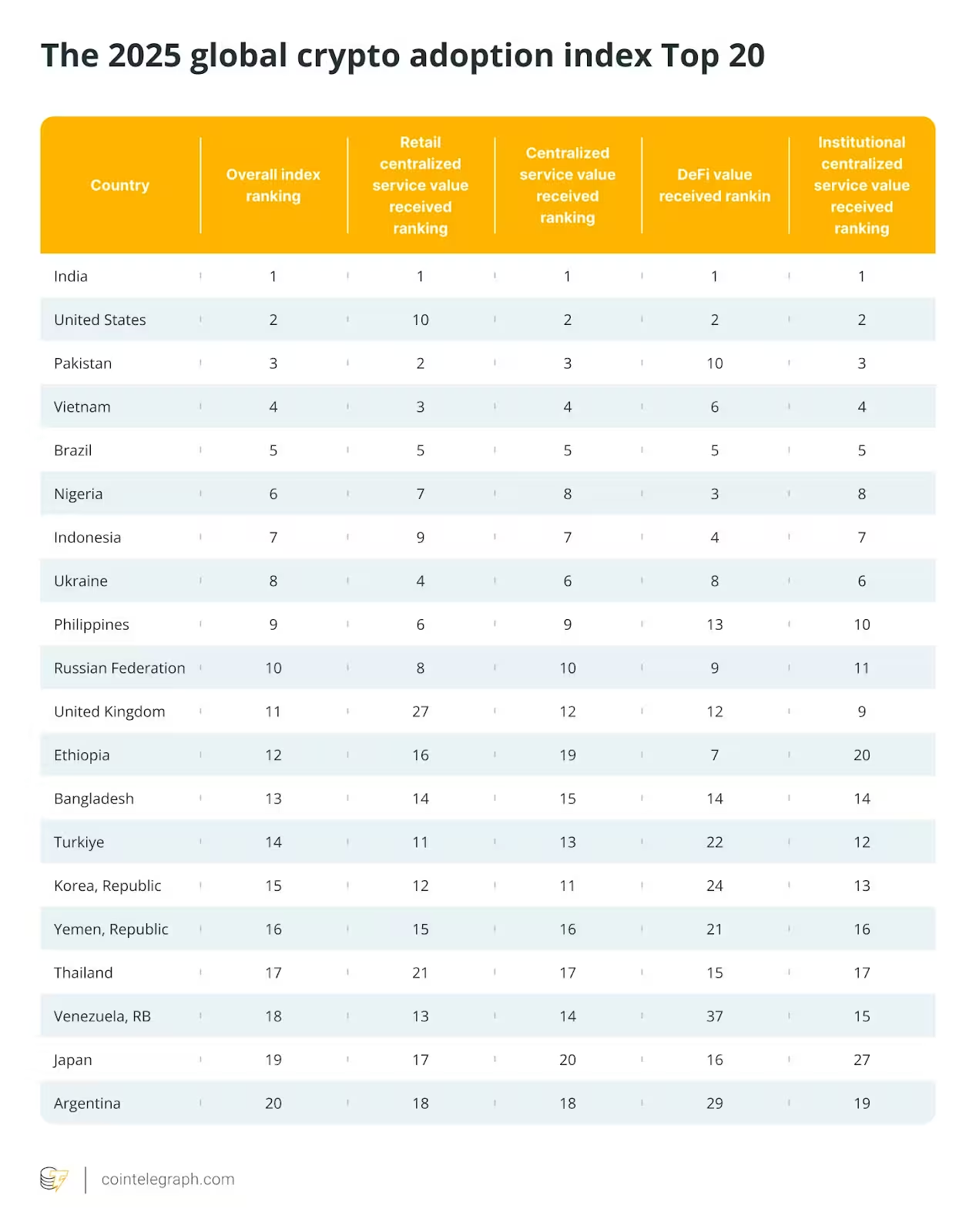
Vietnam is ranked fourth in the world for crypto adoption.
Implications for the market
If enacted, the policy would bring clearer regulatory and tax certainty for traders, exchanges and institutional market participants. The 0.1% trading levy is modest relative to some jurisdictions but significant for high-frequency traders and platforms processing large volumes. Strict capital requirements could limit the number of licensed exchanges, potentially concentrating liquidity among a few large, well-capitalized operators. For blockchain and crypto communities, the draft represents a major step toward mainstreaming digital assets under Vietnam's financial and tax systems.


Leave a Comment
Comments
No comments yet. Be the first.