

Ethereum crash overview: market sells off, momentum weak
Ethereum's recent selloff has left ETH trading near $2,111 after a sharp drawdown, and technicals plus on‑chain flows suggest February is likely to be dominated by damage control rather than a swift rebound. Short‑term momentum indicators point to a corrective bounce inside a continuing downtrend, while capital continues to flow away from the asset on a daily basis.
Key technical signals keeping ETH under pressure
Momentum and oscillators
On the four‑hour chart, the MACD histogram recently flipped green for the first time since late January, indicating a short corrective lift — but the broader signal remains bearish because the 26‑period EMA is still above the 12‑period EMA. The RSI sits in the mid‑30s, well below neutral 50, which underscores that sellers retain control despite the small relief rally.
Trend strength and volume flow
Daily Chaikin Money Flow (CMF) is firmly negative, signaling net capital outflows from Ethereum. The DMI shows the negative directional indicator above the positive one and the ADX is near 39, marking a strong and defined downward trend rather than random volatility. These tools together imply that any rallies are likely to be sold into until flows and trend strength reverse.
Why $3,000 in February looks unlikely
Three structural obstacles make a clean push to $3,000 this month improbable. First, the daily structure is printing lower highs and lower lows, a textbook downtrend pattern. Second, Fibonacci retracement places price just above the zero Fib line — a fragile buffer that can hold only short relief moves. Third, reclaiming key resistance levels will require increasing volume and bullish conviction; specifically, bulls need to regain $2,450 with expanding volume and then clear the $2,818 area before a march toward $3,000 becomes realistic.
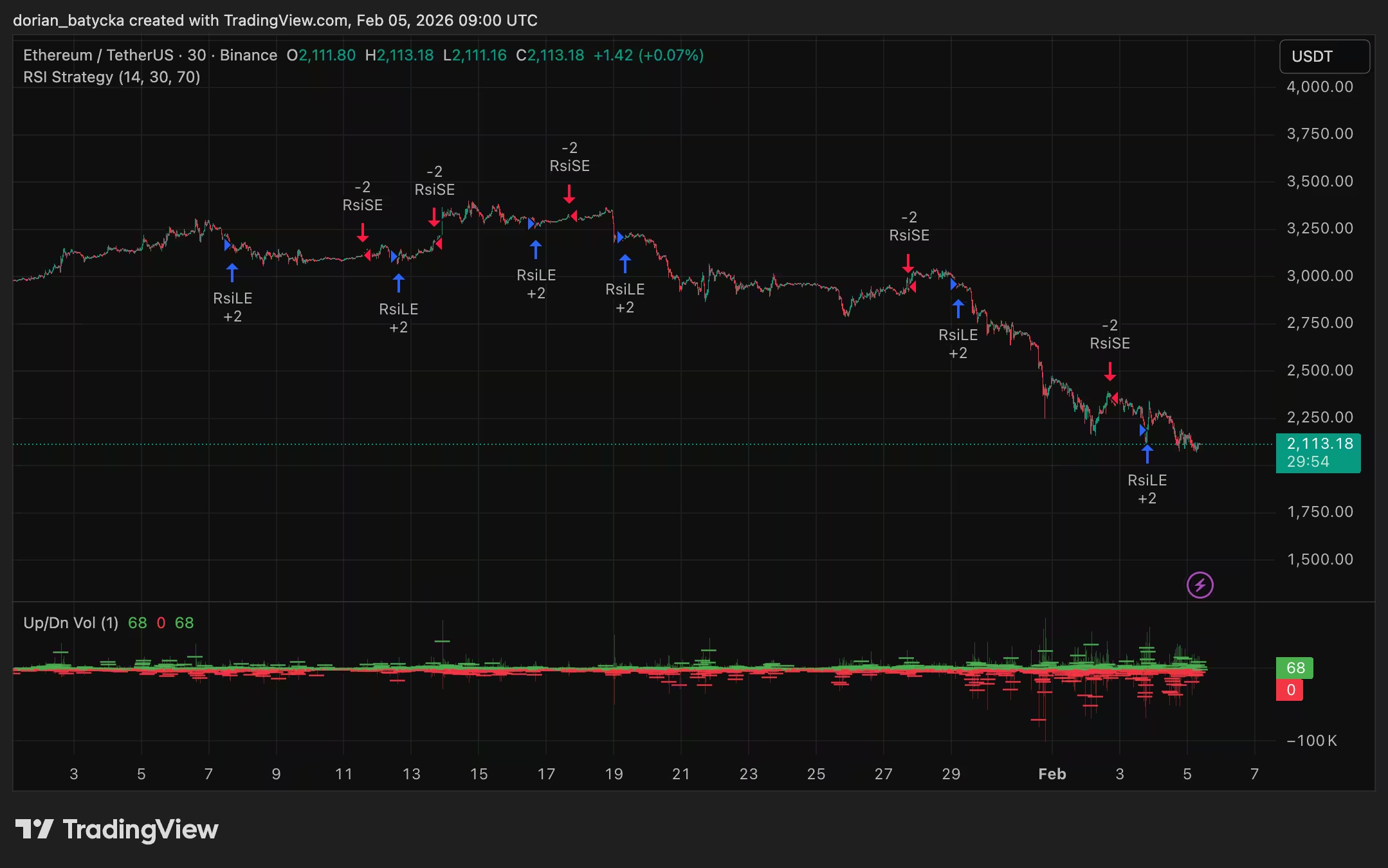
Absent those confirmations, attempting to forecast a February close above $3,000 is optimistic. Market participants should treat rallies as potential selling opportunities until on‑chain flows and technicals flip decisively in favor of buyers.

Alternative scenario: a supply squeeze and multi‑month upside
Not everyone is bearish on the medium term. Some analysts point to historical fractal patterns and a brewing supply squeeze on centralized exchanges as the seeds of a more explosive rebound. One well‑known market watcher suggests ETH could 3x–4x over a six‑month horizon if exchange inventories shrink and accumulation resumes after this de‑risking phase exhausts itself.
That scenario remains conditional: it assumes the current drawdown completes, sellers deplete their resources, and buyers step back in to accumulate. In other words, explosive upside is possible but not the base case for February.
Macro and cross‑market context
Ethereum is trading as a high‑beta expression of broader market risk appetite. Bitcoin (BTC) is sitting around $70,370 with a roughly 7.9% 24‑hour decline and a market cap above $1.4 trillion. Solana (SOL) is trading near $90–$91, down about 6–7% on the day with a market value near $51.5 billion. These moves show correlated de‑risking across crypto markets, weighing on ETH as investors cut exposure.
What investors should watch now
Levels and indicators to monitor
- Short term: watch $2,450 as a first reclaim level; confirmation requires rising volume.
- Medium term: clearing $2,818 would shift the market structure toward a more constructive outlook and open the path to $3,000.
- Risk signals: persistent negative CMF, a negative DMI above the positive line, and ADX remaining high indicate continuing downtrend momentum.
On‑chain flow and exchange inventories
Keep an eye on centralized exchange balances. A sustained decline in exchange ETH supply can catalyze a squeeze that supports higher prices. Conversely, continued inflows to exchanges and high realized losses among holders will keep downside risk elevated.
Practical guidance for traders and investors
For traders: favor defined risk strategies — small position sizes, clear stop losses below recent structure, and be wary of chasing rallies. For investors with a longer horizon: consider dollar‑cost averaging if you believe in the long‑term narrative, but be prepared for further volatility and a possible extension of the drawdown toward lower support levels if macro sentiment worsens.
In short, February looks more likely to be a cleanup month than a recovery month for ETH. Watch the technical confirmations, on‑chain exchange flows, and volume behind any rallies before assuming the downtrend has reversed.

(Market data referenced: ETH ≈ $2,111; 24‑hour turnover ≈ $47.4B; BTC ≈ $70,370; SOL ≈ $90–$91.)

Leave a Comment
Comments (2)
Is this even true? 3x-4x in 6 months sounds wild. If exchange inventories drop maybe, but flows still look bearish and BTC weakness matters. if that flips then ok, else no.
Whoa, ETH bleeding hard. February cleanup feels right, but a squeeze could flip things fast. Watching $2,450 closely, need rising vol. kinda nervous ngl