
3 Minutes
Hyundai pushes the Elantra toward a tougher, more angular design
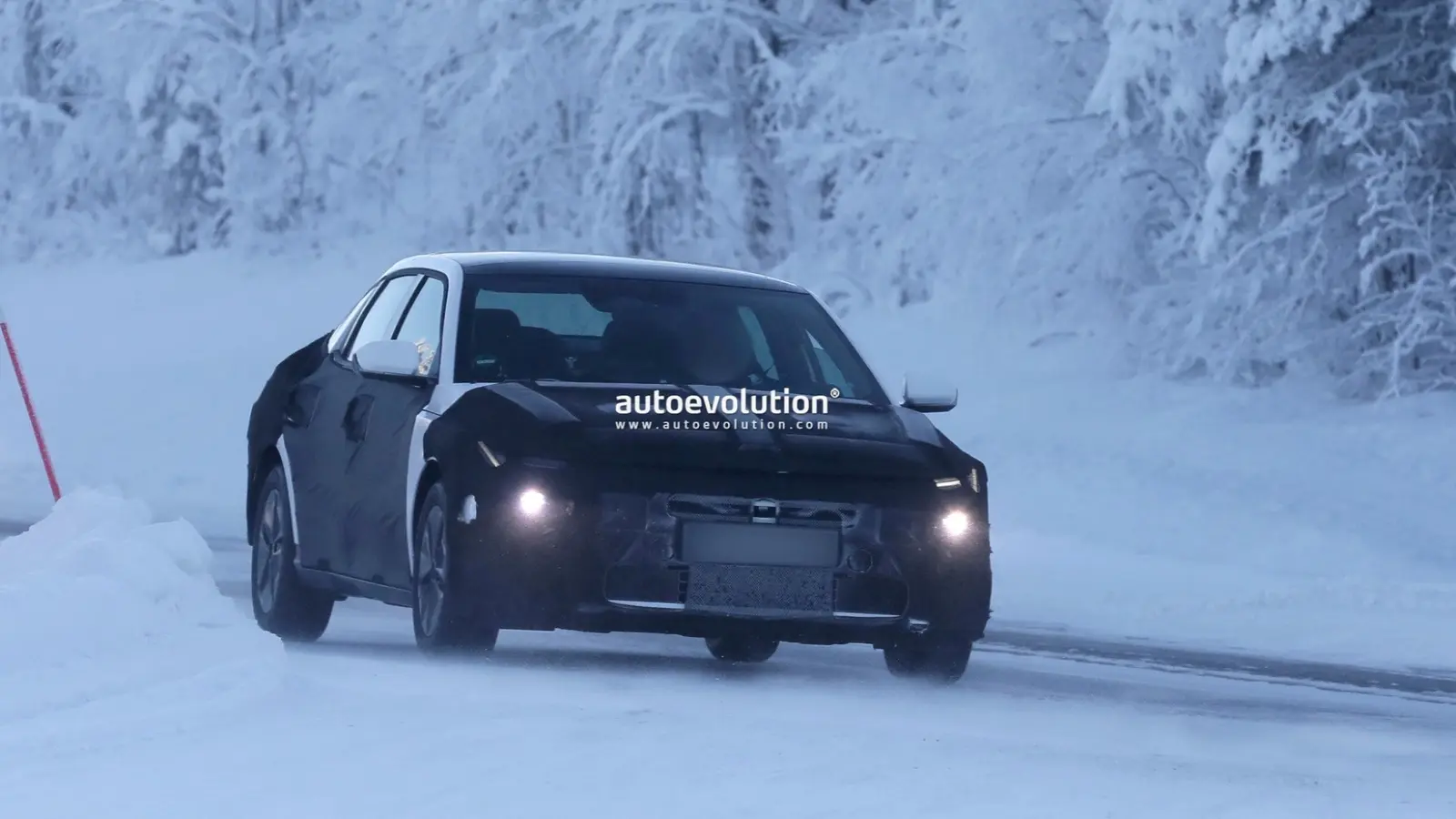
Spy photos captured in cold-weather testing reveal that Hyundai is preparing a bold redesign for the 2027 Elantra. The compact sedan, a global staple for the South Korean brand since the current generation launched for 2021, appears to be evolving into a boxier, more aggressive shape rather than a gentle mid-cycle update.
The prototype, heavily camouflaged but still readable, highlights several visual changes. Blunter front and rear bumpers and T-shaped lighting signatures at both ends create a wider stance. A smaller upper grille sits above a noticeably broader lower intake, signalling an overall move toward a more planted, athletic face.
What changed in the silhouette
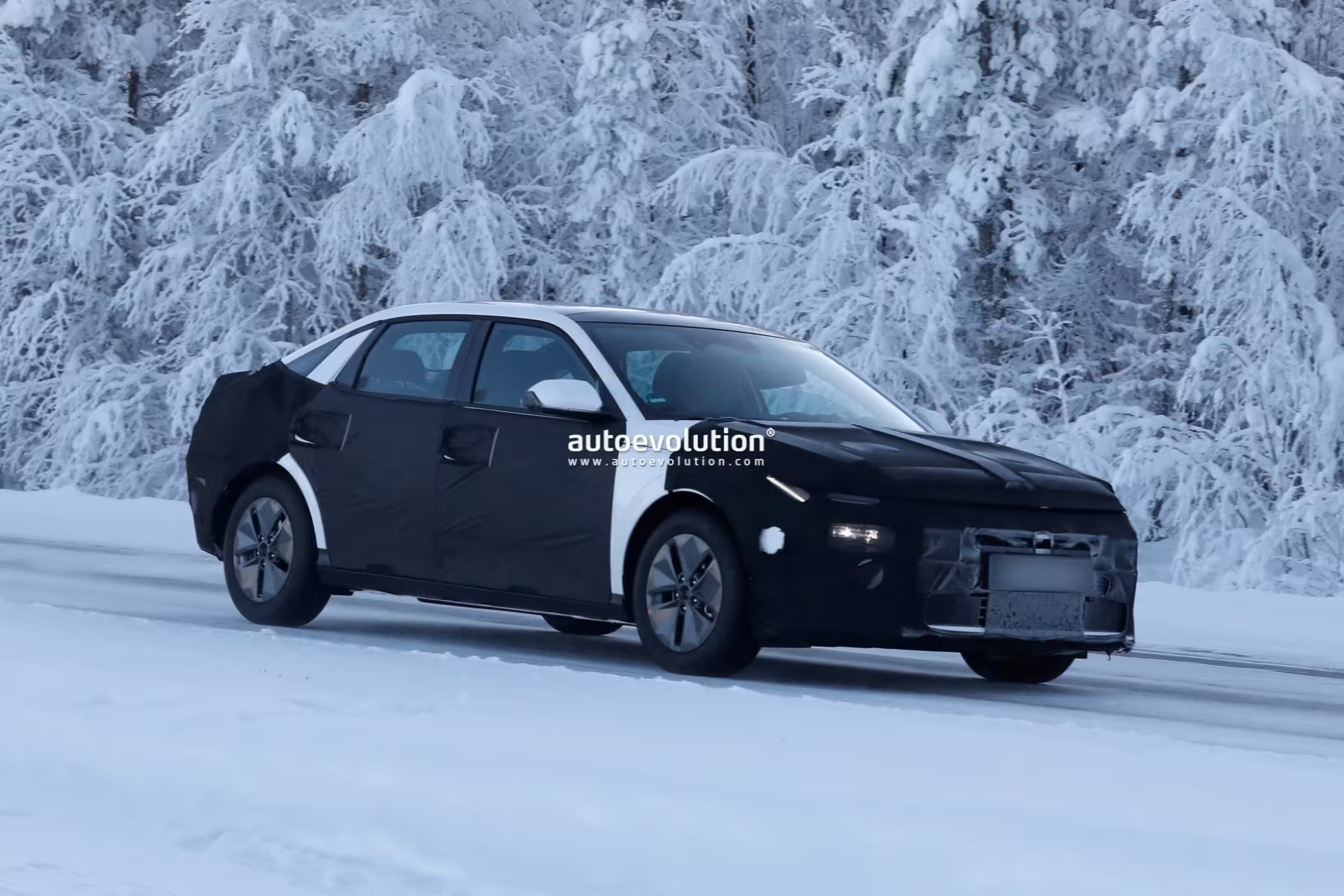
A flatter roofline and surprisingly small rear-quarter glass emphasize thick C-pillars — a design choice that not only updates the car's profile but should add structural benefits for rollover protection and side-impact rigidity. Both A- and C-pillars are more raked than before, giving the Elantra a compact yet purposeful greenhouse. Aerodynamic wheels, reminiscent of EV design cues, suggest an emphasis on efficiency as well as style.
Rumors indicate a modest increase in wheelbase, which would improve interior packaging and rear-seat space. That mirrors moves by sibling brands: Kia widened the K4 compared with the Forte, and Hyundai may be following a similar path to sharpen cabin comfort without increasing overall length dramatically.

New tech inside: Pleos Connect and ADAS upgrades
Under the skin, Hyundai is expected to migrate the Elantra to the Pleos Connect infotainment suite. Built on Android Automotive foundations, Pleos Connect brings a more integrated digital cockpit with a narrow digital instrument cluster and a central touchscreen that consolidates HVAC controls. Key features likely include:
- Hyundai-developed AI assistant
- Over-the-air software updates for infotainment and critical systems
- Significant processing power for advanced driver assistance systems
These upgrades are relevant because the next Elantra’s updated ADAS will require fast processors and robust connectivity to support features like lane-keeping, adaptive cruise, and potential future enhancements delivered by OTA patches.

Powertrains and market positioning
Hyundai will continue to offer a range of four-cylinder engines and hybrid options. For Europe, diesel looks increasingly unlikely as the market continues moving toward electrified drivetrains and with Euro 7 regulations looming. Instead, expect more hybrid variants aimed at balancing emissions targets with fuel economy.
In the United States, the cleanest and most economical Elantra for 2026 remains the 1.6-liter naturally aspirated inline-four hybrid producing about 139 hp. The Blue trim achieves an impressive 54 mpg (approx 4.4 l/100 km), and that hybrid system is expected to carry over largely unchanged into the 2027 model year.
What about the Elantra N?
The high-performance Elantra N is currently an open question. Hyundai could pursue a two-track approach: a traditional 2.5-liter turbocharged inline-four for markets like the United States, and a performance hybrid package for Europe and other regions that must meet stricter emissions rules without sacrificing driving dynamics. If a hybrid N emerges, it would signal Hyundai doubling down on electrified performance to comply with regulatory pressures while keeping enthusiasts engaged.

Highlights:
- Boxier, wider design with T-shaped lights
- Pleos Connect infotainment with AI assistant and OTA updates
- Slightly longer wheelbase and improved interior packaging
- Hybrid focus for Europe and a likely 2.5-liter turbo for some N variants
Whether buyers prioritize tech, efficiency, or outright performance, the 2027 Elantra redesign looks set to sharpen the model's proposition in the compact sedan segment. Expect an official reveal in the second half of 2026, with global markets following shortly after.



Leave a Comment
Comments
No comments yet. Be the first.