

Sony had a choice: absorb rising component costs or pass them to buyers. They chose neither. Instead, the company quietly shifted the battlefield from hardware margins to software and services, turning PlayStation's storefront into a defensive weapon.
When memory chip prices climbed worldwide, Sony's finance team, led by CFO Lin Tao, pivoted. The logic was simple and a little ruthless: don't squeeze customers at the register; squeeze more value from the audience you already have. More games, more subscriptions, more transactions—each one chips away at the cost pressure on the PS5 without forcing a visible price increase on the console itself.
Does that strategy actually work? The numbers say yes. PlayStation 5 and 4 software sales jumped to 97.2 million units, and roughly three out of four of those sales came in digital form. Monthly active users on the PlayStation Network climbed to about 132 million. Those are not incidental stats. They're the lifeblood of recurring revenue—season passes, DLC, online subscriptions, microtransactions—streams that scale far faster than hardware profits.
Sony is deliberately monetizing its existing community rather than leaning on price hikes or hardware losses. That single sentence explains a lot about modern platform economics: once millions of players are connected, monetization moves from a one-time purchase to an ongoing relationship.
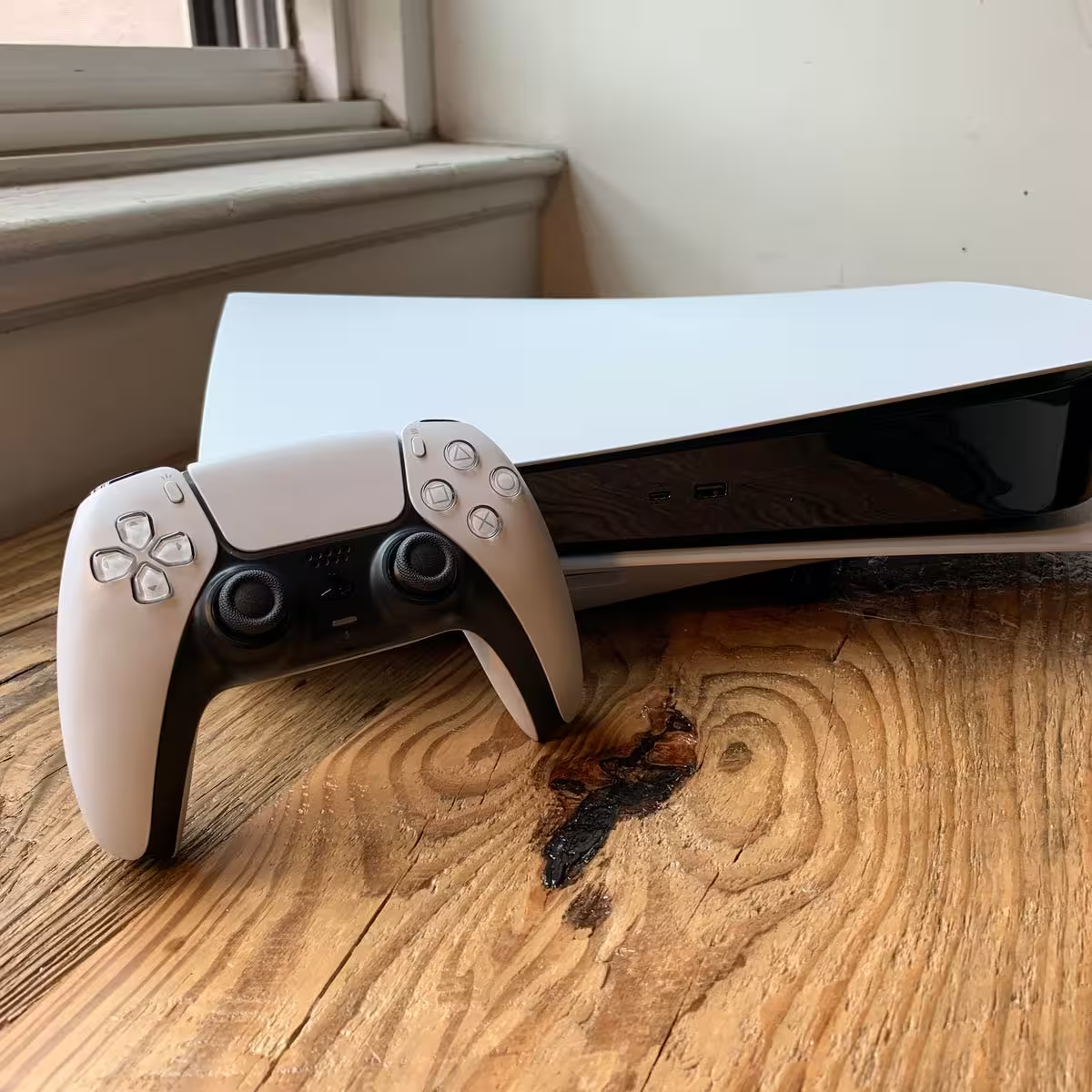
There's more to the playbook. To keep momentum in markets like Japan, Sony has been nudging consumers toward lower-cost, digital-only PS5 models. Cheaper entry points reduce friction for newcomers. Think of it as widening the funnel: fewer upfront barriers mean more users entering the ecosystem, and more users means more potential buyers for digital content.
Sony hasn't limited itself to outright sales. Rental programs and trade-in incentives are smoothing the market's transition away from physical discs. The strategy is pragmatic; it's about creating a soft migration to a full-digital future without alienating collectors or disc loyalists overnight.
And what about supply? The CFO reassured investors that Sony has been negotiating with suppliers to secure parts ahead of the holiday season. In plain English: while shortages have rattled the industry, Sony expects to have adequate inventory for the next sales cycle.
This approach raises a bigger question: are console makers now more like content platforms than hardware manufacturers? Sony's recent moves suggest that the answer is yes. Hardware drives adoption, but software and services drive profitability. For gamers, that means more emphasis on digital storefronts and online ecosystems—and fewer surprises at checkout.
Expect this model to influence the next generation of console economics. If Sony's gamble keeps the PS5 price steady while boosting recurring revenue, others will likely follow. For players, that could mean more live-service titles, deeper shops, and a PlayStation that feels less like a one-time purchase and more like a subscription to a shifting digital world.


Leave a Comment
Comments
No comments yet. Be the first.