

Picture a courtroom where a junior associate can summon a complete case history in seconds. Or a hospital ward where a clinician’s tablet scans every interaction, drug interaction and study on the spot. Quiet, efficient. Terrifying? Maybe.
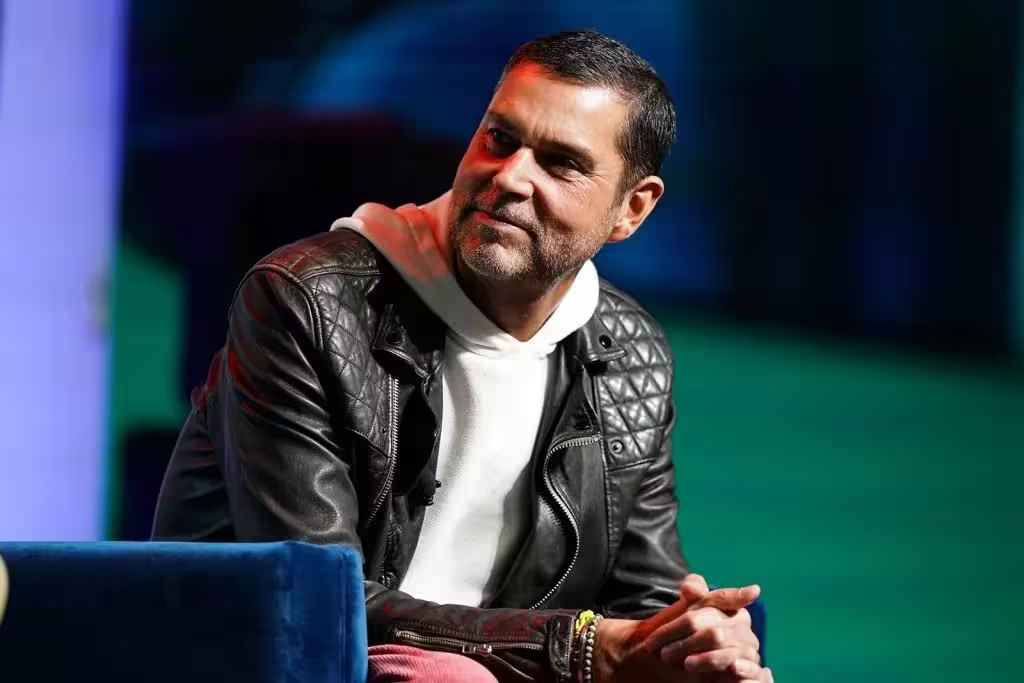
Raoul Pal — cofounder and CEO of Real Vision and a former head of European sales for hedge funds at Goldman Sachs — made just such a provocative claim on the podcast The Diary of a CEO: artificial intelligence is on track to render stored knowledge essentially valueless. He went further, calling AI the greatest invention of humankind to date, with only splitting the atom as a rival in scale. That line grabbed attention, but the more startling point was his take on what happens when knowledge loses its scarcity.
Why does scarcity matter? Because markets and professions are built around it. Lawyers, specialists, consultants, and some doctors command high fees because they hold difficult-to-access information and pattern recognition honed over years. But when large language models can fetch legal precedents, synthesize clinical research or pull market statistics in an instant, the premium attached to simply possessing facts collapses.
Think of AI as an inexhaustible reference librarian — but one that speaks like a human and learns what you ask for. Tools such as ChatGPT, Gemini and Claude can produce summaries, flag drug interactions, outline legal arguments and analyze corporate earnings in moments. For many routine tasks, speed and availability trump the traditional gatekeepers of expertise. The implication is blunt: parts of the knowledge economy will be commoditized.
That assessment, however, has a counterweight. People do not pay just for data. They pay for judgment under pressure, for moral and legal responsibility, for hands-on experience when things go wrong. There is a difference between receiving a research brief and having someone step up, sign the paperwork and be accountable when a decision blows up. Experience, applied judgment and the willingness to accept liability are not trivial.
If information becomes cheap, your edge will be judgment, timing, and accountability.
The practical shift looks less like obsolescence and more like reorientation. Knowledge repositories become utilities. Execution and trust become the scarce commodities. Firms that simply hoard information will find their margins eroded. Those that package insight into actionable decisions, enforceable processes and personal responsibility will retain — and perhaps grow — their value.
So where does that leave professionals? Adaptation. Learn to work with AI as a collaborator rather than a competitor. Invest in reputational capital. Sharpen the skills that machines struggle to emulate: complex ethical reasoning, interpersonal negotiation and end-to-end stewardship. Those who do will ride the wave. Those who do not will watch as clients opt for faster, cheaper, machine-assisted alternatives.
Raoul Pal’s claim is a provocation. It forces a question that professionals and firms can no longer postpone: when data is a commodity, what will you sell?


Leave a Comment
Comments
No comments yet. Be the first.