

Headlines claim AI is everywhere. Reality disagrees. A recent visual estimate flips the script: about 84% of the planet has never interacted with an AI tool.
Roughly 6.8 billion people — more than three quarters of humanity — have no recorded experience with AI tools.
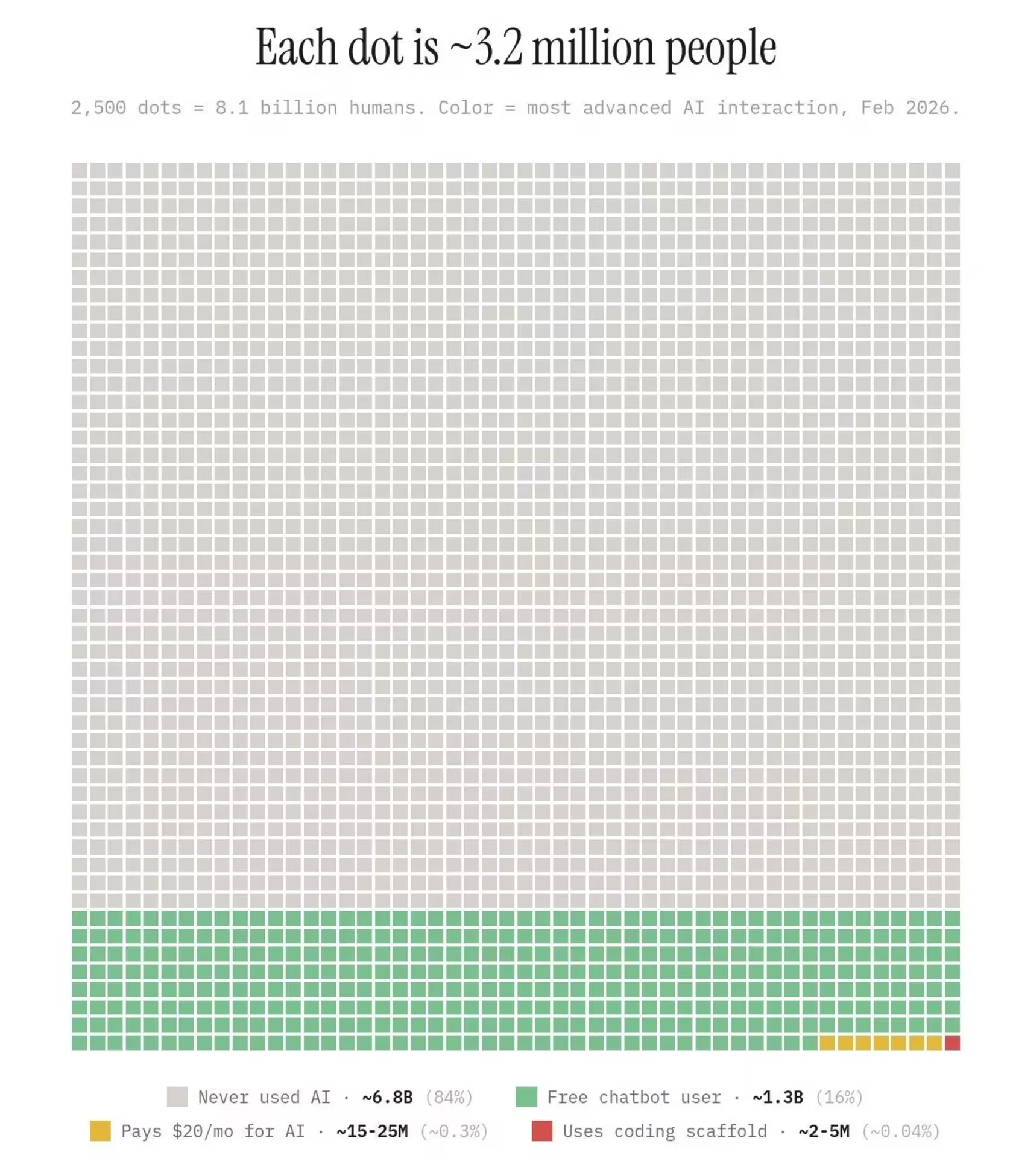
The graphic behind this claim maps the world as 2,500 dots. Each dot represents roughly 3.2 million people, adding up to an estimated 8.1 billion. Most dots sit in a single gray block: people who haven't used AI even once.
At the green edge of the chart, the story shifts. Around 1.3 billion people have tried free chatbots — that’s about 16% of the global population. Paying users are a sliver by comparison: roughly 15 to 25 million people subscribe to premium AI services, a figure close to 0.3% of the world.
The slice representing developers who use AI coding assistants — tools like Claude Code or Cursor — is almost invisible: between 2 and 5 million people, or roughly 0.04% of global residents. Small numbers. Big implications.
Startups and tech leaders talk about intelligent agents and automation replacing routine roles. In pockets of the economy, mastery of AI-powered coding and agent platforms has become a must-have skill. Some businesses are already built on these tools.
Still, many founders assume we’ve passed the tipping point and that AI adoption is universal. The data tells a different story: adoption is concentrated, uneven, and far from complete. Who’s ahead? Early movers — the curious users, developers, and companies that embraced AI before it hit the headlines.
Think of the comparison some analysts make: this moment is less broadband boom and more dial-up infancy. The market is large and largely untouched. That gap won’t remain neutral; it can widen into a structural advantage for those who learn, build, and scale now.
What will the next phase look like? That depends on how quickly access, education, and real-world applications spread beyond the current bubble of users.


Leave a Comment
Comments
No comments yet. Be the first.