
3 Minutes
Think of blood as a modern miracle: red, flowing, utterly familiar. Yet hidden inside each drop may be machinery older than animals themselves.
Researchers led by Kyoto University have traced the lineage of blood cells back roughly 700 million years, revealing that the cells coursing through our veins were not invented by multicellular animals from scratch. Instead, they appear to be repurposed tools—genetic circuits and behaviors borrowed from single-celled ancestors and stitched together over deep time.
How do you read a past that left no bones? You read its molecules. The team compared transcriptomes—the active gene-expression profiles—of blood and immune cells across a broad sampling of life: humans, mice, zebrafish, sea squirts, sea urchins, flies, worms, sponges and even close unicellular relatives of animals. The logic is simple. If two distant cell types rely on highly similar regulatory programs, they may trace back to the same ancestral blueprint.

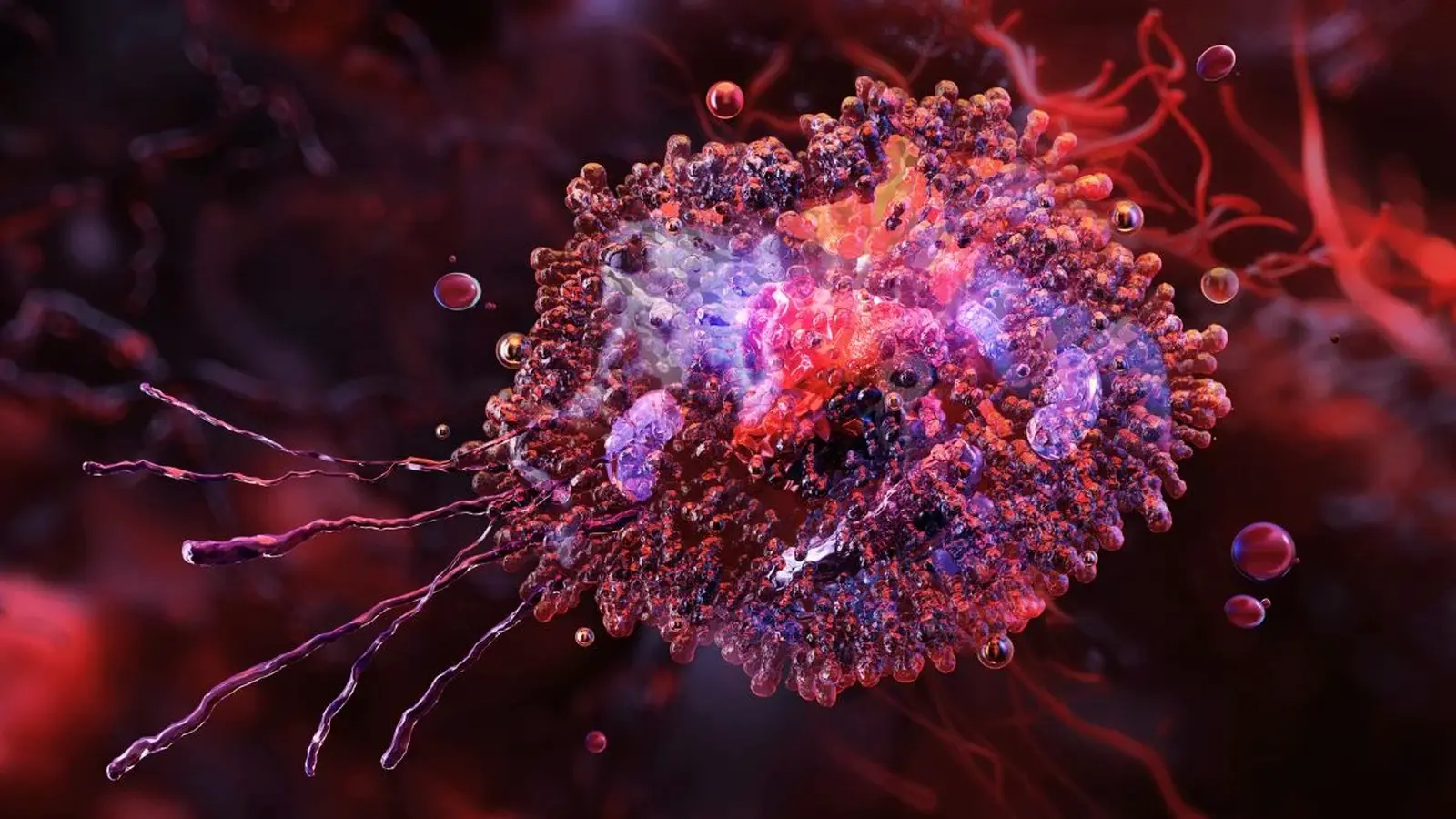
The pattern that emerged was striking. Early blood cells look less like the sleek oxygen carriers and more like scrappy scavengers: amoeba-like predators that swallowed particles whole. Think macrophages—those large white blood cells that sweep up debris and invading microbes. Genetic signatures for phagocytosis and cell-motility were present not only across animal lineages but also in several unicellular species, suggesting these behaviors predate multicellularity.
One gene kept showing up: Fos. This regulator helps cells change state and respond to their environment. When the researchers dialed up Fos expression in a single-celled relative, the cells abandoned their usual clustered life and reverted to a solitary, amoeboid mode—behaving more like phagocytic hunters than social colonies. That simple manipulation hinted at a deep continuity: the genetic tools for macrophage-like functions were already assembled in unicellular ancestors long before animals evolved.
From that ancient, macrophage-like stock, the evolutionary tree of blood appears to branch. One line gave rise to mast cells—rapid-response sentinels of the immune system—which later diversified into cell types such as T cells, red blood cells and platelets. The macrophage-descended branch, meanwhile, evolved into cells like B cells that produce antibodies. It is a family tree written in gene expression rather than fossils.

There are practical payoffs to this reconstruction. Understanding how blood-cell programs were assembled helps explain why certain diseases emerge and how cellular behaviors get rewired in conditions like cancer. It also reframes an everyday fact: those immune patrols and oxygen carriers embody evolutionary experiments that began when life was still single-celled.
"I feel deeply moved by these findings," said Hiroshi Kawamoto of Kyoto University, pointing to the study as the culmination of a long effort to chart blood-cell differentiation across vast stretches of time. Coauthor Yosuke Nagahata added that realizing this legacy circulates in our bodies brings a different kind of closeness to ancient life.
The work appears in the Proceedings of the National Academy of Sciences and opens a window onto how innovation can proceed by rewiring and reusing old parts, rather than inventing entirely new ones. Next time you feel your pulse, consider this: your blood is not only keeping you alive; it is also carrying a story that began long before animals walked the planet.

Leave a Comment
Comments
No comments yet. Be the first.