
2 Minutes
The afternoon sky over New England cracked like a whip when a bright meteor detonated above Massachusetts and New Hampshire, sending windows trembling and phones pinging with shaky video.
NASA investigators say the fireball broke up at about 2:06 p.m. local time at an altitude near 40 miles, tearing apart after hurtling toward Earth at roughly 75,000 miles per hour. The agency estimates the breakup released energy on the order of 300 tons of TNT — enough to produce the boom people felt on the ground.
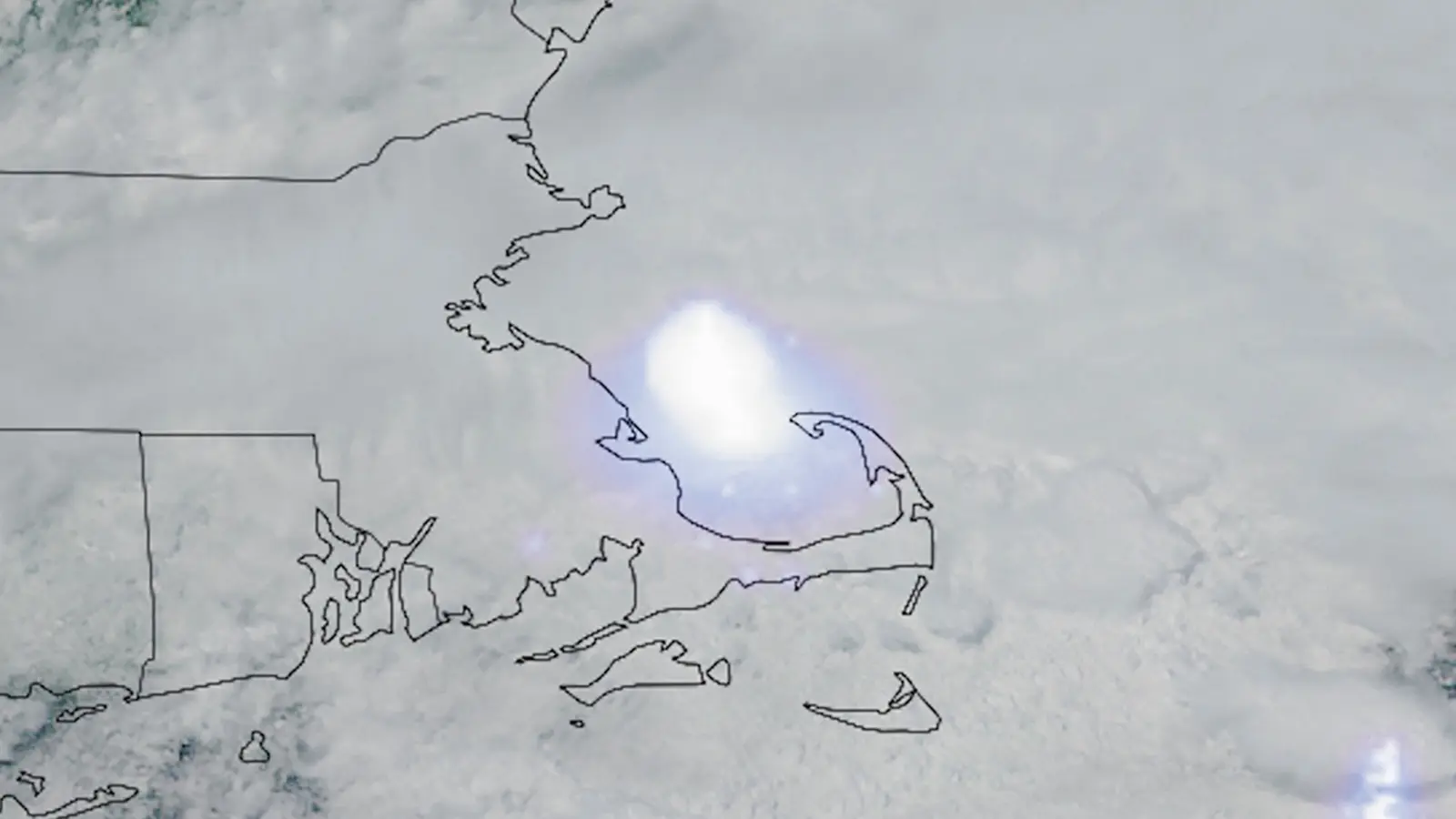
Officials were quick to rule out a satellite re-entry or man-made debris. Jennifer Dooren, NASA’s deputy news chief, told reporters the object was a natural bolide, not tied to any active meteor shower. Remote sensing and flash-density products captured a distinctive, short-lived flash east of Boston that lines up with the reported sonic reports and recordings that circulated online.
For residents, the moment was immediate and visceral: doors rattled, pictures shifted on mantels, and in neighborhoods people stepped outside to ask each other what had happened. Social media filled with clips and timestamps, the modern chorus for an otherwise ancient phenomenon — a rock from space meeting Earth's atmosphere at lethal speed and surrendering to friction and pressure.
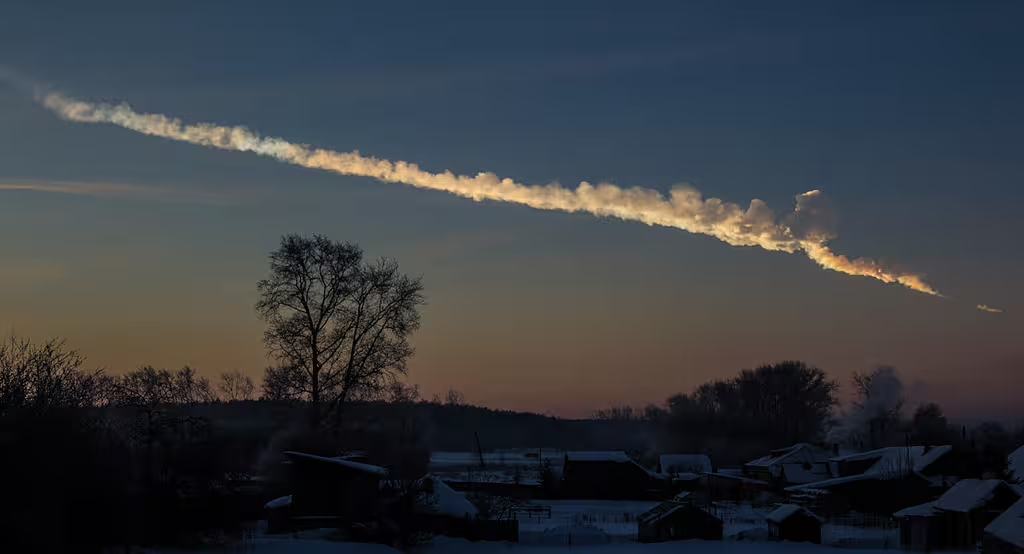
The event invites inevitable comparison to Chelyabinsk in 2013. That house-sized rock exploded far lower in the atmosphere, at about 14 miles altitude, and released energy estimated at roughly 440,000 tons of TNT. The Russian airburst shattered windows across a wide area and injured more than a thousand people, mostly from flying glass. The New England airburst was far smaller in scale, yet it underscores how energy release in the upper atmosphere can translate into audible, sometimes palpable effects on the ground.
Scientists monitor the skies with an array of satellites, infrasound stations and ground cameras precisely for moments like this. Each airburst adds data points: entry speed, breakup altitude, energy yield, and the spectral fingerprint of the light flash. Those details help researchers understand the distribution of small near-Earth objects, improve models of atmospheric breakups, and refine hazard assessments for future events.
People watching the heavens on an ordinary Saturday were reminded how connected we remain to the broader solar system — tiny, swift visitors still capable of making a neighborhood buzz. Keep an eye on the skies; you never know when the next bright streak will write a sudden footnote across a tranquil afternoon.

Leave a Comment
Comments
No comments yet. Be the first.