
3 Minutes
A common gum microbe has turned up where it should never be: embedded in hardened heart valves. Strange. Worrying. And potentially important.
Doctors long describe calcific aortic valve stenosis (CAVS) as a slow, silent clogging of the heart’s outflow gate. Calcium crystals build up on the aortic valve until its leaflets stiffen and the opening narrows. At first, people may feel nothing. Later, fatigue, chest pain, breathlessness or fainting can arrive. Severe cases usually end with valve replacement because no drug yet halts the process.
Researchers presented new findings at the American Heart Association’s Basic Cardiovascular Sciences meeting that point to an unexpected accomplice: Porphyromonas gingivalis, a bacterium best known for gnawing at gums in chronic periodontal disease. The team looked at human valve tissue removed during surgery and noticed that P. gingivalis was more common in calcified aortic valves than in other diseased valves. That alone shows association. It does not prove cause.
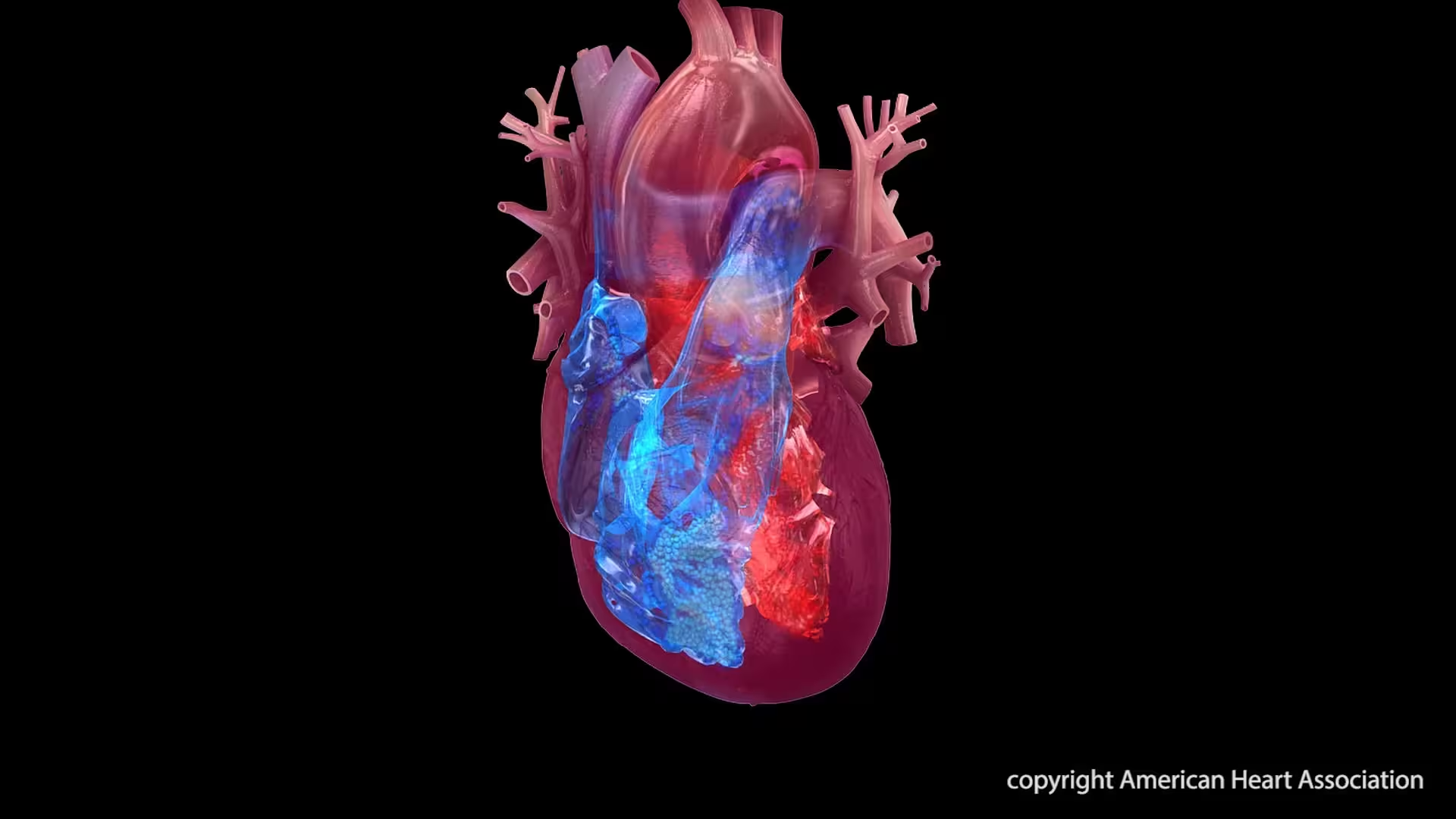
4 chambers of the heart: right atrium, right ventricle, left atrium, left ventricle.
So they took the inquiry to mice. Repeated exposure to live P. gingivalis led the microbe to accumulate on mouse aortic valves. Those animals developed more calcium deposits and signs consistent with aortic stenosis. Preventive antibiotics blunted the effect. When the scientists knocked out a key inflammatory signal—interleukin-1 beta (IL-1β)—the valve damage and calcification shrank, even though the bacteria could still be detected.
Why does that matter? IL-1β is a potent trigger of inflammation. The experiments suggest P. gingivalis may nudge valve cells toward a pro-calcific state by lighting an inflammatory fuse. Interrupt the fuse. The calcification diminishes.
Still, a careful sentence is needed: mouse biology and human disease are not identical. The human tissue work shows correlation. The mouse studies outline a plausible mechanism. Neither alone proves P. gingivalis causes CAVS in people. The investigators have already launched a clinical study to test the connection more directly in human patients.
What should readers make of this? Think of the body as an interconnected neighborhood. A persistent infection in the mouth may send noisy signals elsewhere—small alarms that, over years, remodel distant tissues. Routine dental care often gets framed as cosmetic or localized. Maybe that view is too narrow.
Good oral hygiene and timely treatment of periodontal disease may have benefits beyond your smile. Whether those benefits include preventing valve calcification remains to be proven, but the hypothesis is gaining experimental traction.
For now, scientists will keep testing, clinicians will follow the data, and patients can take heart in one simple truth: the state of your mouth may be more informative about your heart than many realize.


Leave a Comment
Comments
No comments yet. Be the first.