

4 Minutes
Imagine protecting your brain with a routine so simple it fits into a half-hour window between errands or after dinner. That’s the provocative hint from a long-term study tracking older adults’ daily steps and brain health over nearly a decade.
Researchers fitted roughly 300 adults with pedometers and watched them for nine to 11 years. Physical activity did not lower levels of amyloid plaques—the sticky deposits many drug trials target. Instead, the surprise was tau: among people who already had amyloid, those who moved more accumulated misfolded tau proteins more slowly in brain regions tied to memory and daily function. The difference mattered. More active participants showed nearly half as much cognitive and functional decline over the study period.
So what counts as “moving more”? The protective signal began at about 3,000 steps a day—roughly 30 minutes of moderate walking—and grew strongest between 5,000 and 7,500 steps before flattening out. In plain terms, you don’t have to train for a marathon. A modest, achievable walk each day seems to matter most.

The results arrive with caveats. The sample was relatively small and largely white and highly educated, all from the United States, and not every lifestyle or health factor could be controlled. Walking likely helps the brain in ways this study didn’t measure, and cause and effect are not ironclad. Still, the work joins a growing stack of evidence linking modest activity to lower dementia risk.

Other large studies paint a similar picture. A UK cohort of 1,139 people over 50 found that moderate to vigorous activity cut dementia risk by roughly 34–50% over eight to ten years, and a 2022 study of 78,430 people using wrist accelerometers linked about a 25% drop in dementia risk to 3,800 daily steps and a roughly 50% drop at nearly 9,800 steps. Those are big numbers. But they come with a twist: people who walk more also tend to have better heart health, sleep, and blood sugar control—factors that themselves lower dementia risk.
Biology offers plausible bridges between a brisk step and a sharper mind. Exercise improves blood flow, lowers inflammation, and boosts chemicals that strengthen neural connections. Muscle-produced hormones like irisin and growth factors such as BDNF act on many of the brain processes that go awry in Alzheimer’s, offering a direct route by which movement might slow degeneration beyond its cardiovascular perks.
And yet the relationship can run both ways. Early, subtle symptoms of Alzheimer’s may nudge people toward inactivity: hearing problems, social withdrawal, or loss of confidence can sap motivation to go outside. Reduced movement then accelerates cognitive decline—a feedback loop that blurs whether low activity is cause or consequence.
There’s reason for cautious optimism even for people already diagnosed. A small trial of Nordic walking—poles, brisk pace—kept brain function stable over 24 weeks in 15 participants with mild to moderate Alzheimer’s, while a matched group receiving usual care declined. It’s a tiny study, but it suggests that deliberate, sustained movement can still alter the course of symptoms.
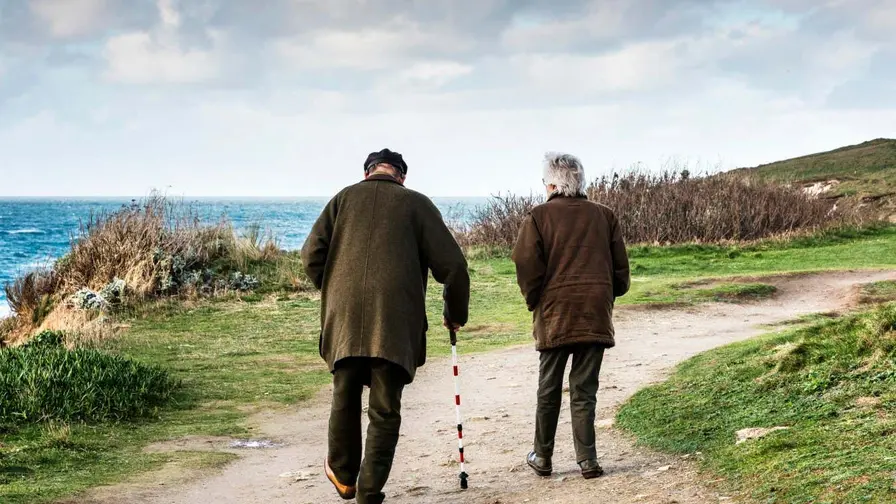
Walking outdoors may add extra benefits: natural light, improved mood, better sleep, and social contact all protect cognition, so a neighborhood stroll can deliver multiple small boosters at once. The practical hurdles are real—fear of falls, unsafe streets, bad weather, or simply preferring the sofa—but the bar here is low. Minutes add up. A half-hour daily walk, or fragmented bouts that reach a few thousand steps, looks far more achievable than the oft-cited 10,000-step target and may still pay meaningful dividends for brain health.
Science rarely hands out single, simple solutions. Still, when modest activity shows up repeatedly as one of the few modifiable factors associated with slower brain decline, it’s worth lacing up and stepping outside. What would thirty minutes of walking change in your life?

Leave a Comment
Comments (2)
Is this even true? folks who walk more often have better sleep, diet, heart health too, so hard to pin causation. still, 30 mins is doable, i'll try.
wow didnt expect walking to slow tau like that. 30 mins/day sounds doable, but sample is tiny and skewed — curious to see bigger trials.